Mon-Fri: 9am-6pm, Sat: 8am-5pm, Sun: 10am-5pm


9025 South Lewis Avenue Tulsa, OK 74137  

Success with Cacti & Succulents


By Paul James

The world of cacti and succulents is vast, and includes more than 10,000 species. It’s also fascinating, if not downright bizarre, given the incredible diversity of sizes, shapes, textures, and colors. Even the names of individual plants spark the imagination, such as Baby Toes, Buddha’s Temple, Crinkle Leaf, Dancing Bones, Fairy Washboard, Flapjack, Shrek Ears, and Zebra Wart. 

But the best thing about cacti and succulents is that they’re incredibly easy to grow, particularly if you take a hands-off approach to caring for them. In other words, try not to kill them with kindness. Here’s what I mean.
From late spring to late summer, water indoor succulents no more than once a week. During the fall and winter months, water maybe once every three or four weeks. Except during extreme periods of drought, outdoor varieties rarely need to be watered. In fact, overwatering is the fastest way to kill them.
Truth is, succulents will be perfectly happy without any fertilizer, and if you feed them too much or too often, they’ll croak. At the most, fertilize once a month during spring and summer, and not at all during fall and winter.
Although most succulents are native to desert regions of the world, they actually do best outdoors in this area when protected from late afternoon sun. Too much light – combined with hot temps — can lead to sunscald. Indoors, they need at least a half day of bright, indirect light.
 Succulents respond well to annual repotting with a mix specifically blended for them. The best time to repot is spring.
 
All cacti are succulents, but not all succulents are cacti. 
 

Succulents Indoors

Don’t fancy yourself a gardener? Try growing cacti and succulents indoors. Just follow the advice above and I’m willing to bet you’ll achieve success. And with success comes the confidence to explore other forms of gardening. Seriously, you can do this.
Shop Indoor Succulents
 

Succulents Outdoors

Yes, there are hardy succulents that grow great in our area, both in pots and in the ground. By far and away, the most popular are the Sedums, whose thick, fleshy leaves add both color and texture to perennial beds. Good drainage is a must, but they’re otherwise tolerant of most soil types. Closely related are the Sempervivums, which includes the ever-popular Hens & Chicks. And there’s the mat-forming Ice Plant (Delosperma), whose daisy-like flowers are available in several colors.
Shop Outdoor Succulents
 
Both cacti and cactuses are acceptable plural forms of cactus.
 

Cacti

Equally diverse are the cacti, which are succulents worthy of their own category. And although not all of them flower — or may take years to do so — those that do are especially worth growing because their blooms are mind-blowingly beautiful. What I find most intriguing about cacti is their symmetry of form, but I must admit that I find their spines (which are actually modified leaves) pretty darn cool too. Never grown cacti before? Give them a go, but know in advance that collecting them can be addicting.
Shop Cacti
 

Perfect Potting Mix

When potting succulents and cacti indoors or out, the right potting mix is critical. It needs to be fairly light and drain quickly to prevent root rot, which is the number-one cause of death in succulents. That’s why we’re sold on Espoma’s Organic Cactus Mix, and you should be too.
Shop Espoma Organic Cactus Mix
 
The Saguaro cactus is the largest of all, often growing to 45 feet. The largest ever recorded reached 78 feet!
 

Coming Next Week — Summer Gardening Tips

Summer doesn’t officially arrive until the 21st, but it’s sure been feeling like summer lately, and that means it’s time to focus on the special needs of just about everything that grows, from turf to tomatoes.

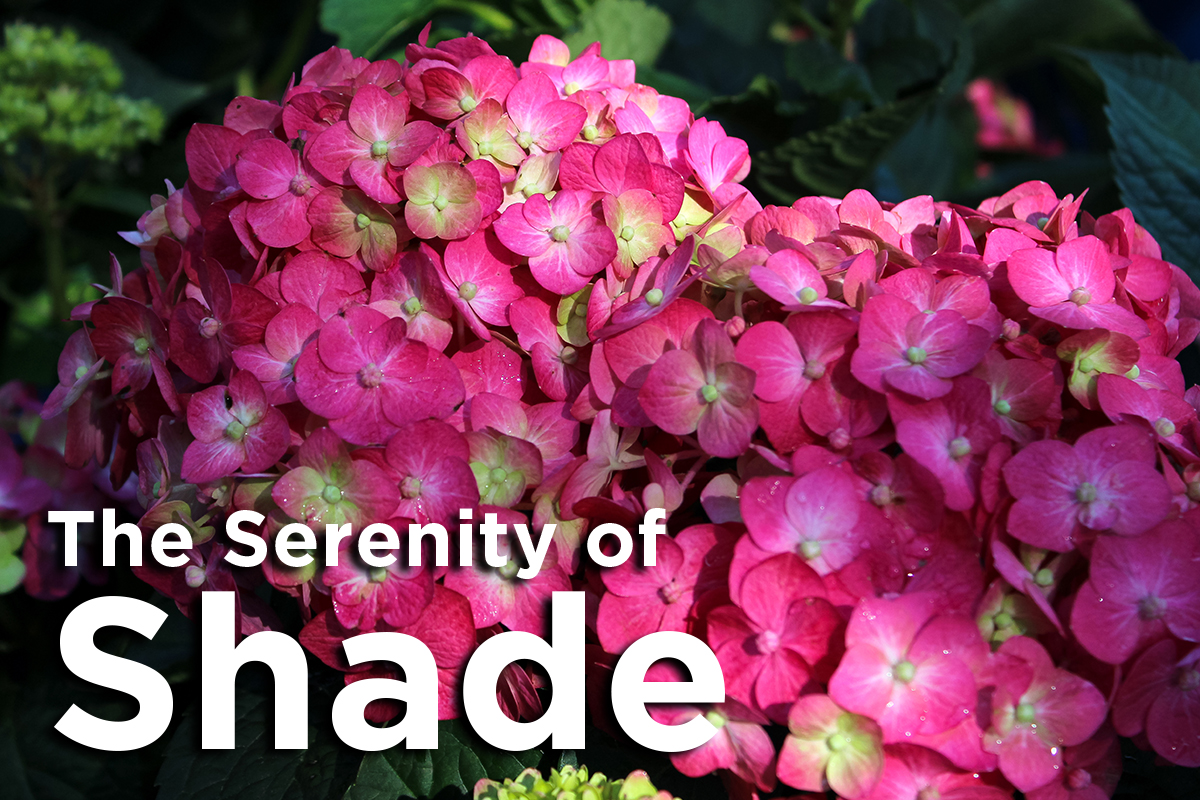
The Serenity of Shade

By Paul James

A lot of folks think of gardening in the shade as a challenge. I think of it as an opportunity to create a serene space that’s not just beautiful, but soothing to the senses. Where brightly colored perennials gardens tend to shout, shade gardens whisper. And the palette of plant possibilities for shade includes many of my favorites.
 
It’s hard to imagine a shade garden without at least one Japanese maple, and they’re available in so many sizes now — including dwarfs — that it’s easy to find one that’s suitable for your space. But the list of trees for shade doesn’t stop there.
Dogwood Saucer Magnolia
Fringetree Serviceberry
Redbud Tupelo
 
Among shrubs for shade, the list is even longer. Most are at least somewhat familiar, but a lesser known and beautiful choice is the evergreen Sarcococca, better known as sweet box. It produces white, fragrant flowers in spring followed by red berries and grows to roughly 4’ tall and wide. It’s especially great for dry shade.
*Aucuba Hydrangea
*Azalea Itea
*Camellia *Mahonia
Elderberry *Sarcococca
Fothergilla *Yew
*Evergreen

And there are a few evergreen shrubs that do great in morning sun and afternoon shade, including Arborvitae, Cryptomeria, Boxwood, Hinoki Cypress, and Hollies. Bear in mind too that Azaleas and Hydrangeas generally bloom better when they receive two or three hours of morning sun. 
 
Think you can’t have flowers in the shade? Think again. With the exception of ferns, all the perennials listed here produce flowers. But then ferns offer unrivaled textures, which is why I have lots of them.
Aralia Heuchera
Astilbe Ferns
Dicentra Solomon’s Seal
Hellebore Tiarella
Hosta Trycirtis
 
The majority of ornamental grasses require full sun, but these thrive in shade.
Acorus Sea Oats
Hakone Sedges
 
Like a carpet for the garden, groundcovers can control erosion, reduce weed growth by forming a living mulch, and they’re pretty darn maintenance free.
Ajuga Liriope
Boston Ivy Mondo
English Ivy Plumbago
Lamium Vinca
 

Different Shades of Shade

Shade comes in many forms, which can make picking the right shady character for your garden a tad tricky. So before deciding what to plant where, evaluate the planting area and describe one or more of the following conditions to our sales staff for help in making the right choices.

Dry shade under mature trees
Dappled woodland shade
Moist, rich shade
Morning sun, afternoon shade
Heavy shade


Tip of the Week

Lighten up heavily shaded spots with white flowers such as Astilbe ‘Deutschland,’ or use lemony Japanese Forest Grass (Hakone), or lime-colored hostas. 

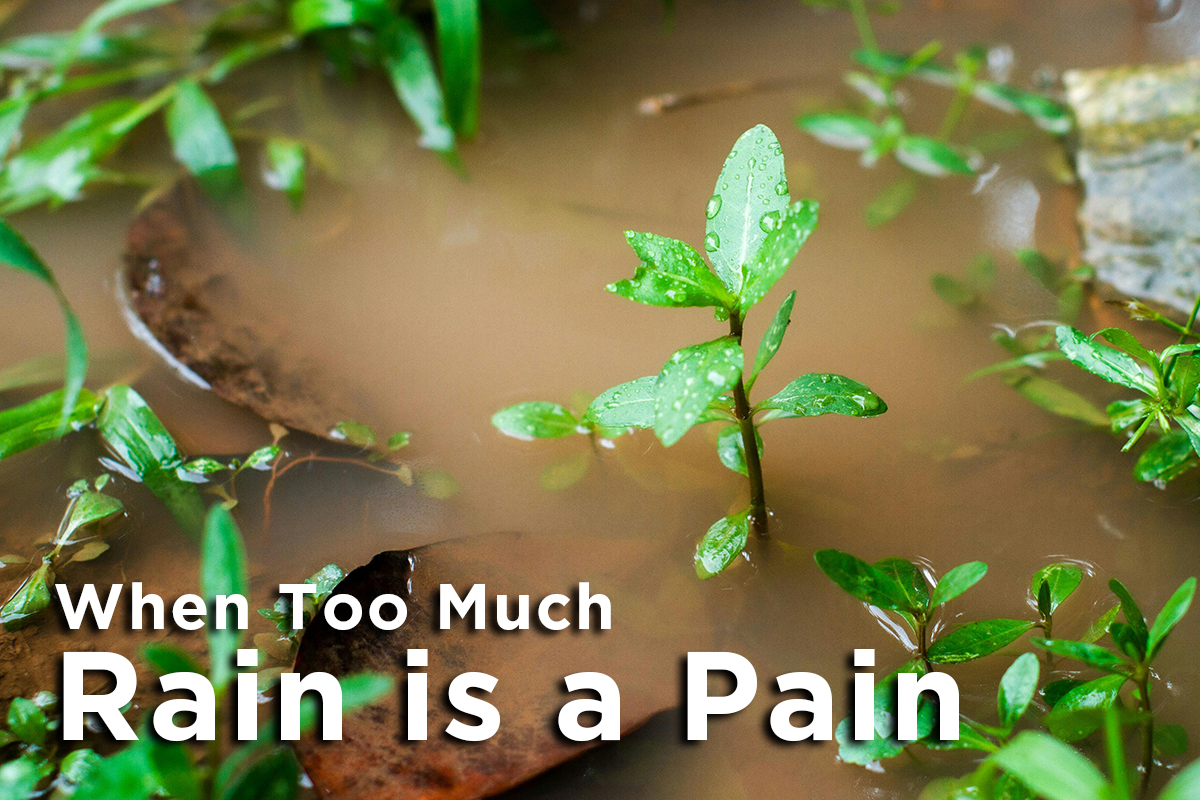
When Too Much Rain is a Pain

By Paul James

As much as I love a good rain, too much of it can create problems in our lawns and gardens, ranging from minor annoyances to serious plant health issues. But thankfully few of them are insurmountable. 
 

Don’t Work Wet Soil!

Working the soil when it’s wet is one of the absolute worst things you can do in the garden. Maybe THE worst. And the negative effects can last for years. It destroys the soil’s natural structure, and once the soil dries, you’re often left with huge, hard clumps. The very act of walking on wet soil can cause long-lasting damage, because it leads to compaction, one of the worst enemies of plant roots.

The best way to determine when the soil is safe to work is decidedly low tech, but effective. Just take a handful of soil in your hands, roll it into a ball, and gently squeeze it. If the ball falls apart, you’re good to go; if not, wait another day or so and test it again. But whatever you do, don’t try to plant anything in wet soil.
 
The wettest place in the United States is Mt. Waialeale on Kauai in Hawaii, which gets approximately 460 inches of rain each year (roughly ten times the Tulsa average) making it one of the rainiest spots on earth.
 

Oxygen Deprivation

Waterlogged soils make it difficult — and in some cases, impossible — for plant roots to take up oxygen, which results in everything from yellowing leaves (on everything from cherry tomatoes to cherry trees) to poor growth to plant death. Unfortunately, there’s not much you can do to remedy the situation other than pulling back any mulch around the plant to facilitate drying or punching holes in the soil with a garden fork (or even a long screwdriver).
 

Nutrient Deficiencies

But you can deal with another issue, namely the fact that frequent rains result in nutrients being leached out of the soil. So once things dry out a bit, you should seriously consider applying fresh fertilizer (perhaps at half the label’s recommended rate) because what you may have applied earlier in the season is likely long gone.
Shop Fertilizers
 
In the city of Buenaventura, Colombia, it rains 258 days a year!
 

Rain-Soaked Lawns

One of the most frustrating things about frequent rains is finding time to mow between downbursts. But there’s no getting around the fact that mowing wet grass is a bad idea. Wet grass blades don’t cut cleanly, which can lead to disease issues. Wet grass clumps as it’s cut, and it’s heavy; both issues can actually lead to smothering of the grass. Wet grass also sticks to the underside of the mower deck, potentially causing the engine to overheat. And cutting the grass while the ground is wet can lead to unsightly wheel ruts that are tough to get rid of.
 

Fungal Diseases

Fungal diseases are finicky. Some prefer cold temps and wet weather, others prefer warm temps and wet weather, and a few prefer dry conditions. But the vast majority of fungi that infect plants have one thing in common — they thrive in moist environments. So be on the lookout for abnormalities, particularly on leaf surfaces, such as a white, powdery substance, brown, black, yellow, or rust spots, or any unusual discoloration, and be prepared to act quickly if symptoms appear by taking a closeup picture of the symptoms and bringing it into the folks in our Solution Center for help in selecting the proper fungicide.
Shop Fungicides
 

Mushrooms in Lawns

Speaking of fungi, mushrooms have been popping up in lawns all over town. But there’s no need to panic, because although some folks find them unsightly (or in my case, fascinating), they don’t pose a threat.
 
The Atacama Desert is the driest place in the world. Located in Arica, Chile, its annual rainfall is only 0.03 inches. Incredibly, 550 species of plants grow there.
 

Watering After it Rains?

Okay, I know this sounds ridiculous, but hear me out. When rain splashes soil onto leaf surfaces, you should use a gentle spray from the hose or a watering can to remove it. That’s because the soil may contain fungal spores, and it may actually inhibit photosynthesis as well. And btw, mulch (applied after the soil dries a bit) will go a long way in preventing soil from splashing on leaf surfaces in the first place.
 

Bugs on the Move

Lots of garden pests reproduce faster in wet and warm conditions, and rains in particular can drive many outdoor pests indoors, so the battle against bugs occurs on two fronts. So make sure you’ve got pesticides on hand, including Bt for caterpillars (and a separate species of Bt for mosquitoes), Neem for aphids, spider mites, flea beetles, and more, and Spinosad for the broadest control of garden pests.
Shop Pesticides
 

Tip of the Week

Those little mounds you see on your lawn after a heavy rain are actually a good thing. They’re nothing more than piles of worm castings (poop) and they indicate a healthy turf.

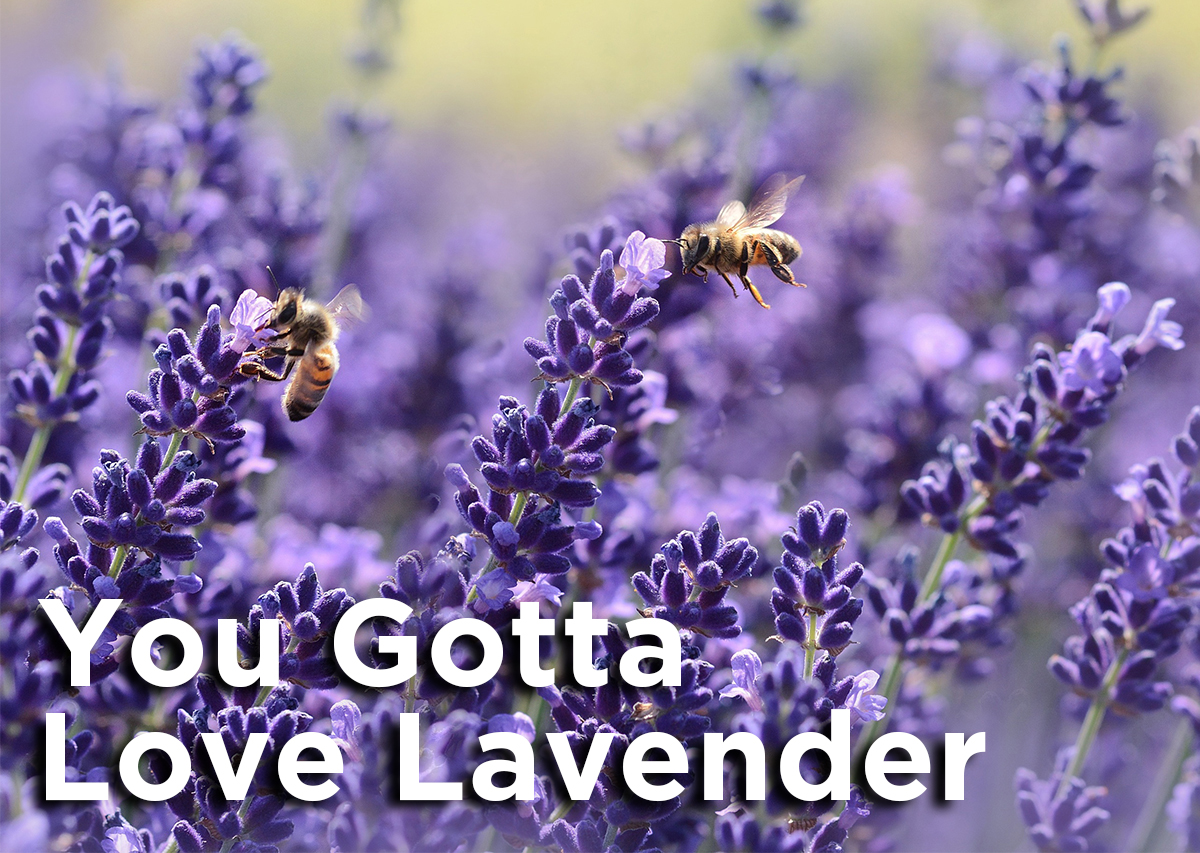
You Gotta Love Lavender

By Paul James

Gorgeous, and often intensely fragrant flowers. Hypnotically aromatic leaves. Prized by pollinators, but ignored by deer and rabbits. And yes, absolutely beautiful. Lavender stands out among perennials because it has so many attributes. And that’s why I say you gotta love lavender. I would also add that if you provide it with what it needs, it’s not all that finicky.
 

Soil, Sun, and Water

First and foremost, lavender needs well-drained soil. It doesn’t just prefer it — it requires it. So if your soil doesn’t drain well, consider adding up to 30% sand or gravel to your native soil prior to planting. But the soil itself needn’t be particularly rich. In fact, lavender grows best in lean soil with little if any supplemental fertilizer. 

Lavender also requires full sun, as in a minimum of eight hours and even more if possible. If lavender gets too little sun it may produce foliage, but flowers likely will be few and far between.

Newly planted lavender should be watered once a week, especially during dry spells, for the first few weeks. By the first and through the sixth month water every two to three weeks (unless we get rain, of course). Beyond that, plants don’t need a lot of supplemental watering. In fact, too much water will do them in. And when you water, try to avoid soaking the foliage to minimize the growth of fungal diseases. 
 
The Romans used lavender to scent their baths, beds, clothes, and even hair.  The oil extracted from its flowers was used as a disinfectant, an antiseptic, an anti-inflammatory and for aromatherapy.
 

Containers May be the Way to Grow

Lavender grows great in containers, especially those that are at least 12” tall and wide. Terra cotta is the ideal material because it drains well. Feel free to add sand or gravel (or vermiculite or perlite) to whatever potting mix you choose, but never put gravel in the bottom of the pot. It may seem counterintuitive, but doing so will cause the potting mix to hold water longer.
 

Pruning Pointers

Routine pruning encourages new flushes of growth of both flowers and foliage. You can prune in late spring shortly after flowers fade, but make sure you leave an inch or two of green growth above the woody portion of the stem. In late summer to fall, you can prune harder, cutting back one-third to one-half of the stems, but never make pruning cuts close to the base of the plant.
 
The name lavender is thought to have originated from the French word lavandre, which came from the Latin root word lavare, which means ‘to wash.’
 

Mulch, Yay or Nay?

Because excess soil moisture is the enemy of lavender, I hesitate to recommend most mulches. However, a light mulch of pea gravel or small stones can be beneficial because both reflect light back onto the foliage and keep roots cool.
 

Lavender Types

There are lots of different types of lavender, but we carry primarily Spanish, English, and French varieties that stand up to heat and humidity. Sizes, foliage, and flower colors vary, so if you can’t decide, try a mix. We also carry a few standards, which are single-trunk forms that look great in containers.
 
Queen Victoria required all her furniture to be polished with a lavender based polish and even drank tea infused with lavender to improve digestion.
 
Photo by Christopher Paquette, CC BY 2.0

Herbs de Provence

This culinary classic herb blend originated in southern France, and it’s used to flavor everything from salads and veggies to fish, chicken, beef, and pork. Use a spice grinder or mortar and pestle to grind rosemary and fennel seeds. Store in an airtight container. And feel free to half or double the recipe.

2 tablespoons dried rosemary
1 tablespoon fennel seed
2 tablespoons dried savory
2 tablespoons dried thyme
2 tablespoons dried basil
2 tablespoons dried marjoram
2 tablespoons dried lavender flowers
2 tablespoons dried Italian parsley
1 tablespoon dried oregano
1 tablespoon dried tarragon
1 teaspoon bay powder

Tip of the Week

Yes, you can grow lavender from seed, but it can take years for the plants to mature enough to actually flower. Better to stick with transplants.

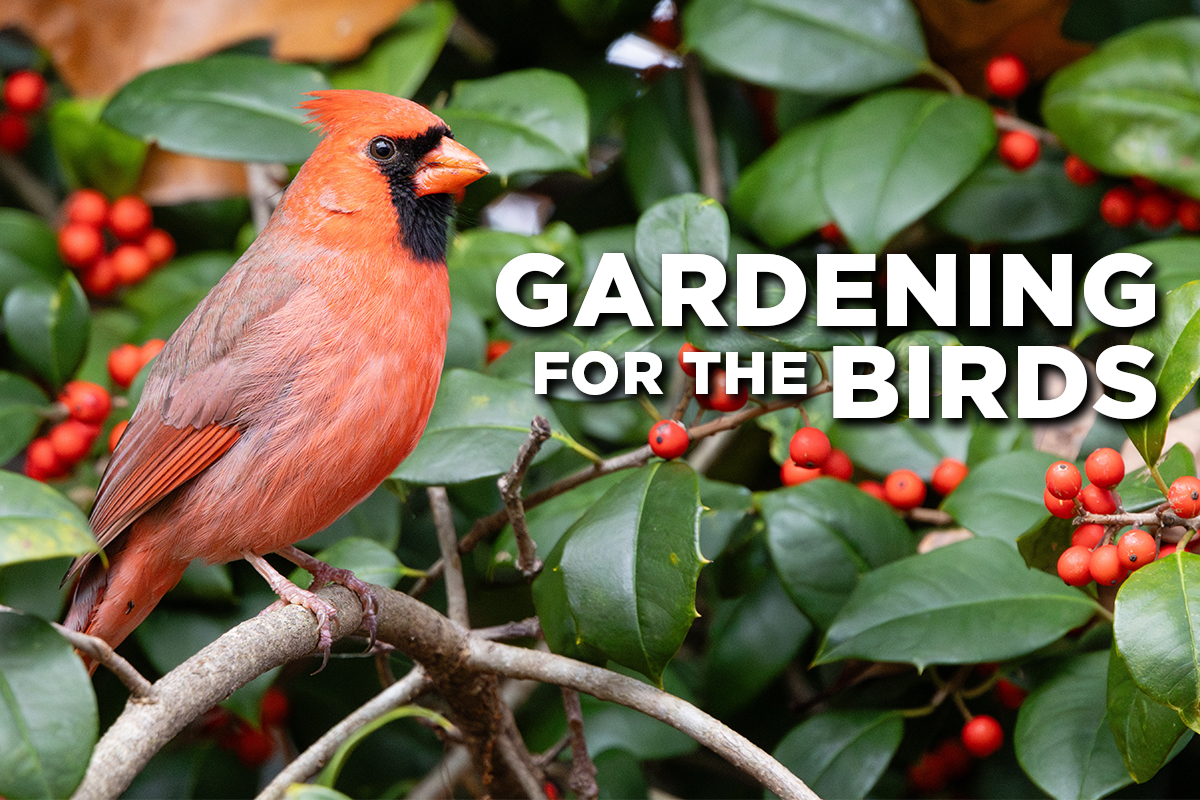
Gardening for the Birds


By Paul James

Birds are, for me, a source of inexhaustible entertainment. Their songs operatic. Their flight patterns acrobatic. Their mere presence calming. 
I’m fortunate to have a yard full of birds who hang out year ‘round, from at least 24 different genera and 31 species at last count. But this week many more will visit, because now is the peak season for migratory birds, and Oklahoma is part of their central flyway en route to northern feeding and nesting grounds. In fact, between 36 and 48 million migratory birds traveled across Oklahoma just yesterday. Seriously.

I live in an older neighborhood with lots of large trees that birds love, but I’ve also created a bird-friendly landscape for both migratory and non-migratory birds by adding plants that provide food, shelter, and nesting sites, the three essentials birds require. And by not using pesticides, which means birds have a steady supply of caterpillars and insects of all kinds. 

So as you continue your spring planting, consider the following plants, all of which in their own way create a haven for birds. It’s a partial list, but it’ll get you off to a good start. All provide at least one of the essentials birds require, and many provide all three.
 
Photo by Larry Lamsa, CC BY 2.0

Trees

Dogwoods Oaks
Cedars Pines
Crabapples Tupelo
Junipers  
 
A single clutch of four to six Carolina Chickadee chicks will gobble up more than 9,000 caterpillars in the 16 days between hatching and leaving the nest.
 
Photo by Tom Koerner, CC BY 2.0

Shrubs

Chokeberry Rose of Sharon
Elderberry Serviceberry
Holly Viburnum
Lilac Weigela
Ninebark  
 
Photo by Todd Petit, CC BY 2.0

Vines

Clematis Trumpet Vine
Honeysuckle Virginia Creeper
 
Outdoor cats kill roughly 2.4 billion birds a year, which is reason enough to keep them indoors.
 
Photo by Brian Plunkett, CC BY 2.0

Perennials

Asters Milkweed
Black-Eyed Susan Native Bluestem
Coneflowers Solomon’s Seal
Gaillardia Sunflowers
Goldenrod Switchgrass
Liatris  
 
Consider fruits as well such as raspberries, blackberries, and blueberries. Use nets to cover what you want to harvest, but leave a portion of the plants exposed for the birds.

And to make your landscape even more inviting, do these things.
  • Set out feeders, houses, and nesting boxes.
  • Provide a source of water.
  • Choose plants that produce fruits and seeds, and avoid deadheading.
  • Plant conifers to provide year ‘round cover and nesting sites.
  • Create cascading layers in the landscape with large trees followed by understory trees, then shrubs, perennials, and groundcovers.
  • Reduce pesticide use.
  • And keep cats indoors!
 
Brown Thrashers mimic other bird songs much like mockingbirds, but they have a more extensive repertoire, with over 2,000 tunes in their catalog.
 
Let Southwood Design Studio light your path to a landscape you’ll love coming home to.

If you’ve been in the store recently, you may have noticed the new shade garden designed and installed by our expert team in our Southwood Design Studio. Not only does it enhance the beauty of the store (which was already gorgeous), it demonstrates exactly the attention to detail we can bring to your landscape.

Our team specializes in transforming everyday yards into extraordinary spaces with structure, color, and even lighting and hardscaping. Every single plant is carefully considered to not only maximize visual impact, but also ensure that each specimen thrives in our Oklahoma weather.

Let your vision take root with Southwood Design Studio – “Love Coming Home”
Learn More
 

Great Bird App

Expand your knowledge of backyard birds with free apps for iPhone and Android. One of the best is Merlin Bird ID from Cornell Lab. It’s powered by ebird, the world’s largest database of bird sightings, sounds, and photos.
 
The number of birds in the United States has declined by nearly 30% in the last 50 years. That’s a startling statistic, for sure, and contributing factors include habitat loss and pesticide use.
 

Coming Next Week — Lavender

In celebration of our Lavender Festival (May 30-31), next week I’ll focus on this beautiful and aromatic perennial, from planting tricks to selection tips. 

Tip of the Week
A patch of bare dirt somewhere in your lawn or garden will encourage birds to use it as a dust bath, which is crucial to feather maintenance.

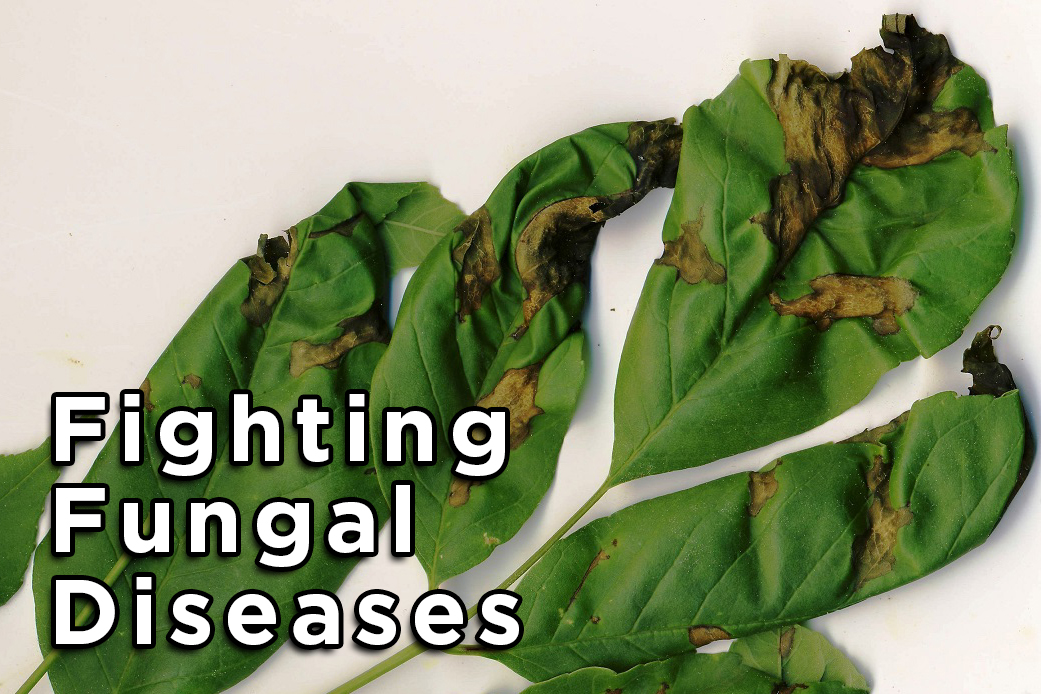
Fighting Fungal Diseases

By Paul James

Anthracnose. Black spot. Rust. Downy and powdery mildew. Those are just a few of the fungal diseases that can ravage plants. But there are thousands more. Dealing with them can be a drag. Not dealing with them can be disastrous. Here’s what you need to know.

Fortunately, not all plants are prone to fungal invasion. But many popular plants – Coreopsis, crabapples, lilacs, Photinia, roses, and tomatoes, just to name a few — are highly susceptible, especially when spring weather is cool and wet, or humidity is high in summer. However, there are things you can do to minimize the likelihood of attack regardless of weather conditions.
 

Maintain Good Soil Fertility

Plants grown in healthy soil enriched with composted products (including those that contain Mycorrhizae, a good fungus) are less likely to be attacked by nasty fungal pathogens.
 
Human feet are home to nearly 200 types of fungi, especially on the heel (80 types found), between the toes (40 types), and beneath toenails (60 types).
 

Choose Plants with Proven Disease Resistance

Plant breeders are constantly working to develop new varieties that are resistant to common fungal diseases. The information is typically found on the plant tag. Most new varieties of crabapples, for example, are far more resistant to mildew.
 

Water Wisely

Overhead watering encourages fungal diseases, especially if leaf surfaces remain moist overnight. So try to water early in the morning, and water the base of plants rather than the leaves.
 

Mulch

Numerous fungal spores reside in the soil -- some good, some bad. And when it rains or when you water, those spores can splash onto leaf surfaces. But a layer of mulch can go a long way toward preventing that.
 
Yartsa Gunbu, also known as caterpillar fungus, is a parasitic fungus that grows on the larvae of ghost moths. It’s used in China for its alleged medicinal properties and fetches up to $50,000 per pound.
 
Let Southwood Design Studio light your path to a landscape you'll love coming home to.

If you've been in the store recently, you may have noticed the new shade garden designed and installed by our expert team in our Southwood Design Studio. Not only does it enhance the beauty of the store (which was already gorgeous), it demonstrates exactly the attention to detail we can bring to your landscape.

Our team specializes in transforming everyday yards into extraordinary spaces with structure, color, and even lighting and hardscaping. Every single plant is carefully considered to not only maximize visual impact, but also ensure that each specimen thrives in our Oklahoma weather.

Let your vision take root with Southwood Design Studio - "Love Coming Home"
Learn More
 

Improve Air Circulation

Avoid overcrowding plants so that air can flow around and through them. Stagnant air creates a breeding ground for fungi. Consider pruning the interior of plants to increase air flow within them.
 

Prune Infected Areas

At the first sign of disease, prune infected areas and dispose of the debris. Cut back to healthy tissue, sterilizing your pruners between each cut with a common household disinfectant. I use wipes containing bleach, or a solution of 10% bleach with water.
 

Signs of Fungi

Signs of fungal disease include rust on leaves or stems, white or powdery mold, black spots, yellowing of leaves, curling or wilting leaves, dieback -- basically anything that looks out of the ordinary. Many of those same symptoms can be caused by bacterial or viral diseases as well, but fungal diseases are far more common.
 
Schizophyllum commune is a common fungus found all over the world. What’s really weird, though, is that it has more than 28,000 different sexes. Go ahead. Look it up.
 

When to Treat Plants

Even if you do all those things, your plants may still succumb to fungal diseases. Enter fungicides, which can be either organic or synthetic. Organic products such as Ferti-Lome’s Fungicide 5 contain a bacterium that won’t harm honey bees or beneficial insects. Two other organic options are Horticultural oil and Neem oil. And in addition to being very effective fungicides, both also control various insects that prey on plants and are often responsible for the spread of fungal diseases. Spray early in the morning or late in the day when bees are less active.

Copper, sulfur, and zinc are also key ingredients in a number of fungicides, and they’ve been used for decades to control some of the worst pathogens. Keep in mind, however, that copper and zinc can be toxic to plants, so follow the label instructions to the letter. Bonide’s Fung-onil is an effective, broad-spectrum fungicide that controls a variety of fungi. There are also systemic fungicides, which are absorbed by the plant and provide lasting treatment.

Apply fungicides weekly once foliage begins to emerge as a preventive, or begin spraying at the first sign of infection.
 
Shop Fungicides
 
Although 85% of plant diseases are caused by fungi, not all fungi are bad. Certain soil-dwelling fungi aid in nutrient uptake, facilitate decomposition of organic matter, and produce yummy mushrooms.
 

Coming Next Week -- Gardening for Birds

Oklahoma is part of the central flyway for birds migrating north, and now is their peak migration time. To welcome them -- as well as non-migratory birds who hang out here year ‘round -- why not add bird-friendly plants to your landscape?
Tip of the Week
Removing the lower 10” or so of tomato branches will make it tougher for fungal spores to splash onto leaf surfaces.


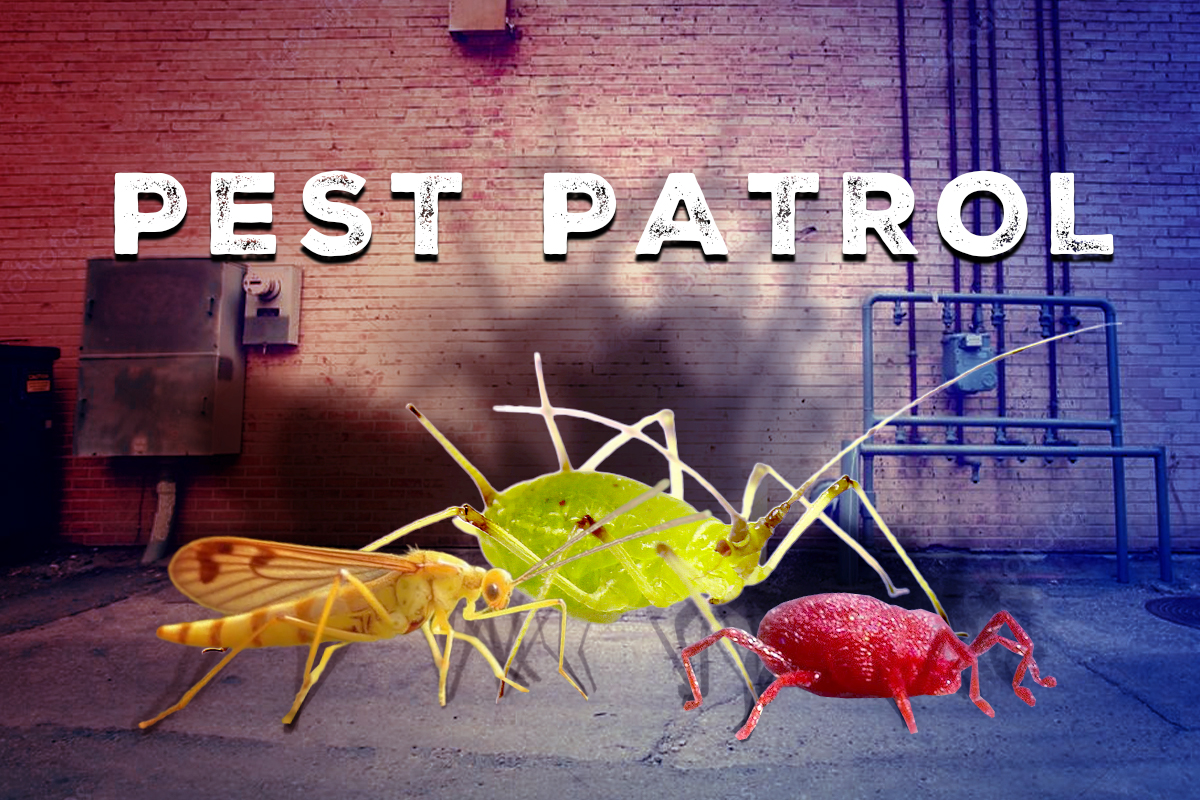
Pest Patrol


By Paul James

I saw my first red spider mite the other day, which means thousands more are on the way. It also means aphids are likely lurking about, as well as a host of other pesky insect pests. Spider mites and aphids are known as soft-bodied insects, a group that also includes scales, thrips, leaf-hoppers, mealybugs, whiteflies, and caterpillars and are the focus of this post. All are potentially destructive, and their rapid reproductive rates make controlling them especially difficult.

However, I’m not going to overreact, because the emergence of pests is as predictable as cilantro bolting in spring (which mine is doing right now). But I will remain vigilant.
 

Be on the Lookout

Your first defense against harmful insect pests and diseases is careful observation. That means inspecting your plants at least every other day. Look for damage in the form of chewed leaves or those with “shotgun” holes, both of which are signs of insect damage, as well as a sticky substance on leaves. You may or may not actually see the critter in question, but a quick look at the underside of leaves may reveal egg masses. Yellowing, browning, and curling of leaves or a powdery substance may suggest either insect or disease problems. Sometimes the two occur in tandem because insects act as vectors or carriers of various diseases.
 
A female aphid can give birth to several daughters every day, without mating. It is calculated that under optimal conditions a single aphid can produce 600 billion descendants in a single year!
 

Think Twice Before Spraying

The worst thing you can do in response to seeing insect pest damage is to spray or dust every plant in sight. That may eradicate the pest, but it may also destroy any beneficial insects that are present. Instead, try to target the pest with a product specifically designed to control it. Here are some of the most effective.
Horticultural Oil
This is an all-natural go-to treatment for controlling soft-bodied insects and it serves as a decent fungicide. It suffocates rather than poisons insect pests, but it must be sprayed directly on the culprit to be effective.
Insecticidal Soap
Another great control for soft-bodied insects, insecticidal soap is highly effective when sprayed directly on pests. It’s been around for years, and no insect has ever developed resistance to it. However, it’s not very effective at controlling caterpillars, and it shouldn’t be used when temps are in the 90s.  
 
A soil scientist on vacation in the Caribbean spotted a bacterium growing on the floor of an abandoned rum distillery. He went back home with a sample, cultured it, and identified it as what would become spinosad. Cheers!
 
Bt
Bacillus thuringiensis is a soil-dwelling bacterium found throughout the world. It targets and controls caterpillars and only caterpillars, and is safe to use around people and pets. So when caterpillars attack your cabbage or petunias or whatever, reach for Bt. It’s also a good preventive control for bagworms, which are on the prowl right about now. 
Neem
Neem is a botanical insecticide that’s made from the tropical Neem tree. Its active ingredient, azadirachtin, is a powerful organic molecule that is most often blended in oil. It controls a number of soft-bodied insect pests and fungal diseases, much like horticultural oil. But it also controls beetles.
Spinosad
For broad-spectrum control of a number of tough to control insects, reach for Spinosad. It’s both a stomach and nerve poison, which makes it doubly effective. I use products containing spinosad more than any other pesticide. Another benefit: once it dries, it doesn’t endanger beneficial insects.
Systemics
Systemic pesticides are synthetic formulations that are typically applied as soil drenches. The active ingredients are taken up through the vascular systems of plants and can remain effective for months. Their risk to beneficial insects is minimal because most beneficials eat insects rather than plants, although the jury is still out regarding their impact on bees.
 
Shop Pesticides
 

Best Times to Spray

To avoid harming bees in particular, it’s best to spray early in the morning or late in the evening when bees aren’t especially active. Avoid spraying on windy days to reduce the chance of “drift,” and don’t spray during the hottest part of the day.
 
The most popular insecticide used by farmers in the 1930s contained arsenic to which a bit of lead was added. Yikes!
 

Read the Label!

Even something as natural as insecticidal soap shouldn’t be applied under certain conditions or to certain plants. So before applying any of the products described above, read the label carefully to avoid damage to plant tissue and reduce the risk of harming beneficial insects.
 

Coming Next Week -- Plant Disease

This week, insect pests. Next week, diseases, which are often more difficult to both diagnose and control. But once again the key is early identification and rapid response.
 
Tip of the Week

Home remedies for controlling insects and diseases found online may be tempting, but most of the claims made are bogus, while others may actually harm plants.

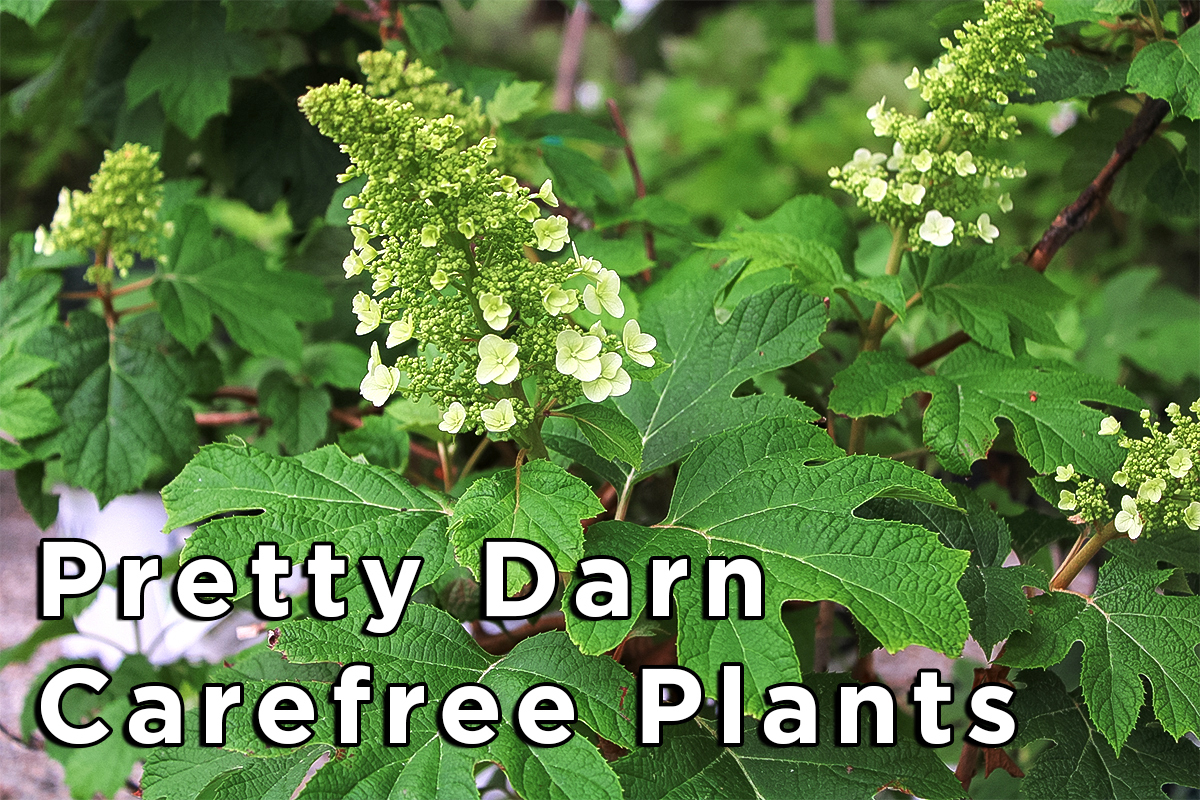
Pretty Darn Carefree Plants


By Paul James

Not everyone fancies themselves a hardcore gardener. I get that. A lot of folks simply want a nice looking landscape but don’t want to spend hours on end taking care of it. That’s why I came up with this list of what I call Pretty Darn Carefree Plants. These are plants that require little care or maintenance, will tolerate most types of soil, are bothered by few if any pests and diseases, and, as if all that weren’t enough, are beautiful to boot.

But let me be clear: There’s not a plant on the planet that you can just stick in the ground and ignore. All plants must be watered the first year so that they become established, meaning they develop a good root system that’s able to support the plant. Beyond that initial period however, nearly all of the plants that follow will do fine with only occasional watering or fertilization.

And keep in mind that this is only a partial list. I could have included at least a dozen more, but these are among my favorite tried-and-true selections, and they’ll get you off to a great start.
 

Deciduous and Evergreen Trees

Chinese Pistache, Shumard Oak, and Tupelo are three of the toughest, most adaptable deciduous trees you can plant in this area, and all three offer great fall color. Fact is, you can’t go wrong with any of them. Just make sure to plant them in full sun. 

Among conifers and evergreens, Spartan and Taylor Junipers, as well as our native Yaupon Holly are great choices as well. They too need a sunny spot, although Yaupon Holly will do fine with a few hours of afternoon shade.
 
The berries of wax myrtles -- also known as southern bayberry -- are used to make bayberry candles.
 
Southwood Design Studio: Love Coming Home
Details matter-every shovel, every plant, every stone placed with purpose - our installation crew transforms your yard into a living work of art. Let your vision take root with Southwood Design Studio:
https://southwoodgardencenter.com/landscaping/
 

Shrubs

Unless otherwise noted, the following shrubs need at least six hours of sun, but can handle a few hours of afternoon shade.

Abelia is a great group of shrubs represented by several excellent, carefree candidates, many of which are evergreen and all of which flower. Give them full sun, and they’ll give you years of delight. Think of them as azaleas for the sun.

Boxwood has been a mainstay in the gardening world for decades because it’s so easy to grow and maintenance free. Few evergreens are as dependably carefree. Prune only in spring (if at all) to avoid winter damage.

Vitex or Chaste Tree (which I would describe as a large shrub, although dwarf forms are available) is the greatest pollinator magnet ever, and bumblebees in particular absolutely love it. Plant in full sun and simply enjoy for years to come. 

Nandina used to get a bad rap because the species that was so commonly planted years ago tends to get gangly with age. Not so with the many new – and colorful -- introductions, all of which are evergreen. 

Noble Privet is a great narrow, upright evergreen that’s undemanding and can be sheared to maintain a preferred size and shape. Clusters of white flowers in spring are a bonus.

Spirea is another great group of shrubs. They’re deciduous, but they’re tough as nails and beautiful. And the variety of leaf colors is awesome.
 
Rose of Sharon is a snap to grow, it’s tough, and its flowers – which are available in several colors – last and last. 

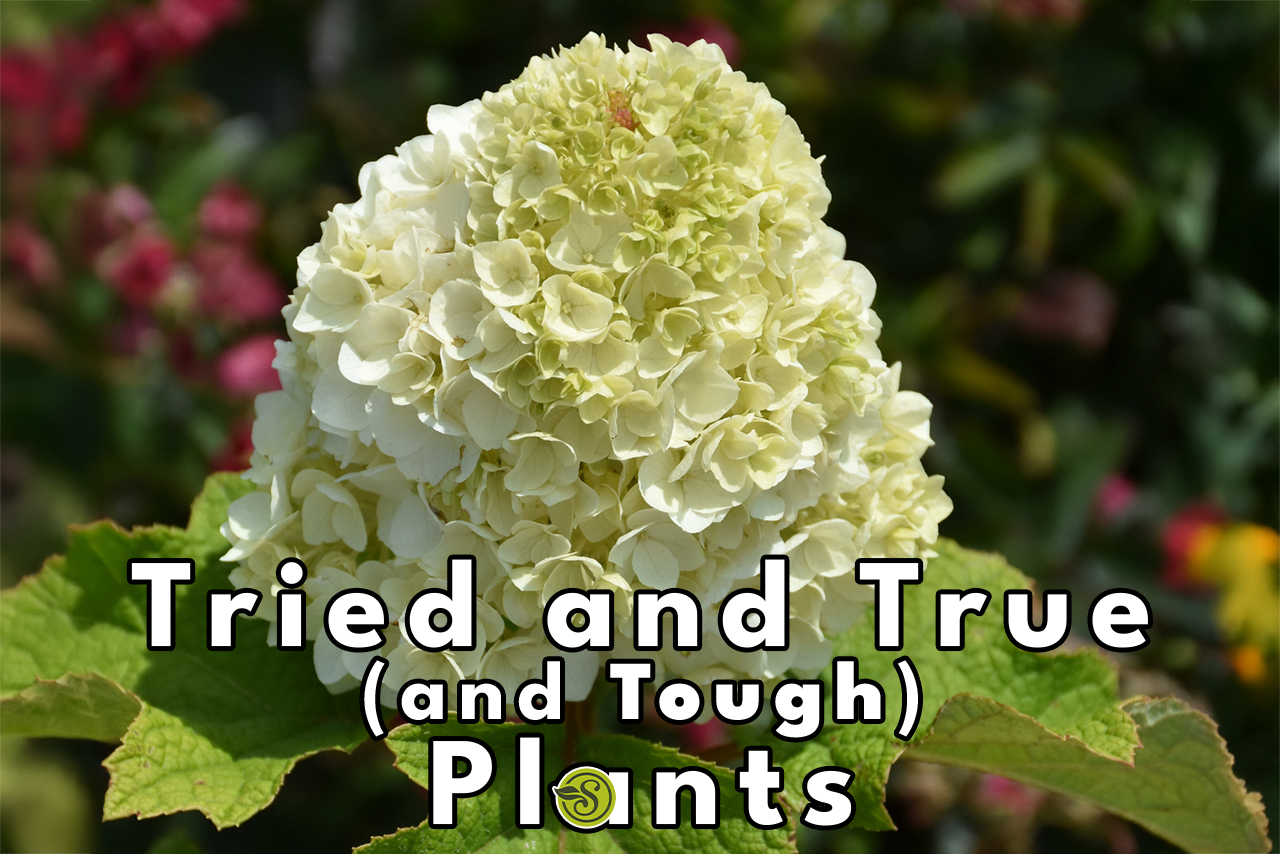
Oak Leaf Hydrangea is a must for any garden. Whereas other types of hydrangeas can be a bit finicky, this one will grow in part sun or shade and bloom prolifically. Flowers are stunning.

Wax Myrtle is a great but not-so-well known evergreen shrub. It’s fast growing (at least 3’ a year), making it ideal for a quick hedge, and it’s very drought tolerant. Birds love the berries!

Yucca loves the sun and heat, and once established it requires next to nothing in the way of care. In fact, it’s so tough it’s tough to kill! The foliage – both solid green to blue green as well as variegated, gives way to striking flowers atop long stalks.
 
Chaste tree is so named because ancient Greeks thought its leaves were an anaphrodisiac, meaning they could calm sexual passion.
 

Perennials

There are dozens and dozens of carefree perennials, but these top my list for ease of care, making them ideal for new gardeners, and most are great for attracting pollinators. Best grown in full sun unless otherwise noted.
Agastaches
*Astilbes
*Autumn Ferns
Black-Eyed Susans
Butterfly Weeds
Coneflowers
Creeping Phlox
Daylilies
Gaillardia
Gauras
*Heucheras
Monarda
Ornamental Grasses
Penstemons
Salvias
Sedums
Yarrows
*Needs shade.
 

Groundcovers

Yes, groundcovers spread, but that’s the point. They cover the ground and create a low-maintenance (and weed-suppressing) living mulch.
 
Ajuga
With its waxy leaves and blue or pink flowers, this baby will thrive even in deep shade. Think of it as a blooming carpet.

Angelina is a gorgeous sedum with golden-green foliage. It’s super easy to grow, and thrives in dry, sunny spots.

Liriope and Mondo are excellent for covering large, shady areas. Their grasslike foliage is evergreen, and Liriope produces beautiful flowers in late summer. It does have a tendency to spread, whereas Mondo is well-behaved. 

Pachysandra is a dynamite, evergreen, deer-resistant ground cover that forms a thick mat. Perfect for mass planting beneath large, mature trees.

Vinca Minor
This hardy form of Vinca is a trailing evergreen with glossy foliage and beautiful, dainty blue flowers. Grows best in shade or dappled light.
 
Yucca and yuca aren’t the same plant. Yucca is a popular plant for dry spots, but yuca is a cultivated cassava, the root of which makes incredible fries.

Tip Of The Week
Remove the first three or four clusters of flowers from young tomato plants to direct energy back into root formation. 
Store Hours
Mon-Fri: 9am – 7pm
Sat: 8am – 6pm
Sun: 10am – 5pm
Facebook
Link
Website
Email
 
Copyright © 2025 Southwood Landscape & Garden Center, All rights reserved.
https://www.southwoodgardencenter.com

Our mailing address is:
9025 South Lewis Avenue Tulsa, OK 74137

Want to change how you receive these emails?
You can update your preferences or unsubscribe from this list.

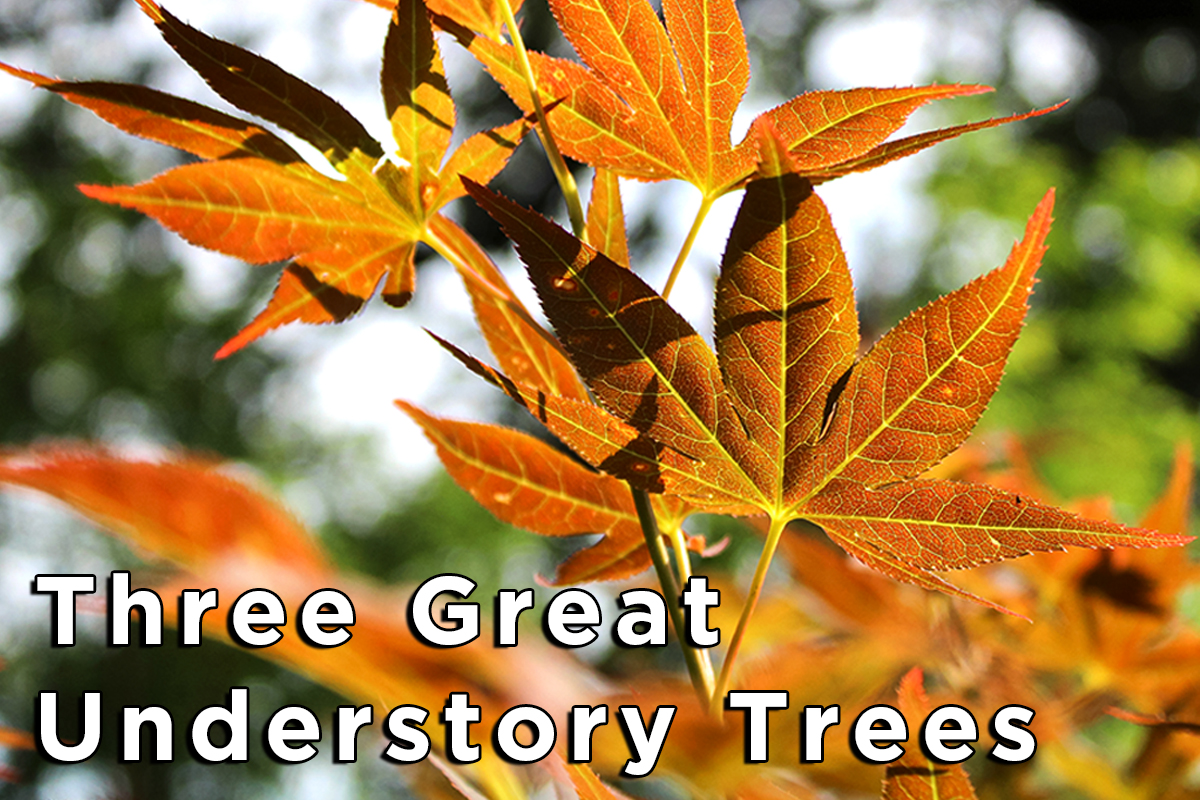
Three Great Understory Trees


By Paul James

So named because they thrive in the dappled light under much larger trees, understory trees -- redbuds, dogwoods, and Japanese maples -- play an important role in the landscape. Redbuds and dogwoods provide spectacular blooms, while Japanese maples offer striking leaf colors and shapes.

Best of all, all three grow well in our neck of the woods, requiring very little care. And within the world of trees, they don’t get very large (15 to 30 feet tall, although Japanese maples are available in dwarf varieties), making them ideal for small gardens, even courtyards.
 
“The House of The Rising Sun” was made famous in 1964 by the British rock group The Animals. Its authorship is uncertain.
 

Redbuds

Although the brilliant spring flowers that upright and weeping redbuds are famous for have largely faded away, the foliage of some varieties is just beginning to shine. That’s especially true of ‘The Rising Sun’ and ‘Flame Thrower’, whose extraordinary leaf colors will shatter any preconceptions you might have about redbuds. And both provide a dynamic and ever-changing mix of colors from spring to fall. But all redbuds are worth considering for your landscape.
 
Redbuds and most common species of dogwood are native. Japanese maples obviously are not, although they are extremely well adapted to our climate.
 

Dogwoods

The native species of these beauties are showing their stuff right now, and the effect created by their flowers, whether white or pink, is often jaw-dropping. Soon to follow in flower are the Asian species, which produce large fruits that birds gobble up like candy. If you like dogwoods -- and honestly, who doesn’t? --  I suggest you plant both types to extend the bloom period. And though often overlooked for their fall foliage, it’s beautiful too.
 
Southwood Design Studio: Love Coming Home
Our landscape department brought new life to this Owasso Estate through a full landscape redesign, strategic lighting plan, and professional installation. Sweeping beds now showcase over 5,000 daffodil bulbs, creating a vibrant seasonal display that welcomes guests from the moment they arrive. Carefully placed lighting accentuates the home's character while ensuring safety and ambiance after sunset. Together, these updates create a seamless transition from daytime charm to evening sophistication. Book your pre-project meeting today!
https://southwoodgardencenter.com/landscaping/
 

Japanese Maples

I’ve written lengthy posts about Japanese maples in the past because I think they’re among the most beautiful trees on the planet. They offer immense variety in terms of leaf shape (palmate or dissected), growth habit (upright or weeping), and leaf color (primarily red or green, but available in other colors, and even variegated). And the range of sizes is considerable, from dwarfs that do well in pots to upright forms that may reach 35 feet or more.
 
The “flowers” of dogwoods are actually bracts (modified leaves), as are poinsettia flowers. The actual flowers of both are in the center of the bracts. 
 

Don’t Forget Understory Shrubs

Aronia (Chokeberry), Aucubas, Azaleas, Hydrangeas, Itea (Sweetspire), Serviceberry, Viburnums, and Yews thrive in the understory environment. In fact, though often sold as plants for shade they’ll likely flower more when exposed to either a few hours of morning light or dappled light throughout the day.

And among dogwoods, there are several shrub forms available, including the standout known as ‘Garden Glow’. Its chartreusezy-yellow leaves are gorgeous, and its dainty white flowers are a bonus.
 
Technically, ‘The Rising Sun’ redbud is known as ‘NC2006-14’, while ‘Flame Thrower’ is ‘NC2016-2’. Just thought you’d like to know. 
 

Coming Next Week -- Putting Plants in Pots

Plants in pots solve problems. Period. Whether it’s framing the entrance to your home with upright evergreens or flowering shrubs, adding color and texture to your patio or pool with annuals and tropicals, creating a focal point in your garden, or simply growing vegetables and herbs, containers are key.
 
 
Discover all of our specials online! 🖱️
 
Tip Of The Week

Do you need to stake a newly planted tree? Generally not, although if you decide to do so, make sure you remove the stakes after the first year. 

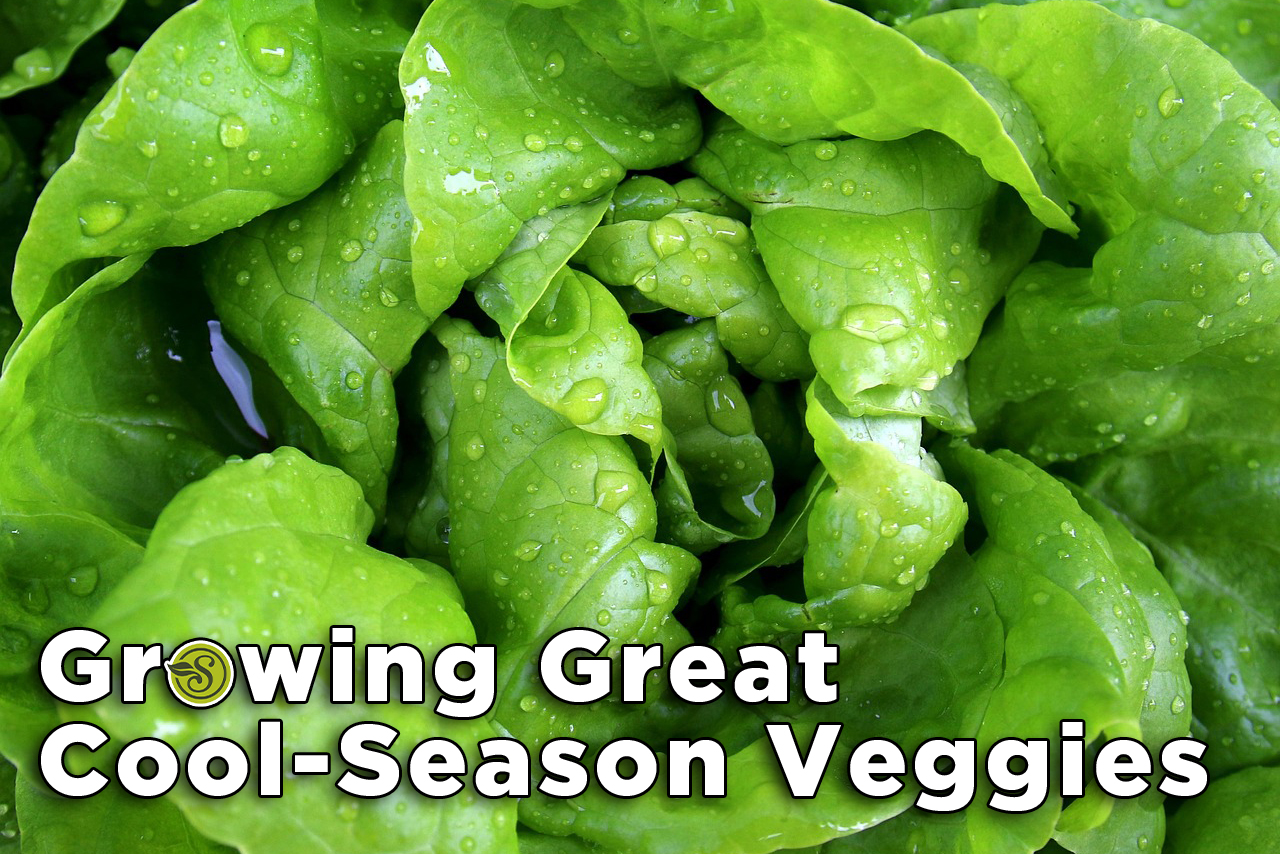
Growing Great Cool-Season Veggies


By Paul James

It’s time to plant cool-season veggies, so named because they germinate and grow best in cool weather. Last week I focused on asparagus, onions, and potatoes, and this week it’s all about leafy greens (arugula, lettuce, spinach, etc.) and root crops (beets, carrots, radishes, etc.), plus the cruciferous trifecta -- broccoli, cabbage, and cauliflower. 
 

Seeds or Transplants?

Folks new to gardening can be intimidated by the thought of planting from seeds, and admittedly, the process is more complicated and requires more patience. You sow the seeds, wait for them to germinate, thin the seedlings as they emerge, and water judiciously along the way. But with transplants, you simply plop them in the ground and water them now and then. The process is much simpler, and the gratification is immediate.
 
The largest seed in the plant kingdom is the coco-de-mer, a type of coconut. A typical seed can be over a foot long, three-feet around, and weigh up to 40 pounds.
 

Which is Better?

Fact is, neither method is necessarily better, but for a variety of reasons I prefer to grow primarily from seed, and choice is one of them. Take lettuce, for example, something I grow a lot of. I can choose from several different types of lettuce in the form of seeds — looseleaf, butterhead, romaine, heirloom, and so on. And I can find dozens of varieties of each type with different colors and characteristics — green, red, speckled, dwarf, and so on. But only two or three types of lettuce transplants are ordinarily available, and they’re usually pretty ordinary.
Price is another consideration. A packet of lettuce seed that sells for $2.99 may contain as many as 500 seeds, and I can make successive sowings of those seeds over a period of several weeks. A single lettuce transplant can easily cost just as much (or more), and once you’ve harvested the leaves, that’s pretty much it.
Another issue — transplant shock, which is the failure of plants to root well. When you direct sow seeds in the garden, the plants root out and grow in the same spot, developing strong roots from beginning to end with no disturbance. Transplants, on the other hand, are raised and nurtured in a climate-controlled greenhouse, then thrust into a new environment (your garden), and such an abrupt transition can (and often does) result in transplant shock, which affects plant health and survivability.
So what can you plant now from seed or transplants? Here’s a list.


Plant Now from Seed (Unless Otherwise Noted):
**Asparagus Lettuce
Beets Mustard
*Broccoli */**Onions
*Brussel Sprouts Peas
*Cabbage **Potatoes
Carrots Radishes
*Cauliflower **Rhubarb
Chard Spinach
Kale Turnips
Kholrabi  
*From transplants
**From roots, tubers, or sets
This is far from a complete list, particularly with regard to leafy Asian greens such as bok choy, tatsoi, and mizuna.
 
The smallest seeds belong to orchids, which can be smaller than a speck of dust. A single seed capsule may contain as many as four million seeds!
 
Southwood Design Studio: Love Coming Home
Transform your outdoor space into a peaceful retreat with our expert landscape design and installation team. This custom stone pathway, surrounded by lush shade-loving plants, invites you to slow down and enjoy your surroundings. Whether it's a quiet bench under a tree or complete backyard renovation, our team brings your vision to life with attention to detail and long-lasting quality. Ready to elevate your landscape?
https://southwoodgardencenter.com/landscaping/
 

What NOT to Plant

Do not, under any circumstances, plant warm-season veggies — beans, corn, cucumbers, eggplant, melons, okra, peppers, squash, and tomatoes this early in the season -- because they simply will not survive temps in the low 40s (without protection). But more importantly, soil temperatures are way too cold and their seeds will quickly rot in the ground. Better to wait until early to mid April, or until overnight temps hover around 60 degrees. 
 

Our Seed Selections

Our seed selection is about as good as it gets, with outstanding selections from Renee’s Garden, Botanical Interest, Cornucopia and more, many of which are non-GMO and organic. If it grows here -- whether flowers, vegetables, or herbs -- chances are we’ve got it. 
Shop Seeds
 
The hard seeds of our native raspberries and blackberries need to be abraded in a bird’s gizzard or eroded by digestive acids before water and air can enter the seed and germination can begin.
 

Seed Packet Info

There’s a wealth of information on the back of seed packets, including critical details such as planting depth and recommended spacing between plants, as well as useful info on when to plant, how long it should take the seeds to germinate, and when you should expect to harvest. Most also include growing notes and harvest tips and some even have recipes. So save those seed packets!
 

Coming Next Week -- Strawberry Yields Forever

To coincide with next weekend's Strawberry Festival, I’ll give you tips and tricks on how to grow this delicious fruit and reap harvests for years. 
 
 
Discover all of our specials online! 🖱️
 
Tip Of The Week

If your soil is hard-packed or otherwise less than ideal, add compost or bagged soil amendments prior to planting.

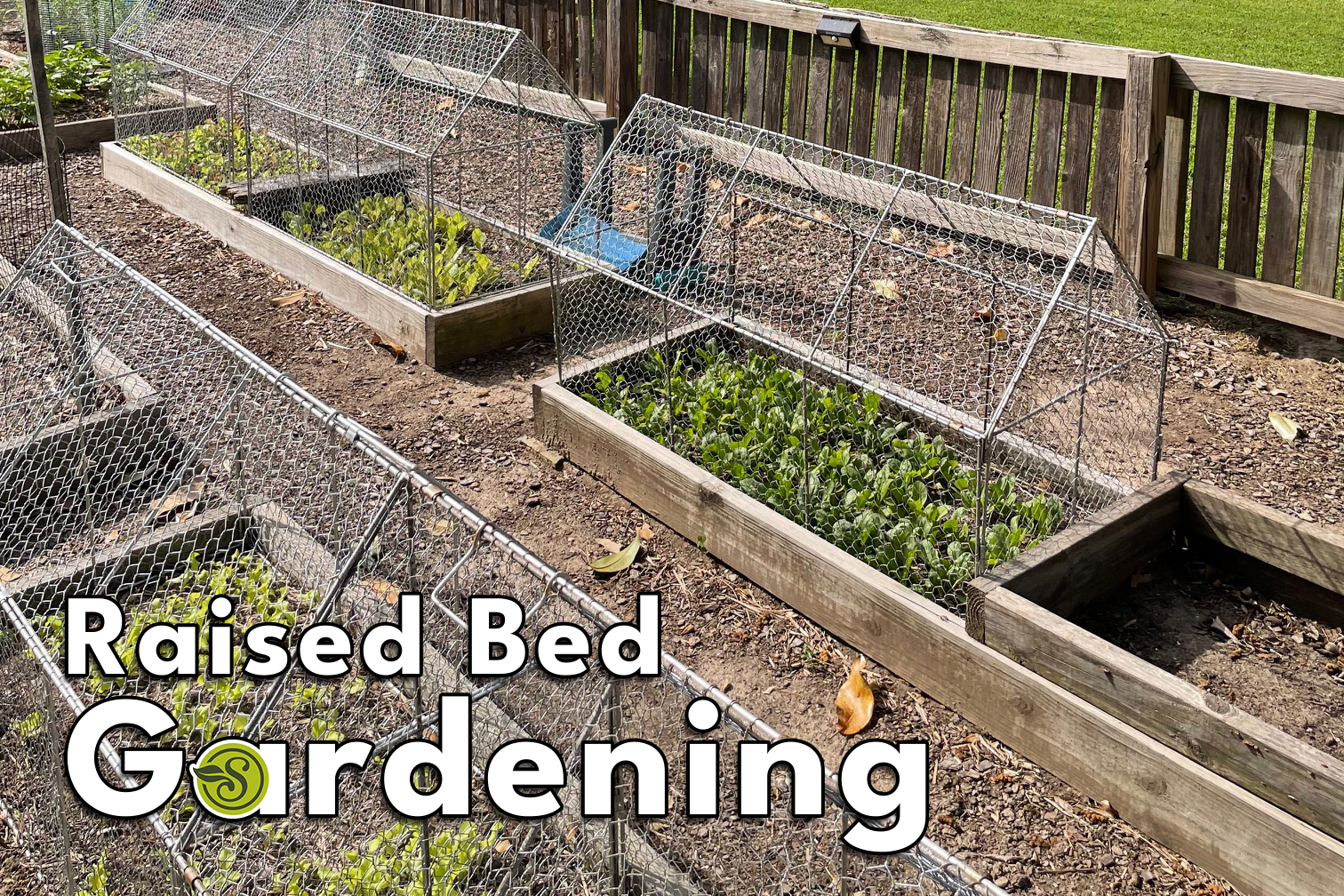
The Wonders of Raised Beds


By Paul James

Do any of the following describe your soil?
 
⏹️ Too much clay
⏹️ Too much sand
⏹️ Full of rocks
⏹️ Full of weeds
⏹️ Compacted
⏹️ Drains poorly
⏹️ Prone to erosion
 
Even if you only checked one box, you should strongly consider growing in raised beds, a simple yet highly effective way of growing plants within a framed bed that has numerous advantages.
 

Warmer Soil in Spring and Fall

Raised beds warm up much faster in spring and remain warmer longer in the fall. As a result you can get a jump start on planting in the spring and extend the growing season in the fall.
 

Improved Drainage

Raised beds filled with loose, fluffy soil (more on that in a moment) naturally drain better, and poor drainage is one of the leading causes of crop failure. 
 
Southwood Design Studio: Love Coming Home
Details matter-We blend artistry with horticultural expertise. Our crews specialize in careful bed preparation, quality planting, and professional finishing touches. Our crews are dedicated to making your landscape shine one detail at a time, transforming your home into a polished and welcoming space.
https://southwoodgardencenter.com/landscaping/
 

Fewer Weeds

Weeds are much easier to manage in raised beds, in part because they can’t creep into the beds from the sides. 
 

No Compaction

Compaction is bad news for plants, because it restricts root growth. But because you never walk on the soil in raised beds, compaction is basically nonexistent.
 

No Erosion

The frames of raised beds contain the soil, which eliminates problems with erosion.
 

Intelligent use of Water

If you water by hand (which I do), you need only water the plants within the beds rather than the paths between, and that saves a lot of water. Plus, you can water only the beds that need it rather than all the beds at once.
 

Aesthetic Appeal

I think raised beds look better, and give the garden a neater, tidier look. That may not be important to you, but it is to me. (Those are my raised beds in the pictures.)
 

Materials

I’ve always used cedar lumber to build my raised beds, but you can also use wooden fence posts, bricks, stone, or cinder blocks. Cedar isn’t cheap, but it’s easy to work with and lasts for ten years or more even when in contact with the ground. Treated wood is my second choice. It’s much cheaper and it’s no longer made with toxic materials. However, it is more likely to warp.
 

What Size is Best?

Three 8’ boards (whether 6”, 8”, or 12” deep) will create a 4’ by 8’ bed, which is a great size for several reasons. You only have to cut one board in half to build the bed, the beds themselves are portable, and it’s easy to reach into the center of the bed from either side. And you can stack the frames to create the depth you prefer.
 

Adding Soil

Filling your beds with a good garden soil plus a mix of soil amendments isn’t exactly cheap, but once it’s done, you need only add a bag or two of additional amendments once a year. You can buy garden soil in bulk or you can purchase it in bags. Bagged products include topsoil, mushroom compost, and cow manure, as well as specialty mixes such as Espoma’s Raised Bed Mix. Combining a few bags of each works great. Fill your beds to within an inch of the top to allow for settling.
 

And Finally…

Make sure you remove any existing turf grass before plopping your raised bed on the ground. And if it’s Bermuda, dig down to a depth of 4” to make sure you get rid of all the roots and rhizomes. Otherwise, you’ll end up with an excellent crop...of grass! If you don’t want to go to the trouble, you can place a few layers of heavy cardboard on the grass before filling the bed with soil. The cardboard will smother the grass and decompose fairly quickly.
 

Ready to Use Raised Beds

There are all kinds of ready to use raised beds on the market these days, made from wood or metal, often with only minor assembly required. Those built on stands are especially great for folks with bad backs or knees or other physical limitations
 

Coming Next Week -- Fruit Trees

Growing fruit at home can be challenging, but the payoff is worth the effort and the results are delicious!
Discover all of our specials online! 🖱️
 
Tip Of The Week

Add mulch to the paths between your raised beds to create a practically weed-free garden.

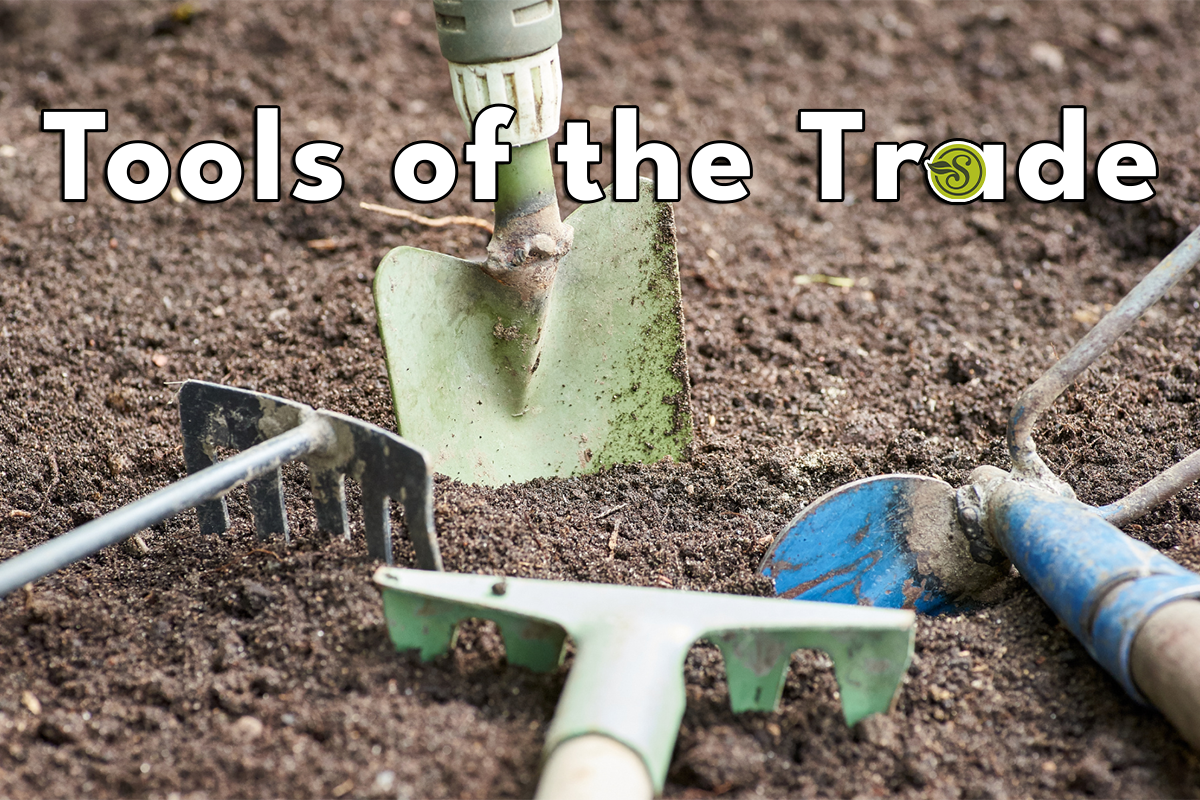
Tool Care Tips

By Paul James

If you were to peek inside my garden shed, you would instantly conclude that I’m a tool fanatic. And you’d be right. If you were to suggest that I’ve got way more garden tools than one gardener needs, you’d be right again. I mean, who needs 12 shovels?!

But here’s the deal -- I haven’t bought a new tool in years, and I’ve got some hand-forged tools from England that I bought over 40 years ago that work as well as the day I bought them. That’s because I take care of everything in my inventory. And you should consider doing the same.
 

Keep Tools Clean…

Tools get dirty, especially shovels and hoes. And if dirt (or worse, mud) is left on metal surfaces, rust -- the dreaded enemy of metal -- will form. So each time you use your tools, scrape off the dirt with a stiff brush, trowel, or scouring pad, then apply a thin layer of oil -- canola, corn, or vegetable -- or spray with a product like WD-40, and rub it in with a rag. You can also just keep an oil-soaked rag handy and use it to rub metal surfaces periodically. 
 
Pruning shears, known as secateurs in France, were developed in the 19th century for pruning grape vines.
 

And Dry…

Pruners and loppers in particular should never be stored when the blades are wet or covered in tree or shrub sap because they too will rust, and they can harbor diseases. Clean them in the manner described above. Use a foaming bathroom cleaner to more easily remove sap, rubbing surfaces with an old toothbrush. Rinse and dry thoroughly.
 

And Sharp…

Putting a fresh edge on the cutting surface of shovels, hoes, and pruning tools makes a world of difference, and it takes just a few minutes using a metal file or any number of sharpening gizmos made specifically for tools. You’ll be amazed at how much better shovels slice through soil when sharp and how easily and cleanly pruning tools cut.
 
One of the oldest gardening tools is the dibber (or dibbler), which is little more than a pointed stick used for stabbing holes in the soil for seeds or seedlings.
 

And Smooth

Over time, wooden handles may begin to dry and develop splinters, but bringing them back to life is simple. Rub the handles well with sandpaper, then apply oil -- Linseed oil, Tung oil, or mineral oil work great -- with a rag, and they’ll last for years to come.
 
Southwood Design Studio: Love Coming Home
From the first impression to the final glow, every detail shines. Designed to impress both day and night, this landscape showcases craftsmanship and creativity at every turn. Custom stonework defines the space, while carefully selected plantings provide color and texture throughout every season. As evening falls, ambient lighting transforms the scene into a stunning display that highlights its best features.
https://southwoodgardencenter.com/landscaping/
 

Getting Rid of Rust

There are plenty of rust-removal products on the market, but plain old white vinegar works great. Just spray or soak metal surfaces in vinegar for up to two hours, then use a toothbrush or nylon cleaning brush to scrub the surfaces clean. Rinse with water, and dry the tool thoroughly before storing.
 
Nunchucks, Bruce Lee’s weapon of choice (and a favorite of Teenage Mutant Ninja Turtles), were originally developed in Okinawa for thrashing grain.
 

Getting Equipment Repaired

Beat the spring rush by having your power equipment serviced now. If you wait another month, you’ll wind up waiting weeks rather than a few days to get your mower or blower back, and by then it’ll be time to mow and blow.
 

Coming Next Week -- Pruning Tips

When and why should you prune what? I’ll answer that question next week, and I’ll focus as well on what NOT to prune.
 
Discover all of our specials online! 🖱️
 
Tip Of The Week

One of the cleverest ways to keep garden tools clean and rust free is to fill a bucket with sand and add some mineral oil. Click here to see how it’s done.
https://theprepared.com/blog/how-to-maintain-garden-tools-with-a-bucket-of-sand-and-oil/

Do Garden Chemicals Go Bad?

By Paul James

Much like the flavors of spices and seasonings in your pantry diminish over time, the effectiveness of garden chemicals can do likewise. But just how long do garden chemicals, whether synthetic or organic, actually remain effective? Or said another way, do they have a finite shelf life? Well, it depends on who you ask and the product in question.

And unfortunately, three of the major manufacturers of garden chemicals have different takes on the subject.

Scotts (which also produces Ortho products) says its products should be used within three years, although granular fertilizers with no additives such as herbicides should keep indefinitely. Chemical giant Bayer claims its products will keep indefinitely. And Bonide, which makes a number of synthetic and organic chemicals, says its liquid products have a shelf life of between three and 10 years.
The Sumerians were the first to use pesticides roughly 4,500 years ago. The main ingredient used was powdered sulfur.
However, the one thing all three companies agree on is that the effectiveness of their products can be greatly affected by how they’re stored. Specifically, they acknowledge that the shelf life will likely be reduced if the chemicals are stored where they’re exposed to extreme temperatures, as in above 90 or below 32 degrees Fahrenheit, or in areas of high humidity. And my guess is that at least one of those conditions probably can be found where you store your chemicals, such as a garden shed or the garage. All three can be found in my shed depending on the time of year.

What’s more, the Big Three generally agree that once opened, the active ingredient in their products may change chemically and begin to break down, thereby decreasing its concentration and effectiveness. The product may also begin to form flakes, crystals, or sludge, making it impossible to mix or use in sprayers. Powders are especially prone to caking.
Early Romans used crushed olive pits to produce an oil called Amurea that was capable of killing a variety of pests.
So what’s a gardener to do? Well, I do believe that granular fertilizers that don’t contain any herbicides should keep indefinitely, although organic fertilizers and soil amendments that contain beneficial fungi such as mycorrhizae should be used shortly after purchase. Most liquid formulations – whether fertilizers or pesticides – should be used within two or three years, especially once they’ve been opened.

That’s why I strongly suggest you check your inventory of lawn and garden chemicals and regularly replace any old products with new ones. And just how do you get rid of unwanted garden chemicals? Well don’t pour them down the drain or throw them in the trash! Instead, take them to the City of Tulsa’s Household Pollutant Disposal Facility. For details, go to:
Household Pollutant Collection Facility
Tulsa residents can drop-off for free by showing a drivers license or City of Tulsa utility bill.

Residents living in Bixby, Broken Arrow, Claremore, Collinsville, Coweta, Glenpool, Jenks, Owasso, Sand Springs, City of Wagoner, and unincorporated Tulsa County can obtain a voucher from the Metropolitan Environmental Trust (918) 584-0584, to drop-off the first 45 lbs. of pollutants free of charge. If the weight is over 45 lbs, there will be a disposal fee of $1.37/lb.. Residents of these communities must obtain a voucher number before dropping off pollutants.
 
Southwood Design Studio: Love Coming Home
Our landscape design and installation team specializes in crafting inviting outdoor spaces for beauty, balance, and lasting appeal. Our experts combine thoughtful plant selection, elegant hardscaping, and seasonal color to create a scene that enhances your home's charm.
https://southwoodgardencenter.com/landscaping/
 

Time to Restock?

We maintain an extensive inventory of organic and synthetic insecticides, fungicides, herbicides, fertilizers and other essential gardening products. So when it comes time to restock your supply, drop by our Solution Center or shop online.
Shop Garden Essentials
 
Chemical names can be long and difficult to pronounce, none more so than a protein called titin, which is 189,819 characters long and takes close to three hours to pronounce.
 
 
Tip Of The Week

Whenever you buy a new lawn or garden chemical, write the purchase date on the container with a permanent marker.

Hard Freeze Alert


Just one week away!
It won't be long before we officially ring in the holiday season with the return of our Holiday Benefit Party! Beyond just a jolly good time, this special evening is dedicated to helping neighbors in need, with proceeds from each ticket sold going to benefit the Tulsa Day Center. Discover our enchanting holiday collection, enjoy tasty treats from Lambrusco'z Deli, unwrap special promotions, and celebrate the season of giving with us by purchasing your tickets at tinyurl.com/swparty25
 

By Paul James

Checked the weather lately? If so, then you know a hard freeze is in the forecast for Monday morning. The question is, Should you be worried?
The answer is, no. Freezes, even hard freezes this time of year are no big deal, at least so far as the vast majority of landscape plants are concerned -- more on that in a moment. But first, what’s the difference between a frost and a freeze, and which plants are most affected? Glad you asked.
 

Frosts

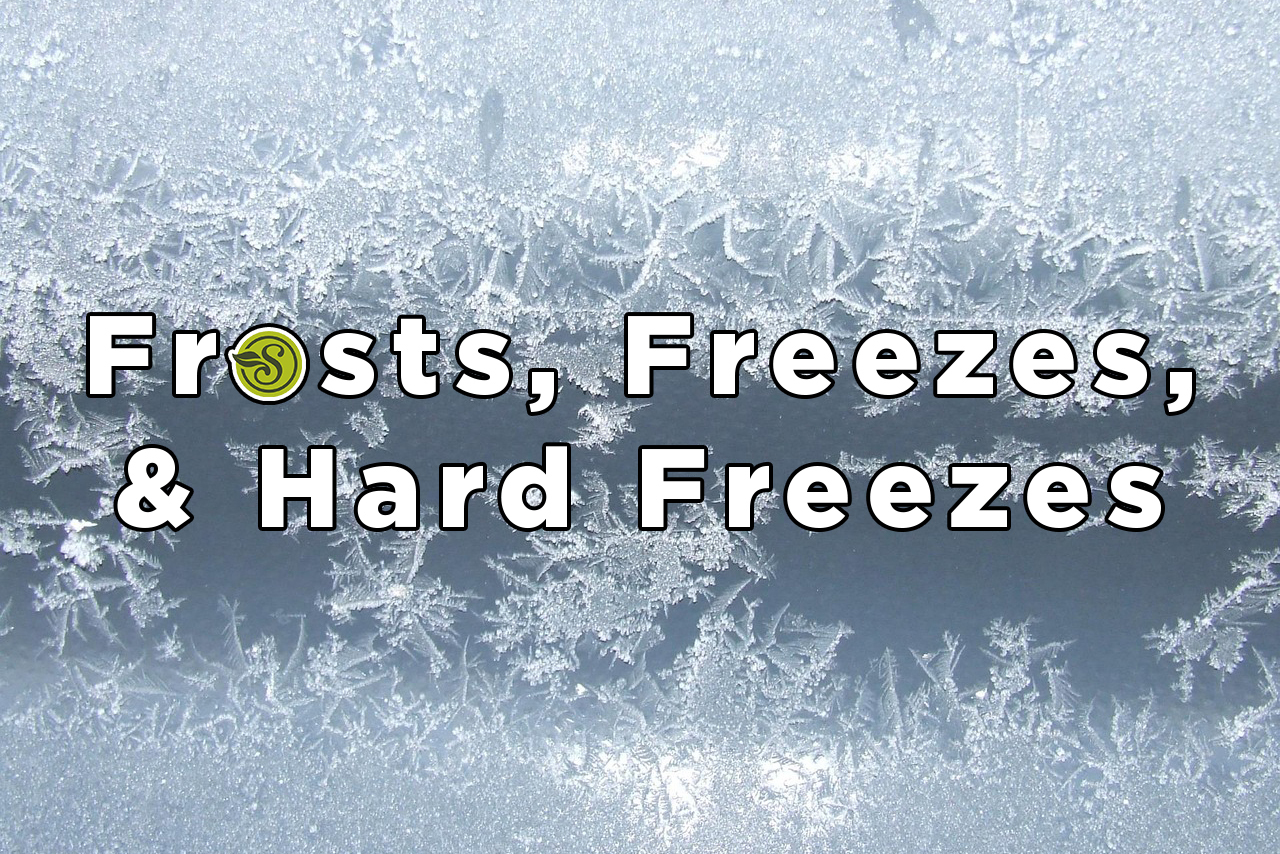
Frost forms as a layer of ice crystals on plant surfaces, and can actually occur when temperatures are between 32 and 42 degrees, depending on the dew point. Frost most often forms at or near ground level, and when it lasts longer than a few hours, it can cause the water inside plants to freeze, which can lead to cell and tissue damage in tender plants.
 
Wind chill temperatures have no effect on plants. Only actual air temperatures do.
 

Freezes

A freeze occurs when temperatures are at or below 32 degrees, often several feet above ground level. A light freeze ranges between 29 and 32 degrees, and can cause even more damage depending on how long it lasts.
 

Hard Freeze

A hard freeze occurs when temperatures drop to or below 28 degrees for at least four hours. In some circles it’s also known as a killing freeze, especially when temps fall below 25 degrees. Regardless of what you call it, a hard freeze can kill certain plants. 
 
The average fall date for a hard freeze in Tulsa is November 18. The average spring date is March 17.
 
Southwood Design Studio: Love Coming Home
Details matter-We blend artistry with horticultural expertise. Our crews specialize in careful bed preparation, quality planting, and professional finishing touches. Our crews are dedicated to making your landscape shine one detail at a time, transforming your home into a polished and welcoming space.
https://southwoodgardencenter.com/landscaping/
 

Spring vs. Fall Frosts and Freezes

Spring frosts can cause light damage, whereas spring freezes can be downright deadly, and with any luck I won’t have to warn you about a late spring freeze. But since it’s fall after all, here’s what you need to know now. And why you can relax. Or chill.
 
Hoar frost is feathery and refers to the old age appearance of the frost, particularly the way ice crystals form and look like white hair or a beard.
 

Vegetables and Herbs

Warm-season vegetables -- tomatoes and peppers, beans and cukes, for example -- won’t survive a fall frost or light freeze without protection, but cool-season veggies -- lettuce and other greens, broccoli, cabbage, cauliflower -- will, and their flavors will be improved because the colder temps cause the plants to concentrate sugars. Tender herbs such as basil and dill won’t survive either, but most culinary herbs are perennial and will be fine.
 

Annuals

Tender annuals may bite the dust when covered in frost or subjected to freezing temps, especially Begonias, Calibrachoas (Million Bells), Coleus, Geraniums, Impatiens, Lantana, Marigolds, Petunias, and Zinnias. But microclimates may exist where temperatures stay well above 32 degrees, thereby enabling some of them to survive a while longer. Hardy annuals will fare better, but even they can’t survive a hard freeze. However, keep in mind that mums and pansies won’t be bothered.

Tropicals and houseplants (most of which are tropical), can’t handle frosts or freezes either, so if you haven’t already moved them indoors, do so now.
 

Trees, Shrubs, and Perennials

Trees, shrubs, and perennials actually began preparing for winter several weeks ago as daylight hours started to decline by making physiological changes that enable them to survive freezes. Back in late August, they began to slow their growth and concentrate sugars to begin the process of dormancy, which they’ll continue to do in the weeks ahead. In other words, they’ll be ready for winter.
 

Events

Southwood Holiday Benefit Party
November 13, 4-7 p.m.

It won't be long before we officially ring in the holiday season with the return of our Holiday Benefit Party! Beyond just a jolly good time, this special evening is dedicated to helping neighbors in need, with proceeds from each ticket sold going to benefit the Tulsa Day Center. Purchase your tickets at tinyurl.com/swparty25
Holiday Market at Southwood
November 22, 9a.m.-4p.m.

Join us on Saturday, November 22, for an enchanting day of food, train rides, and a sleighful of incredible local vendors and craftspeople at our annual Holiday Market! Gather the whole family, grab the biggest stockings you can find, and prepare to be so full of holiday cheer and MASA empanadas that you just might burst!
 
Discover all of our online specials! 🖱️
 
Tip Of The Week

A dry and extremely cold winter can cause plant roots to dry out beyond the point of recovery, which is why it’s essential to water under those conditions. If necessary, I’ll have more to say about that later this year or early next year.

Yes, It’s Planting Time!


By Paul James

Every year I write about why fall is the best time to plant. I did so just a few weeks ago. And yet just a few days ago Southwood’s Tree and Shrub Section Leader, Jacob Odle, told me that he and his cohorts have been asked repeatedly whether it’s okay to plant now.

The answer is yes. But clearly, I’ve failed to make my message clear. However, I understand the confusion, particularly since most folks think of spring as the best time to plant (and in many cases it is). But when it comes to trees and shrubs, fall is far better. So here’s the why, when, and what of fall planting.
 

The Why

Here’s why now is the ideal time to plant trees and shrubs. In late spring and summer, trees and shrubs devote much of their energy into producing branches, leaves, and in some cases flowers and fruit as well. But in the late fall and winter, even into early spring, energy is directed toward root development which, so long as soil temperatures remain above 40 degrees, can be considerable. That growth results in a much more robust root system and a plant that’s better equipped to deal with summer stress due to hot temps and lack of rainfall.
 
Even when you cut down a tree, its roots can continue to grow for several years.
 

The When

So long as the ground can be worked, it’s okay to plant, meaning so long as the ground isn’t frozen, you’re good to go. And around here, the ground doesn’t freeze all that often. Most years, planting can continue into December. But remember --  the sooner you plant in the fall the more time the plant will have to develop that all important root system. Said another way, the time to plant trees and shrubs is now.
 

The What

First and foremost, what you should plant this time of year is the vast majority of deciduous trees and shrubs, as well as conifers. But there are exceptions, notably crape myrtles and Loropetalums. And there’s a risk in planting broad-leaved evergreens as well -- Magnolia and hollies in particular -- especially if we have an extremely cold and dry winter..

Although I’m focusing on trees and shrubs, it’s also a great time to plant a number of perennials for the same reason. Again, there are exceptions, namely butterfly bushes and most ornamental grasses.
 
The roots of the Sassafras tree were once used to make root beer and teas, but the oil in the roots, safrole, was banned by the FDA in 1960 after it was found to cause cancer in mice.
 
Southwood Design Studio: Love Coming Home
From the first impression to the final glow, every detail shines. Designed to impress both day and night, this landscape showcases craftsmanship and creativity at every turn. Custom stonework defines the space, while carefully selected plantings provide color and texture throughout every season. As evening falls, ambient lighting transforms the scene into a stunning display that highlights its best features.
https://southwoodgardencenter.com/landscaping/
 

Need Help Planting?

If you don’t have the time or inclination to plant trees and shrubs, we’ve got you covered. Our experienced installation crews are ready to help, and they’ve got the equipment required to install any and every size tree we sell. And for peace of mind, we offer a one-year replacement guarantee or store credit when we do the planting.
 
The vast majority of tree roots are located in the top 12” of soil, and they often extend two to four times beyond the tree’s dripline or outermost branches.
 

Rather Do it Yourself?

Okay, so you don’t need help planting, but maybe you could use some tips? Check out my blog from 2017 on how to plant a tree.
How to Plant a Tree


Coming Next Week -- Frosts, Freezes, and Killing Freezes

What’s the difference between a frost, a freeze, and a killing freeze, and what effect does each have on plants? Tune in next week to find out.
 
Tip Of The Week

Avoid working in the garden when the soil is soaking wet. Doing so will lead to compaction, which is one of the worst enemies of plants.

Tried and True (and Tough) Plants


We're pleased to announce the return of our annual Holiday Benefit Party, and you're invited! Join us on the evening of November 13 for music, libations, food by Lambrusco'z Deli, special savings, and fun! This year's party comes with a special mission of giving, as proceeds from all ticket sales will benefit the Tulsa Day Center. Discover our enchanting holiday collection, unwrap special promotions, and celebrate the season of giving with us by purchasing your tickets at tinyurl.com/swparty25
 

By Paul James

There are certain plants -- in this case, shrubs -- that are popular not only because they look great in just about any setting, but also because they’ve stood the test of time and proved to be tough despite extreme weather, marginal soil conditions, lack of fertilizer, and even neglect. Here are some of my favorites.
Shop Shrubs
 

Abelia

I’ve got a species Abelia -- meaning it’s the OG of Abelias -- in my backyard that is one of the toughest plants I’ve ever seen. It was here when I bought the house 15 years ago, and not once have I ever fertilized it or for that matter even watered it. I once pruned it back so severely that I was convinced it wouldn't rebound, but it bounced back beautifully and continues to bloom prolifically.
What’s sold nowadays are improved hybrids of Abelia, and they’re just as tough. Moreover, they’re (mostly) evergreen, their foliage is far more interesting and often more colorful, and they bloom from summer to fall. They need a good six hours of sun and, unlike my OG, need to be watered regularly.
 

Boxwood

It’s hard to beat boxwoods. Evergreen. Tough as nails. And they come in so many different shapes and sizes these days that you can use them pretty much anywhere in the landscape, and by that I mean they’re not just for foundation plantings. They too need at least six hours of sun and routine watering. Just don’t prune them this time of year. That can stimulate new growth that can get zapped by a freeze.
 
Boxwood is among the densest of all hardwoods. It’s also among the most expensive.
 

Holly

I may be going out on a limb here, but it’s even harder to beat hollies. They perform so well here, and they range in height from just a few feet to 25 feet. Most are evergreen, most produce gorgeous berries, and there are even some that don’t have prickly leaf tips. And for you fans of all plants native, there’s the super easy-to-grow Yaupon, which is available in a shrub or tree form. A sunny spot is best.
 
Southwood Design Studio: Love Coming Home
From the first impression to the final glow, every detail shines. Designed to impress both day and night, this landscape showcases craftsmanship and creativity at every turn. Custom stonework defines the space, while carefully selected plantings provide color and texture throughout every season. As evening falls, ambient lighting transforms the scene into a stunning display that highlights its best features.
https://southwoodgardencenter.com/landscaping/
 

Nandina

I’ll admit it -- there was a time when I wasn’t all that keen on Nandina, but that was back in the day when Nandina domestica was all you could buy, and it’s not a great plant, unless you’re a fan of gangly, invasive, shrubs. Today, however, there are fantastic varieties to choose from in a rainbow of colors -- from vivid reds to lime-greens -- all of which are evergreen. Best of all, they’re remarkably easy to grow and carefree when given at least a half day of sun.
 
Wood from hollies has been used to make guitar pegs and fretboards, imitation piano keys, and inlays for fine furniture. Hurray for holly wood!
 

Noble Privet

Talk about tough. This glossy green-leaved evergreen is also undemanding and fast growing. White flowers are fragrant and attract lots of pollinators. And it adapts well to wet soils but is also extremely drought tolerant, and can be sheared to maintain desired shape. Grows to about eight-feet tall and half as wide.
 

Wax Myrtle

Also known as southern bayberry, this native, multi-trunked, evergreen shrub is pretty amazing. Its light green foliage has a spicy fragrance and its green flowers -- which attract butterflies and moths -- smell great. It thrives in areas most other plants can’t tolerate, namely wet environments. In the landscape, it tops out at around 12 feet, and it’s great for screening, wetland gardens, and habitat restoration.
 

Oakleaf Hydrangea

You know I love this deciduous shrub. In fact I wrote about just last week, highlighting its fall color. But it deserves mention here because it’s also extremely tough and undemanding, rather unlike most other hydrangeas. It also tolerates -- and flowers best -- with more sun, making it more versatile in the landscape. Honestly, if I could only pick one shrub, this would be it. 
 

Fothergilla

This is another of my favorites. It’s deciduous, grows to about four-feet tall and wide, and does great in moist (though not wet) and organically rich soil. Honey-scented flowers appear at the tips of branches in spring, and fall color is a mix of red, orange, and yellow. It’s a fairly slow grower, but well worth the wait.
 
Fothergilla is native to the southeastern U.S. It was discovered by a Scottish physician and plant enthusiast who lived in Charleston, SC. His name was -- wait for it -- Alexander Garden!
 

Viburnum

At the home where I taped “Gardening by the Yard” I planted no less than 25 Viburnums, which is to say that I love these shrubs. Most are deciduous, most produce gorgeous white flowers, some are native, and all are worth growing. They flower best in the sun, but can easily handle a few hours of afternoon shade.


Coming Next Week -- Is it Still Okay to Plant?

There appears to be some confusion out there in the land of gardeners regarding just how late in the season you can plant. I’ll give you the lowdown next week. Hint: keep your shovel sharp.
 
Tip Of The Week

Unless the bottom suddenly falls out of the thermometer, there’s still time to get one last sowing of lettuce, spinach, and other quick-growing greens. After all, they can handle temps as low as 28 degrees.

Fall To-Do (and Don’t) List


By Paul James

I know. It hasn’t felt like fall lately. I actually traveled all the way to the Maine coast last week for cooler weather and it was in the 80s there! But still, it is fall after all -- weather or not -- which means it’s time to focus on several things that need to be done in the garden -- and a few that don’t.
 

Planting Trees and Shrubs

Now is a great time to plant trees and shrubs. In fact, it’s the best time, because as trees begin to go dormant, they divert more energy into root development rather than top growth, and that’s a good thing. Even conifers and evergreens, which never go fully dormant, can (and should) be planted now. And remember, if you don’t want to do the heavy lifting, we can do the planting for you.
Shop Trees
Shop Shrubs
 
Research confirms that spending time in the garden reduces stress, lowers blood pressure, and even alleviates symptoms of anxiety and depression.
 

What About Pruning?

For the most part, you don’t need your pruners this time of year. It’s too early to prune deciduous trees and shrubs (I usually wait until February), and it’s too late to prune conifers and evergreens (wait until spring). However, it’s okay to remove dead or diseased branches any time.
 

Perennial Care

Tempting as it may be to remove the faded flowers of perennials, realize that many of them produce a bounty of seeds for birds, so it’s best to leave them be. Among the best seed producers in fall are aster, coneflower, bee balm, black-eyed Susan, blanket flower, coreopsis, and sedum. If you prefer to cut them back, wait until we’ve had a few frosts. And don’t forget, you can plant perennials this time of year.
Shop Perennials
 
Southwood Design Studio: Love Coming Home
Details matter-from soft curves in the walkway to vibrant seasonal blooms. Skip the guesswork with our talented designers at Southwood Design Studio. Discover how a tailored design makes all the difference, our professionals are ready to craft you a cohesive landscape that thrives all season long. Our skilled installation crews are efficient, knowledgeable and have over 25 years of experience installing the fine details to enhance your home.
https://southwoodgardencenter.com/landscaping/
 

Fertilizing

Is it a good idea to fertilize most trees and shrubs this time of year? Well, it depends on who you ask. For the most part, plants take up the nutrients in fertilizers when they’re actively growing. In other words, spring. But plant roots continue to grow so long as soil temps remain above 40 degrees, although their growth rate is considerably slower. 

The consensus among folks whose opinions I value (fellow gardening geeks and the folks at OSU) is that if a tree or shrub struggled during the growing season, then applying fertilizer in fall can be beneficial. But timing the application is fairly critical -- wait until after leaf drop but before freezing weather arrives.
 
The average person burns 175 to 300 calories per hour doing light gardening tasks, and to 500 calories per hour doing intense gardening tasks.
 

Watering

You definitely want to continue watering on a regular basis, especially since we haven’t had much measurable rainfall in the past few weeks. Just remember that it’s best to deep soak lawns and gardens each time you water rather than watering frequently and shallowly. 

But in the case of newly seeded fescue lawns, frequent and shallow is key. Water twice a day but only enough to keep the seed moist until it germinates (usually within 10 days), then switch to weekly watering.
 

Fescue

Continue sowing seed through the end of the month, and fertilize fescue lawns in November. Try to keep leaves off the grass as best you can because they’ll prevent new seeds from emerging and can smother established lawns if allowed to form thick mats.
Shop Fescue
 

Bermuda

Don’t fertilize Bermudagrass this time of year. Doing so may stimulate late-season growth that could be damaged by winter weather. Besides, it’s already showing signs of dormancy and will be completely dormant soon.
 

Weed Control

Certain lawn weeds can be controlled with herbicides through the end of this month as well as November. But since I don’t use herbicides, you should chat with Jenn Smith in our Solution Center for advice on which products to use and the best time to apply them.
Shop Herbicides
 

Spring-Flowering Bulbs

Oh what the heck. Go ahead and plant. I know some people recommend that you wait until soil temps are in the 50s, but I don’t see the point in waiting. Planting now means the bulbs will have more time to develop a good root system. Besides, bulbs tend to sell out quickly, so get ‘em while they last.
Shop Bulbs
 
Planting seeds, mowing the lawn, and watering are the top three most popular gardening activities.
 

Houseplants

In the next 45 days or so, you’ll want to gradually decrease watering and fertilizing most houseplants because their growth rates will soon begin to slow. I’ll remind you about that when the time comes. In the meantime, be prepared to move plants closer to windows as the sun’s angle and intensity changes.
 

Soil Test

If you haven’t had your soil tested in five years, consider doing so this fall. Over time, the levels of nutrients, pH, and organic matter content can change, and not always for the better. For information on how to gather a soil sample and get a test, click below:
Soil Test
 

And Finally…Just Enjoy

Remember, the most important time you can spend in the garden is the time you spend not gardening. So just enjoy the colors, the sounds, the smells, the pollinators, even the four-legged critters (I know, but you gotta admit rabbits are cute). Isn’t that why we garden, after all?


Coming Next Week -- Fall Color is Coming

Fall color is just a few weeks away, so next week I’ll feature some of my favorite trees and shrubs for producing the best colors, all of which you can and should plant now.
 
Tip Of The Week

Take pictures of where you plant spring-flowering bulbs so you don’t accidentally plant something in the same spot or damage them while digging in the garden. I write from personal experience.

Bulbs — The Best Bang for the Buck

By Paul James

I’ve said it before and I’ll say it again -- no other plant on the planet gives you more bang for your buck than a single, solitary, spring-flowering bulb. Think about it: in most cases you shell out a buck or two per bulb and in a few months you wind up with a gorgeous flower that’ll return year after year for decades. And in that time all the plant requires is an occasional drink and maybe a light snack.

Spring-flowering bulbs are, in fact, among the most carefree plants you can grow, and they’re pretty much pest and disease free (unless gophers find them). They’re also a snap to plant with a trowel, mattock, auger bit, or specialty bulb planter. Once you get a rhythm going, you’ll be amazed at how fast you can get them in the ground.

And yes, our bulbs have arrived. If you don’t plan on planting right away, store them in the garage in a paper bag and they’ll be fine for up to a month. I typically start planting mine by the middle of October and finish by early November -- and there’s a reason for that. A very important reason.
Shop Bulbs
 

The Chill Period

Spring-flowering bulbs must be exposed to temperatures of 40 to 45 degrees for 12 to 16 weeks or they won’t bloom. And lucky for us, that’s roughly the temperature range of our soils during winter. Of course, that’s also why folks in the south must store their bulbs in the refrigerator for the same length of time before planting. It’s also how you can “force” bulbs to bloom in pots indoors (although paperwhite narcissus don’t need to be chilled).
 
Only a few of the “bulbs” we plant are technically bulbs. Instead, they might be corms or tubers or rhizomes. But at the end of the day, names don’t matter much because we treat them all the same.
 

Daffodils

Daffodils are definitely my favorite of all spring-flowering bulbs. They come in a dizzying array of sizes, colors, and bloom periods, and they’re one of the few bulbs gophers won’t eat. Best of all, they spread, but in a good way, as in slowly but surely. And they rebloom dependably for decades, often outliving the gardener who planted them.
 

Tulips

And then there are tulips. There was a time when tulips weren’t my thing, largely because with the exception of the Darwin hybrids, they tend to behave as annuals. But I’ve changed my tune in recent years. After all, even if they don’t come back, they’re so spectacularly beautiful that having the opportunity to enjoy them for a few weeks is better than not enjoying them at all. Keep in mind that tulip bulbs are very susceptible to rot in wet soils, and daily watering with an automatic irrigation system can prove deadly.
 
Southwood Design Studio: Love Coming Home
Public spaces matter. Our team is proud to make them beautiful. In the fall of 2023, we had the honor to revitalize many landscapes across numerous Tulsa City-County Library locations. Our design team and crew help create welcoming environments where knowledge and community can thrive for many years to come. Southwood Design Studio - "Love Coming Home" 
https://southwoodgardencenter.com/landscaping/
 

Crocuses

I’m crazy about crocuses, which often flower in late winter, and are especially beautiful planted en masse beneath trees roughly three-inches apart in a random pattern, in either single or mixed colors. Although they’re small -- rarely growing six-inches tall -- their impact is anything but. And if they don’t flower on cloudy or rainy days, don’t panic. That’s just what they do. We also have autumn crocuses in stock, the species that produces stigmas that are harvested as the crazy expensive spice known as saffron. 
 
Narcissus is the Latin or botanical name for daffodils, but the terms can be used synonymously.
 

Alliums

In recent years I’ve grown fond of the alliums for the big, bold, beautiful statements they make, and the pollinators they attract, including bees, butterflies, and hummingbirds. The really big ones produce softball-size flowers on strong, erect stems that are great for cutting. I assure you that if you plant these in your front beds, folks walking by will take notice.
 

Hyacinths

Strikingly colorful flowers and intoxicating fragrance combine to make hyacinths one of the best of all bulbs. And their foliage is especially attractive as well. Hyacinths are perennial -- typically reblooming for three to four years -- but the blooms tend to be smaller in subsequent years, which is why a lot of folks treat them as annuals, planting new bulbs every year.
 

Minor Players, Major Impact

There are also lots of so-called lesser or minor bulbs to consider as well, including Muscari (Grape Hyacinths), Fritillaries, Galanthus (Snowdrops), Leucojum (Summer Snowflake), Scilla (Siberian Squill), Puschkinia (Squill), and, my favorite, Camassia. If you’re planting bulbs anyway, you really should try a few of these not-so-well-known but beautiful bulbs.
 

Planting Depths

As a general rule, you should plant bulbs roughly two or three times their height, which means really large daffodils might need to be planted eight-inches deep, whereas most tulips (and smaller daffs) can be planted roughly six-inches deep, and smaller bulbs three-inches deep. But keep in mind that if you have heavily mulched beds, you should include the depth of the mulch when planting. And don’t forget to plant bulbs “pointy-side” up. If there’s no point, plant them roots down.
 

Soil 

Spring-flowering bulbs tolerate a wide range of soil conditions, but whatever the soil type it needs to drain well to prevent the bulbs from rotting. You can improve drainage by prepping beds before planting with any number of different bagged, composted soil amendments.
 
Tulip flowers come in an amazing range of colors, from pure white to nearly black. However, there’s no such thing as a blue tulip.
 

Sun or Shade?

Nearly all bulbs need sun, but here’s the deal: when most bulbs are in bloom, deciduous trees have yet to produce leaves, so the area below them is generally sunny, so no problem.
 

Layering

Layering is a cool way to plant a variety of bulbs in the same space. Just dig an area to a depth of six inches and plant daffodils. Fill with two inches of soil and plant tulips. Then add another inch or so of soil and plant small bulbs such as crocus. And finally, top with an inch of mulch. 
 

Fertilization

Truth is, bulbs don’t need much fertilizer. Everything the plant needs to begin growth is stored in the bulb. However, once the foliage begins to emerge, you might want to use Espoma’s Bulb-tone to give the plants a nutrient boost. Bone meal, which for years has been applied to the soil at planting time, is primarily a source of phosphorus, and our soils already have plenty of that.
 

Watering Needs

Spring-flowering bulbs should be watered well after planting, but beyond that they don’t require regular watering unless we have an especially dry winter, in which case they should be watered every two weeks. During their bloom phase, plan on watering once a week.


Coming Next Week -- Fall To Do (and Don’t) List

The calendar says it’s fall, although the weather is more like summer. Nevertheless, there are specific things that need to be attended to this time of year and a few that don’t. I’ll discuss them all next week.
 
Tip Of The Week

My favorite way to determine where to plant bulbs to achieve a natural look is to put them in a bag or bucket and toss them on the ground, planting each bulb where it falls.

New Arrivals from Iseli

By Paul James

Throughout my career, I’ve visited lots of wholesale growers, but the most memorable visit of all was in Boring, Oregon, home to Iseli Nursery. Iseli is, in my opinion, the nation’s premier grower of conifers and Japanese maples. And lucky for you, we just received a sizable order from them, including a number of familiar and fantastic plants, as well as several listed here that have never before been offered in this market.

I’m tempted to say that these new arrivals are for collectors, connoisseurs, and geeks like me. That may be true, but the fact is they’re for everybody, and you owe it to yourself to come see them for yourself…and for your garden.
 

Japanese Maples

Acer palmatum ‘Omure Yama’ is a gorgeous cascading maple that will grow 15’ tall and 12’ wide. Deeply dissected green leaves turn red and gold in fall.

Acer palmatum ‘Koto Maru’ grows to about 6’ tall and wide, making it ideal for small gardens or containers. Leaves start out yellow-green with a touch of amber, then finish the season bright red, orange, and yellow.

Acer palmatum ‘Ukigumo’ goes by the name Floating Cloud owing to its white leaves that are splashed with green and pink. Fall color ranges from apricot to fiery red. Grows to about 15’ by 12’

Acer trifolium ‘Shaggy Bark’ is also known as Chinese Three Flower maple. Its shaggy bark is gorgeous, as is its bright yellow to orange fall color. Exceptionally heat and cold tolerant, you can expect this beauty to top out at around 15’.
 

This Saturday!

Fescue to the Rescue
Saturday, September 20 
10 to 11 a.m.


Fall is for fescue, and given the unexpected arrival of cooler-than-normal temperatures, we may be able to get a jump start on planting this cool-season grass from seed. Join Paul James as he talks you through the steps required to ensure success, from sowing to mowing. This event is free, but registration is required: tinyurl.com/paulfescue
 

Ginkgo

‘Everton Broom’ has been trained into a compact tree form that should reach 10’ in as many years. Great for small gardens or large containers, it produces the brilliant yellow foliage Ginkgo lovers adore.
 
We call them Japanese maples, but they’re actually native to not just Japan, but Korea, China, parts of Mongolia, and southeastern Russia.
 

Hydrangea

‘Skyfall’ produces outrageously large panicles of white flowers that eventually turn pastel pink. Recurved petals resemble hyacinth flowers. As good as these look now, they won’t last.

‘Mojito’ is compact, but it’s covered with lime green flowers in spring and summer that fade to a bluish-pink in fall. Great in the garden or in containers, it grows to roughly 3’ tall and wide. 
 
Southwood Design Studio: Love Coming Home
Landscapes aren't just for springtime. We design & install all year long. Our crews are working through every season to bring your landscape vision to life, no matter the month! Why wait for a particular season to start your project? With Southwood Design Studio you will "Love Coming Home".
https://southwoodgardencenter.com/landscaping/
 

Dawn Redwood

‘Miss Grace’ is described as a superb living sculpture owing to the way its branches arch out and down. As a deciduous conifer, its green needles turn shades of yellow, orange, and red before dropping to reveal its peeling red bark. As for size, the folks at Iseli won’t commit to a number, saying only that it “varies with culture,” but that it does grow about 8” a year.
 

Pine

Pinus banksiana ‘Schneverdingen’ is a dynamite dwarf form that’s kinda funky, forming an irregular pyramid. It’s a sloooow grower, reaching 18” (yes, inches) in ten years. I saw my first one in a bonsai collection years ago, and it definitely caught my eye.

Pinus bungeana ‘Silver Ghost’ is a lacebark pine with stunning silvery, gray-white bark that, unlike the species, develops at a young age. Put it in a spot where its bark is on full display. Should reach 12’ to 14’ tall in ten years.

Pinus heldreichii ‘White Cloud’ is really cool, with green, variegated, and white needles. At maturity, it’s only 3’ tall and 2’ wide, making it great for growing in containers. Definitely a plant that offers year-round interest.
 
There are several bonsai trees that are over 500 years old, and two that have been around for 1,000 years.
 

Arborvitae

It’s small, rare, and pretty pricey for its size, but ‘Haley Bop’ is prized by collectors. Honestly, not a lot is known about how best to grow it, but I chatted with Alex Boedeker -- the fellow plant geek who placed this Iseli order -- and we agreed that it’s not likely to survive temps much below freezing, which means it needs to be protected in winter much like tender bonsai, that is placed in a cold frame or unheated garage with bright light, or in a cool greenhouse.
 

Many Mini Conifers

 
In addition to many conifers, we also received lots of mini conifers. These have been hugely popular for years, and they’re great in pots, as starter bonsai, or for railroad gardens.
 
Ginkgo biloba is one of the oldest living tree species in the world and the sole survivors of an ancient group of trees that outlived the dinosaurs.
 

Conifer Fertilizers

This is a good time to fertilize conifers and evergreens, and Espoma makes picking the right fertilizer easy with its specially formulated Evergreen-tone, and for hollies -- you guessed it -- Holly-tone.
Shop Fertilizer
 

Coming Next Week -- Garlic!

Easy to grow, mighty tasty, and the best defense against vampires. I’ll go through all the steps required to grow a great batch of garlic.
 
Tip Of The Week

If you’re noticing the inner needles of your pines beginning to brown, don’t panic. This is the time of year when they shed older needles.

Backyard Fruit

By Paul James

Let me be clear -- growing fruit can be a challenge. But the same can be said of everything from asparagus to zucchini, right? It’s the reward that makes it so worthwhile, whether it’s biting into a sweet, slightly tart homegrown apple, or a peach so juicy you need a bib, or a handful of fat, fresh-picked blueberries.

Besides, not all fruits pose a challenge. Figs, for example, are pretty darn easy to grow. So are blueberries. Among tree fruits, pears (my favorite) are great for beginners because they have very few pest and disease problems (other than squirrels!) and because they’re harvested when unripe and allowed to ripen slowly indoors.

And nearly all fruit trees and bushes can -- and I think should -- be planted this time of year.
Shop Fruit Trees
Shop Fruit Shrubs
 

Patience is a Virtue

Be advised that most tree fruits will take up to three years, and as long as five years, to reach maturity and begin producing fruit. That’s reason enough to plant now!
 
Botanically speaking, bananas are berries, but strawberries aren’t. Sorry, we don’t make the rules.
 

Tree Fruits

Apples, apricots, cherries, peaches, pears, plums, and nectarines are the most popular tree fruits for backyard gardeners. Nearly all are sold as semi-dwarf, meaning they grow to about 12 to 15-feet tall and wide. Columnar fruit trees -- especially apples -- are extremely narrow by comparison, making them ideal for growing in containers. And if you want to create a spectacular display, try your hand at espalier, a method of pruning that results in strong horizontal branching. Apples and pears work best.
 

Shrub Fruits

Blueberries are the classic shrub fruit, but nowadays you can find shrub forms of blackberries and raspberries. And don’t forget figs. They tend to grow much larger -- over 20 feet in some cases -- but you can prune them aggressively to keep them at six to eight feet, making them ideal for containers.
 
Southwood Design Studio: Love Coming Home
Transform your backyard into a private retreat with thoughtfully designed plantings that blend beauty and function. This landscape features layered greenery, structured trees, and lush shrubs that create both softness and privacy along the fence line. The mix of texture and height provides year-round interest while enhancing the natural flow of the space. This design makes your outdoor space into an inviting backdrop that elevates the entire yard.
https://southwoodgardencenter.com/landscaping/
 

Cane Fruits

Blackberries and raspberries are the most popular cane fruits, and they grow well here. They do require routine pruning, and some grow long canes requiring some form of trellis for support. Grapes are vining fruits, and they too grow well here. They also require routine pruning and a trellis for support.
 

Citrus

Lemons and limes are fairly easy to grow in containers, although you’ll need to move them indoors before temperatures drop below 40 degrees. And the scent of their flowers is fantastic. Give them a sunny spot, don’t overwater, and apply fertilizer once a month during the growing season. Meyer Lemon is a great choice for beginners and experts alike.
 
There are over 7,500 cultivated varieties of apples, although (sadly) only a dozen or so are found in most grocery stores.
 

Other Fruits

Strawberries are great fruit for the backyard garden or containers, though plants aren’t available until early spring. And let’s not forget cantaloupe and watermelon, which can be planted from seed or transplants once the weather warms -- usually by mid to late April.
 

Takes Two to Tango

 
There are pollinators. And then there are pollinizers. So when you hear someone say that an apple needs a pollinator, what they really mean is that it needs a pollinizer, specifically a different variety of the same plant -- and one that blooms at the same time -- for both to produce fruit. Of course, both do indeed need pollinators, bees in particular, for the physical exchange of pollen from one plant to the other.

Or said another, much simpler way, it sometimes, but not always, takes two to tango.

Fruits that require a pollinizer include all apples, most sweet cherries (other than ‘Lapins’ and ‘Stella’), and all pears (‘Kieffer’ is said to be self-fertile, but in my experience it is not dependably so).

Fruits that are self-fertile and therefore don’t need a pollinizer include apricots, blueberries, figs, grapes, sour cherries, nearly all peaches, nectarines, and most plums. 
 
But even some fruits that are self-fertile and don’t require a pollinizer will produce a more bountiful crop when you plant a pollinizer nearby. That’s especially true of blueberries.
 
Apples, peaches, and raspberries are all members of the rose family.
 

Pest and Disease Control

I’ll readily admit that growing certain kinds of fruit -- apples and peaches, for example -- can be more of a challenge to grow, because there are a number of pests and diseases to contend with. But there are also a number of products on the market, both organic and synthetic, that do an excellent job of controlling them. In most cases, timing is everything, meaning that you need to spray according to a fairly specific schedule, but it’s not a difficult task. Try Bonide’s Orchard Spray or Citrus, Fruit, and Nut Orchard Spray, or talk to the folks in the Solution Center to determine which product is right for you.
Shop Pesticides
 

Coming Next Week -- Iseli Conifers and Japanese Maples

Throughout my career, I’ve visited lots of growers, but the most memorable visit of all was in Boring, Oregon, home to Iseli Nursery. Iseli is, in my opinion, the premier grower of conifers and Japanese maples. And thankfully, we’ve got a large order of both coming next week, including several you’ve never seen before.


Tip Of The Week

Birds love blueberries as much (or more) than people, so consider covering them with our Bird-X netting. Just search on our website for “Netting.”

Cool Plant Curiosities

By Paul James

The other day I was checking out my pole beans and noticed something that sparked my curiosity: all the vines grew around the poles in a clockwise direction, save one, which twisted counterclockwise. So I walked over to my cucumbers to inspect their vines. They were growing counterclockwise, although one changed directions midway up the trellis.

So why would bean vines twist predominantly clockwise and cucumbers counterclockwise? Good question, but before I answer it let me share a few other cool plant curiosites.
 
Southwood Design Studio: Love Coming Home
Bring your home's curb appeal to life with a landscape that blends texture, color, and form to provide year-round interest. This design layers lush evergreens, vibrant hostas, bold hydrangeas, and glossy groundcovers for a stunning low maintenance display. Carefully edged beds and fresh mulch create a polished look that elevates the entire property. Learn what Southwood Design Studio can do for you at:
https://southwoodgardencenter.com/landscaping/
 

Seedless Watermelons

Seedless watermelons didn’t even exist until the 1990s, yet today they’re hugely popular. But where do seedless watermelons come from if they don’t produce seeds? Science!

In fact, they do produce tiny seeds that are nearly transparent (and edible). Occasionally you'll also find what looks like a regular seed. But don’t bother planting either because the seeds are sterile. Think of seedless watermelons as the mules of melons. A mule is a cross between a horse and a donkey, but a mule is sterile. And so are seedless watermelons. 

Now let me get technical for a moment. A typical watermelon has 22 chromosomes, which makes it a diploid melon. Seedless watermelons are triploids with 33 chromosomes. But producing a seedless watermelon first requires a chemical process that doubles the diploid melon chromosome count from 22 to 44, resulting in a tetraploid melon. (The chemical used is colchinine, which is derived from a plant in the genus Colchicum, namely the Autumn Crocus.) The pollen of the diploid melon is then crossed with the tetraploid to produce a triploid, seedless watermelon. The process is repeated each year to produce seed for seedless watermelons.

Keep in mind that the flowers of seedless watermelons are not self-fertile, so you’ll need to plant a regular (as in seeded) watermelon nearby to insure successful fruit development. That’s a good thing actually, because you’ll have both seeded and seedless crops, which means you’ll have plenty of seeds to spit.
 
Asparagus festivals are held throughout much of the world, including the U.S., but they’re wildly popular in Germany, where the season is known as Spargelzeit (asparagus season).
 

White Asparagus

White asparagus is prized for its delicate flavor, and it looks cool. But how does it differ from its green counterpart? Basically, white asparagus is the same as green asparagus, but it’s grown without sunlight so that it doesn’t produce chlorophyll, the pigment that makes plants green. It’s a laborious process in which soil or sometimes dark plastic is used to cover the plants as they grow. The same technique is used to grow endive. And the price of both reflects the labor involved.
 

Peanuts and Peduncles

Growing peanuts is fun, and the way they grow -- in the ground or in containers -- is cool, because although they flower aboveground, once the flower is fertilized it forms a peg (technically a peduncle) that burrows into the ground where the peanuts then develop. 

All you do is plant raw peanuts (not roasted or salted!) about two-inches deep and six-inches apart in loose, well-drained soil in a spot that gets full sun when soil temps are in the mid-60s (typically May to early June). Flowers will appear in about a month, and the pegs will then begin to form. Keep the plants well watered throughout the long (130 days or more) growing season. When the foliage begins to yellow, carefully pull up the plants, shake off the excess soil, and let the peanuts dry in a cool, dry place for two to three weeks. 

You can expect to harvest 30 to 40 peanuts from each plant.
 
Peanuts aren’t nuts. They're legumes, which means they fix nitrogen in their roots much like beans and peas.
 

Potato Origins

For me, life without potatoes would be nearly meaningless, which is why I grow a lot of them. We know that potatoes have been cultivated for over 10,000 years, and that they originated in the Andes. But what we didn’t know until recently was how they actually came into existence.

And it turns out that the potato evolved from a fling between a tuberless potato precursor and a wild tomato some nine million years ago! To learn more, click this link:
Learn About Potato Origins
 

Plant Communication

When a caterpillar chews on a leaf, a pressure change occurs within the vascular system of the plant, which triggers the release of an acid that’s toxic to caterpillars. The plant may also send chemical substances to nearby relatives to warn them of the danger.

Plants also “know” if nearby plants are related to them or total strangers. If related, they tend to share the soil space around them so they all can produce a healthy root system. But if a nearby plant is a total stranger, they get aggressive, growing more and longer roots to fill up the soil space and drive the stranger out.

It’s estimated that plants can send as many as 100,000 different chemical signals to communicate with other plants. Pretty cool, huh?
 

A Trembling Giant

In the remote highlands of Utah there’s an aspen forest made up of 47,000 trees encompassing 106 acres. It’s called Pando -- Latin for “I Spread” -- and it’s actually one massive organism connected by a single root system, making it the largest living being on earth by mass. 

An Armillaria fungus in Oregon is the largest organism by area -- covering 2,400 acres -- but since a fungus is not a plant, I really shouldn’t even mention it here.
 
Wisteria is a legume too, but the beans it produces are poisonous.
 

And Now, Back to Vines

Now back to my question about the directionality of vines. Turns out, it’s simply a matter of genetics, and interestingly, 90% of all vines twine counterclockwise, although they may also change direction now and then. And in case you're wondering, the effects are the same in both the northern and southern hemispheres.
 

Coming Next Week -- Plan a Pollinator Garden

Fall planting is just around the corner, which means now is a great time to begin planning a pollinator garden full of perennials. I’ll share a list of my (and their) favorites.

Tip Of The Week

Rotate houseplants every month or so. Just a quarter turn each time will ensure that they get even light all around.

Veggies for Fall, Y’all!

Veggies for Fall, Y'all banner image, blog written by Paul James

By Paul James

I know. It’s hot. So why in the world am I talking about fall veggies? Well believe it or not, the time for planting is just around the corner -- say from mid-August to mid-September -- which means now is the time for planning.

If I had only one season in which to plant a vegetable garden, it would be fall. No doubt about it. And the reason is simple: vegetables harvested in the fall taste better. No doubt about that either. And just what will I be planting, you ask?

Well pretty much everything I plant every spring, with the exception of asparagus, and that’s a long list, one that I now present in alphabetical order. The asterisk indicates those that I stick in the ground as transplants. All others I direct sow in the garden from seed.
Arugula Kohlrabi
Beets Lettuce
*Broccoli Mustard Greens
*Brussels Sprouts Onions
*Cabbage Potatoes
Carrots Spinach
*Cauliflower Swiss Chard
Collards Radishes
Kale Turnips
Planting veggies in the fall is a tad tricky, because everything on my list is a cool-season crop, yet it’s anything but cool this time of year. And it’s not just the air temperature that presents a problem – it’s the soil temp as well. So here’s what you need to do to ensure a successful fall planting.
1. Start planting by the middle of the month, and make successive sowings into mid-September or beyond.
2. Plant seeds and transplants late in the day, so they aren’t subjected to the hot sun immediately after planting, or wait for an overcast day to plant. Either way, moisten the soil lightly before planting to cool it down a bit.
3. Plant seeds roughly twice as deep as you would in spring (check the seed packet for planting depth). It may take them longer to germinate, but they’ll be fine.
4. Water every morning and again every evening. Water just enough to keep the top inch or so of soil moist and cool. If you’ve got a drip irrigation system, good for you. Follow the same schedule.
5. Spread a light (say ¼ inch) layer of mulch over the planting area to conserve moisture. Grass clippings work great, as does straw, compost, or bagged products such as Espoma’s Raised Bed Planting Mix.
6. As seeds begin to germinate, water a little longer, but continue to water twice a day until plants are established and temperatures begin to cool off a bit, then water only as needed. And make sure you thin the space between plants according to the recommendations on the seed packet.
Do all that, and you should have plenty of tasty veggies to enjoy for weeks on end. And don’t worry too much about frosts. Everything on my list is not only frost tolerant (down to about 28 degrees or so), but their flavor actually improves when they get nipped by frost (the plants produce more sugars in response to colder temperatures).
Southwood Design Studio: Love Coming Home
This landscape proves beautiful design can also be highly functional. Elevation changes are softened with natural stone terraces, layered plantings add year-round interest, and the flow of the space invites exploration. Our team specializes in transforming everyday yards into extraordinary spaces. Let us bring structure, color, and charm to your landscape. Book your initial consultation at:
https://southwoodgardencenter.com/landscaping/

Sowing from Seeds

The majority of fall veggies grow great from seed, and with seed you have more choices. For instance, if lettuce is your thing, we stock at least a dozen or more different varieties. That’s a good thing, especially if you know someone who eats salad for lunch every day (that would be my wife!).
Shop Seeds
Onions are one of the most cold hardy of all the vegetables, capable of surviving even the worst of our winters.

Save Seed Packets!

There’s loads of helpful information on seed packets -- planting depth, spacing recommendations, days to harvest, etc. -- which is why you should save them. I actually hold onto mine until the following year so I’ll remember what I planted and which varieties I liked best.

Planting from Transplants

Broccoli, Brussels sprouts, cabbage, and cauliflower are best grown from transplants. And all are pretty darn easy to grow. But be on the lookout for a small white butterfly and a grayish brown one hovering around your plants. Both lay their tiny eggs on the undersides of leaves which quickly hatch as small green caterpillars with voracious appetites. Bt (Bacillus thuringiensis), an all-natural bacterial spray or dust, provides excellent control.
Shop Bt
Spinach planted in fall will often overwinter in area gardens and bounce back in early spring.

Fertilizers for Veggies

Fertilize veggie transplants at planting time and again three weeks or so later. In addition to using my own sifted compost, I supplement everything with Espoma products such as Garden-tone, Plant-tone, and Chicken Manure.
Shop Organic Fertilizers

Soil Improvement

It’s a good idea to add valuable organic matter to the soil before planting your fall garden, because it’s a good bet much of it was depleted during the summer growing season. There are plenty of bagged products available. Gently work them into the top three or four inches or soil, then level and smooth the soil surface prior to planting.
Shop Soil Amendments

Veggies in Containers

It’s easy and fun to grow all sorts of veggies in containers (especially with kids), and some seed varieties have been bred specifically for container planting. Just make sure you use a container that’s at least 12-inches in diameter and six-inches deep. And never use garden soil because it will harden like concrete. Instead, use a good potting mix.
Shop Potting Containers
Shop Potting Mixes
The risk of frost in Tulsa begins in late October and is pretty much a sure bet by the middle of November.
Tip Of The Week

There’s still time to plant tomatoes from transplants and beans, cucumbers, even squash from seed if you hurry. They can’t handle temps below the mid-40s, but it could be weeks before that happens.

Watering Myths

By Paul James

The record-shattering rains we had throughout the spring kept the soil moisture level so high that, incredibly, I thoroughly watered my lawn and ornamental garden beds for the first time this year on July 20th, deep soaking everything in sight. And in all my years of gardening I can’t remember when I didn’t water my lawn and landscape plants for such a prolonged period.

Now, however, with the heat dome in place, watering is once again a top of mind task, which prompted me to focus on a subject I first addressed several years ago, and that’s watering myths with watering advice sprinkled here and there.
 
We have so many amazing deals going on, we can’t list them all!
Many are online, but some of the best ones are in-store only!
Don’t miss our BIG SUMMER SALE!
Stop by and grow your garden at a discount!
Discover All Online Specials 🖱️
 

MYTH #1: PLANTS REQUIRE ONE INCH OF WATER A WEEK

I’ve never been a fan of this popular recommendation for two reasons. First, how in the world do you know when you’ve delivered an inch of water to plants? And second, it’s just plain bad advice.

Fact is, the moisture needs of plants vary enormously. For example, newly seeded beds, young seedlings, and new transplants need water every day, maybe even twice a day in summer. The same is true of patio pots and hanging baskets (and in my case at least, bonsai).

Newly planted trees and shrubs are sure to die if they receive only an inch of water a week. It’s best to water them with a slow trickle from the hose, moving the hose around the perimeter of the root ball now and then, ideally for about as long as it takes you to casually consume one beer or soda. Or even two. Depending on your soil type, you may need to repeat the process every three or four days.

Mature trees and shrubs, on the other hand, may not need much (if any) supplemental watering even during the summer months. I occasionally water my tree-filled lawn, but in 40 years I’ve never actually watered a mature tree.

And Bermuda grass can get by with as little as an inch of water every four to six weeks. Fescue, however, should be watered every week.

Now in defense of the myth, I suppose that if everything in your landscape is fully established, meaning every plant has been in the ground for at least three years, odds are most everything growing will survive with only an inch of water a week. But I can assure you few things will actually thrive.
 
The Resurrection plant -- also known as Rose of Jericho -- can survive for years without water. It might look dead, but when watered its brown leaves turn bright green within 24 hours.
 

MYTH #2: WHEN PLANTS WILT THEY NEED WATER

That certainly can be the case, but wilting may be due to something other than a lack of water. Wilting can also be a sign of overwatering, because water-logged soils can suffocate plants. And even plants that have plenty of moisture available to them can wilt on really hot days, because they tend to lose moisture through their leaves faster than their roots can take it up.
 

MYTH #3: WATERING ON A SUNNY DAY CAN SCORCH LEAVES

I hate to burst your bubble, but water droplets don’t act as a magnifying glass on plant leaves.
 

MYTH #4: AUTOMATIC SPRINKLER SYSTEMS ARE THE BEST WAY TO WATER

I would argue the opposite, actually. Not because there are inherent flaws in sprinkler systems, but because at least 75% of the time the systems are set improperly.

The vast majority of sprinkler timers are set by the installer, whose expertise is in irrigation systems, not plants. So the installer sets the timers to run for 10 or 15 minutes in the morning and very often another 10 or 15 minutes in the evening as well. In most cases, and especially if your gardens are well mulched, that’s nowhere near enough time to deliver a sufficient amount of water to the root zones of plants. Instead, it results in water barely percolating into the soil, which means roots hover in that moist, shallow zone rather than reaching farther down into the soil.

I had an irrigation system for 15 years at a previous home, and I never set it to run automatically unless I was on vacation. Instead, I would turn it on manually to water select zones at different times during the week, and I would adjust the run time of each zone depending on what was growing. I suggest you do likewise.

Now I water by hand, which is in my opinion the only way to know with certainty just how much water every plant gets. And as a bonus, it puts me more in touch – and in tune – with my garden.
 
Rainwater is free of the salts, minerals, treatment chemicals, and pharmaceuticals found in municipal water, which can build up in soils and cause plant health problems.
 

MYTH #5: OVERHEAD SPRINKLERS ARE BAD

While it’s true that it’s best to water the base of plants rather than the foliage to minimize fungal diseases, there are times when it’s perfectly okay to water plants overhead. As a matter of fact, after prolonged periods of dry, windy days, I prefer to water overhead to knock off all the accumulated dust on leaf surfaces. What’s more, overhead watering helps cool down heat-stressed plants.
 

MYTH #6: WATER ONLY IN THE MORNING

Sure, it’s best to water in the morning, but not everyone’s schedule allows for what’s best. Basically, you should water whenever you can. And deep soak each time you water.
 

MYTH #7: DROUGHT-TOLERANT PLANTS DON’T NEED TO BE WATERED

Even cacti and succulents, which are among the most drought-tolerant plants, need water, especially during their first season. Beyond that, they’ll need water less frequently, but they’ll still need to be watered now and then. In my experience, even drought-tolerant plants grow better with a regular supply of moisture.
 
Got a fish tank? Use the water in it now and then on your houseplants. It’s packed with nutrients.
 

MYTH #8: THERE’S NO NEED TO WATER IN WINTER

Actually, many plants -- particularly conifers and evergreens -- require water during the winter months because unlike deciduous plants they don’t go dormant. A deep soaking once a month is usually enough to sustain their growth, but if temperatures are extremely cold and rain is scarce, you may need to water twice a month. Just remember to do so on a day when temps are above freezing.
 

THE BOTTOM LINE

Ultimately, the only way to know if your plants are getting enough water is to stab a shovel or trowel into the soil, pull it back to reveal the soil profile, and see for yourself just how deep the water is percolating into the soil. It’s not exactly a high tech method, but it is the best method.
 
Southwood Design Studio: Love Coming Home
Transform your outdoor space into a peaceful retreat with our expert landscape design and installation team. This custom stone pathway, surrounded by lush shade-loving plants, invites you to slow down and enjoy your surroundings. Whether it's a quiet bench under a tree or complete backyard renovation, our team brings your vision to life with attention to detail and long-lasting quality. Ready to elevate your landscape? Book your initial consultation at:
https://southwoodgardencenter.com/landscaping/
 

Coming Next Week -- Fall Gardening

Why in the world would I be writing about fall gardening when it’s so darn hot outside? Well, it’s because fall gardening in the veggie garden actually begins in August, which means you need to get ready.
 
 
Tip Of The Week

Water is a precious resource, so routinely check for leaks in hoses, spigots, and irrigation systems and quickly make repairs. A slow leak can waste up to 10 gallons of water a day.

Crape Myrtles!


By Paul James

I remember a time when essentially all crape myrtles on the market were destined to grow at least 15-feet tall, the choices in terms of flower color were limited, and the leaf color was pretty much the same no matter which variety you chose. But of course I’m old.

Nowadays, thankfully, all that has changed thanks to savvy breeders, who’ve made clever crosses in search of new colors and sizes, as well as disease resistance. 
 
We have so many amazing deals going on, we can’t list them all!
Many are online, but some of the best ones are in-store only!
Don’t miss our BIG SUMMER SALE!
Stop by and grow your garden at a discount!
Discover All Online Specials 🖱️
 

Plant Now

Spring and fall are the preferred times for planting nearly all trees. But crape myrtles are an exception. Their roots actually grow rapidly in warm soils, which means now is a great time to plant. Just make sure to water well throughout the summer months.
Shop Crape Myrtles
 
Is it crape or crepe? Because the flowers resemble crepe paper, crepe is the original spelling, and is still preferred by purists. But crape is more commonly used.
 

So Many Sizes

The greatest thing about crape myrtles these days is that there are so many sizes available, from less than two-footers to over 20-footers, and just about everything in between. And in addition to the familiar tree forms, there are some awesome shrub forms as well. In other words, there’s a spot somewhere in your garden (or a container) for a crape myrtle, assuming it gets plenty of sun.
 

And Color Combos

Leaf colors are now available in green to reddish to purple to almost black, and although the basic flower colors haven’t changed all that much, the range of hues certainly has. Particularly striking are the varieties with nearly black leaves and white flowers.
 

Ideal Growing Conditions

Crape myrtles will grow in decent soil so long as it drains well, but they don’t like wet feet. More than anything else, they need sun, and lots of it. They simply won’t grow well -- and more importantly, won’t flower well -- if grown in shade. 
 
Crape myrtles are native to southeast Asia. The first trees arrived in the U.S. in Charleston, North Carolina, in 1790.
 

Pruning Pointers

In late winter, remove branches smaller than the diameter of a pencil, especially those in the interior of the tree, to promote good air circulation. Do not cut them back hard (even though you may see others doing just that), because it destroys the plant's natural form and creates ugly knots or knobs. Pruning suckers that form at the base of the trunks improves the look of the tree.
 

Pests & Diseases

Sooty Mold
This black, sooty fungus is caused by insects, including aphids, whiteflies, and scale (see below). So if you get rid of the insects -- which primarily attack leaves -- you stop the formation of the mold. Spray leaf surfaces with insecticidal soap, horticultural oil, neem oil, or spinosad and the problem should go away fairly quickly.
Powdery Mildew
The second best way to prevent powdery mildew (which, by the way, is a fungus that looks just like it sounds), is to make sure plants have sufficient light and air circulation. The best way is to simply plant a resistant variety, particularly those with distinctly Native American names -- Arapaho, Comanche, Natchez, Sioux, for example -- as well as Dynamite, Red Rocket, and Pink Velour. Infected plants can be sprayed with horticultural oil.
Bark Scale
Bark scale is nasty. And ugly. The white to gray, felt-like scale insect responsible for the condition secretes honeydew, which then encourages the development of black sooty mold on branches and foliage. OSU continues to recommend scrubbing affected areas with mild dishwashing soap and water (a stiff nylon brush works well), followed by an application of horticultural oil or neem oil to smother any remaining adult insects and their eggs. 
Shop Pesticides
 
Myrtle Beach was so named because of the abundance of wax myrtles that grow there, although wax myrtle is unrelated to crape myrtle.
 
Southwood Design Studio: Love Coming Home
Details matter-from softscape to hardscape, we shape spaces that invite you to slow down and enjoy home. Shade, seating, and stunning greenery, your staycation starts here. Designed with purpose, Southwood Design Studio - "Love Coming Home".
https://southwoodgardencenter.com/landscaping/
 

Coming Next Weeks -- Watering Myths

Watering is the most difficult subject to address because there are so many variables to consider -- soil type (and related drainage issues), exposure to sun/shade, wind, and so on. But shattering watering myths is pretty simple, and that’s my topic next week.
 
Tip Of The Week

Removing faded flowers from crape myrtles may encourage more blooms, but it’s a lot of work and the benefit is marginal.

Gardening Terms to Know


By Paul James

Will knowing a few basic gardening terms make you a better gardener? I say yes, because knowing a few key terms will help you better understand how plants grow and what they need to remain healthy. What’s more, you’ll be better prepared to make smart decisions when buying plants. Here are just a few important gardening terms that even casual gardeners should add to their lexicon. I’ll feature more in the future.
 
We have so many amazing deals going on, we can’t list them all!
Many are online, but some of the best ones are in-store only!
Don’t miss our BIG SUMMER SALE!
Stop by and grow your garden at a discount!
Discover All Online Specials 🖱️
 

Once Established

This is a key term, one you’ll likely encounter in plant descriptions. It refers to the time it takes plants to develop enough of a root mass to support the top growth. Generally, it takes a full year for most plants to become established, during which time they need extra care, especially when it comes to their watering requirements. But trees and shrubs may require two or even three years before they become established.
 

Drought Tolerant

The key word here is tolerant, meaning that once a plant is established, it can go for longer periods without irrigation. It doesn’t mean they’ll survive without water, just that they can go for longer periods of time without it. And I’m not just talking about cacti and succulents (although they are drought tolerant). The list of drought-tolerant plants also includes ornamental grasses, dozens of perennials, Crape myrtles, junipers, and more.
 

Disease Resistant

Some plants -- especially healthy ones -- have natural resistance to various diseases, be they fungal, viral, or bacterial. But in others resistance is the result of selective breeding. In fact, hybridizing plants to make them more disease resistant is the primary goal of many plant breeders. Keep in mind, however, that resistance is not the same thing as immunity.
 

Hardy (Hardiness)

This term doesn’t actually refer to a plant’s toughness. Rather, it refers to a rating given to plants based on their ability to survive winter temperatures. The USDA Zone Map includes 13 Zones, with Zone 1 the coldest and Zone 13 the warmest. Most of Green Country is in Zone 7, and with the exception of tropicals and houseplants, the plants we sell are indeed hardy in our area.
 
Southwood Design Studio: Love Coming Home
Details matter-from softscape to hardscape, we shape spaces that invite you to slow down and enjoy home. Shade, seating, and stunning greenery, your staycation starts here. Designed with purpose, Southwood Design Studio - "Love Coming Home".
https://southwoodgardencenter.com/landscaping/
 

NPK

The three numbers you see on fertilizer packaging, such as 3-4-2, refer to the percentage, by weight, of nitrogen, phosphorus, and potassium contained in the product, whether granular or liquid, which are essential for plant growth. Many fertilizers also contain various micronutrients as well as beneficial fungi, and they too are essential but to a lesser degree.
 

pH

The relative acidity or alkalinity of soil is measured by pH, a scale that goes from 0 to 14. Anything below 7 (which is neutral) is acidic and anything above 7 is alkaline. The vast majority of plants grow best when pH is between 6.8 and 7.2, but azaleas, blueberries, hydrangeas and a few other popular plants require acidic soil with a pH of 4.5 to 5.5. The most important issue regarding pH is that if it’s too high or too low plants may not be able to absorb key nutrients, and that’s why you should measure it either with a simple test kit or a soil test available from OSU.
 

Organic Matter

Collectively, organic matter refers to plants or animals (most of them teeny tiny creatures) in various stages of decomposition. Think compost. It’s a vital component of healthy soil that improves soil fertility and structure. Healthy soils typically contain between 3% and 7% organic matter, which can be measured by a soil test.
 

Pollinator/Pollinizer

Even savvy gardeners use these terms incorrectly. It’s not a big deal, really, but it bugs me. A pollinator is a critter -- be it a bee, butterfly, moth, hummingbird, or whatever -- that transfers pollen from one plant to another. A pollinizer is a plant that’s required for cross pollination. For example, apples and pears require two different varieties for cross pollination. Otherwise, neither plant will produce fruit.
 

Well Drained Soil

Most plants grow best in soil that drains well, meaning the soil doesn’t drain too quickly (like sand) or hold water for extended periods (like clay). Test your soil’s drainage by digging a six-inch-deep hole and filling it with water. Ideally, it should drain between one and three inches in an hour. If it drains slower or faster than that, add organic matter in the form of compost or composted soil amendments and work it into the soil.
 

Deciduous

Plants that lose their leaves in the fall or winter and go dormant are known as deciduous.
 

Evergreen

Evergreens retain their leaves year ‘round, and are classified as either broadleaf (boxwood, holly, live oak) or needleleaf (pine, spruce, yew).
 

Conifer

Conifers are plants that produce cones. The vast majority of them are evergreen, but there are deciduous conifers as well, such as bald cypress and dawn redwood.
 

Hybrid

When plant breeders cross pollinate two different species or varieties of a plant, the resulting offspring is a hybrid, ideally one that contains the best traits of each of the parents, such as disease resistance or larger fruits or flowers. The process has occurred naturally for millions of years, but traditional hybridization offers breeders more control. And no, hybrids are not the same as GMOs, which are plants whose genetics have been altered or modified in a lab.
 

Heirloom

Typically, heirloom plants are at least 50 years old and have not been hybridized, except perhaps by natural processes. The term is used most often to describe fruits and vegetables. Tomatoes such as Brandywine and Arkansas Traveler are popular heirlooms. Also known as open-pollinated, the seeds of heirlooms will produce virtually identical offspring, whereas hybrid seeds often do not.
 

Coming Next Week -- Crape Myrtles

Crape myrtles are showing their colors right now, and there’s good news for anyone who wants to add one to their garden -- now is the perfect time to plant. And they’re on sale!
 
Tip Of The Week

The heat is returning, so check to make sure hoses and sprinklers are in good working condition.

Tomato Tips and Trivia


By Paul James

It’s hard to believe that the tomato was once regarded as vile, disgusting, unfit for human consumption, even poisonous. It wasn’t even universally accepted as edible in the US until the 1820s. And yet today it’s the most popular vegetable on the planet (even though it's technically a fruit). 

But sadly, tomatoes aren’t all that easy to grow. They’re susceptible to several diseases, a few pesky pests, hungry birds and squirrels, the vagaries of weather, and bad luck. But we keep trying nevertheless, because a vine-ripened tomato can be revelatory…and oh-so delicious. 
 

Blossom Drop

If you notice flowers falling for no apparent reason, it’s because they aren’t getting pollinated properly. Tomato plants have both male and female flowers and rely primarily on wind to move the pollen from one flower to another. The simple solution is to shake your plants a bit, preferably early in the morning. (This trick works for corn too.) 
 

Blossom-End Rot

Technically, the rot that occurs at the blossom end of developing tomatoes (and peppers, eggplant, squash, even watermelon) is due to a lack of calcium in the soil. But here’s the deal: most soils have plenty of calcium. The real culprit is usually a lack of soil moisture or erratic watering practices, and to a lesser extent, a soil pH below 6.3.

Routine watering and a thick layer of mulch will usually remedy the problem fairly quickly. If you experience the problem year after year, you might also consider adding ground limestone to the soil at planting time both to add calcium and to raise pH. You can also apply products aimed at preventing blossom-end rot, such as Bonide’s Rot-Stop.
Shop Bonide Rot-Stop
 

Splitting, Cracking Fruit

Too much water is the main cause of fruit splitting and cracking, which is another reason why routine watering rather than letting the soil remain dry for extended periods is the surest way to prevent it. Cat-Facing is a form of splitting near the stem end of the fruit, but it’s more often seen in cool weather, which affects flower formation and pollination, and is most common on beefsteak and large heirloom tomatoes. As temperatures warm, the condition tends to go away on its own.
 

Pesky Pests

Aphids and red spider mites often appear suddenly on tomato stems and foliage, and given their incredible fecundity, both can do serious damage. Spray with Spinosad (such as Captain Jack’s) as soon as you spot them. The tomato hornworm (a rather large and menacing-looking caterpillar) can also do considerable damage. Handpicking (and foot stomping) is the simplest way to get rid of them.
Shop Organic Pesticide
 
Southwood Design Studio: Love Coming Home
Details matter-from cozy seating areas to curated plantings. We blend structure, color, and texture to create landscapes that are both beautiful and functional. Our expert design and installation team transforms ordinary spaces into stunning outdoor escapes. See the difference a tailored landscape can make for you at:
https://southwoodgardencenter.com/landscaping/
 

Those Dang Diseases

Sadly, tomatoes are prone to a number of diseases -- bacterial, viral, and fungal -- most of which attack the foliage. Often the best defense is to quickly remove any foliage that appears discolored or misshapen. Bacterial and viral diseases can be especially difficult to control, which is why it’s best to purchase resistant varieties. However, many fungal diseases can be controlled with fungicides such as Infuse, Mancozeb, Fung-Onil, and copper-based products.
Shop Fungicides
 

Mushy Pollen

When daytime temperatures soar into the 90s or remain above 75 degrees overnight, tomatoes struggle to produce fruit, because the excessive heat essentially turns their pollen to mush, which means pollination can’t occur. And sadly, there’s not much you can do about it beyond waiting for cooler temps. Some folks say shade cloth may help a little bit, but I’ve never tried it.
 

The Need for Nutrients

Once tomato plants begin to flower and produce fruit, you definitely should fertilize them. Just make sure to avoid high nitrogen products, which can lead to lots of lush, green foliage but little or no fruit formation. Continue fertilizing once or twice a month throughout the growing season.

Espoma Tomato-tone is my go to, but there are others that do the job nicely. 
Shop Tomato-Tone
Shop Fertilizers
 

Tomato Trivia

Although store-bought tomatoes consistently rank poorly in food dissatisfaction surveys, we eat a billion pounds of them a year.  

Most tomato-tasting experts agree that the best tasting tomato is Brandywine, an heirloom that isn’t easy to grow given its susceptibility to disease, and not especially attractive. But it is absolutely delicious.

Oved Shifriss, an Israeli immigrant, went to work for W. Atlee Burpee & Company as a plant breeder when he was only 29. A few years later, he bred what would become the most quintessential tomato in the world -- Big Boy.

A wild cherry tomato that grows on the Galapagos Islands is virtually impossible to germinate unless and until it passes through the gut of Galapagos giant tortoise.

In Florida, the largest tomato-growing state in the country, tomatoes are picked in the “mature green phase” from October to June and artificially ripened in warehouses where they’re exposed to ethylene gas. The majority of them are purchased by fast-food restaurants, and for the most part they taste terrible.

In Canada, millions of tomatoes are allowed to ripen on the vine in huge greenhouses that cover more than 4,800 acres. The most popular (and expensive) variety is Campari, the seeds of which cost an estimated $150,000 a pound! It’s pretty tasty.

Henry J. Heinz, of ketchup fame, was born in 1844. His paternal grandmother was Charlotte Trump, a second cousin to Friedrich Trump, grandfather of Donald J. Trump.

The H.J. Heinz Company purchases over two million tons of tomatoes annually, making it the largest buyer of processed tomatoes in the world. 

The Code of Federal Regulations, Title 21, Section 155:94 requires that any product labeled as ketchup or catsup must meet the following test for flow rate: “The consistency of the finished food is such that its flow rate is not more than 14 centimeters in 30 seconds at 20 degrees Celsius.

The cult classic, Attack of the Killer Tomatoes, was filmed in 1977 for $90,000. One of the sequels starred a young George Clooney.

There isn’t a single tomato on the market today that has been genetically modified, which makes you wonder why supermarkets label their tomatoes as “Non-GMO.”
 

Coming Next Week -- Summer Veggie Tips

The harvest is coming on strong, and next week I’ll offer some tips and tricks on how to keep warm-season veggies productive.
 
 
Tip Of The Week

Removing the lowest foot or so of leaves from tomato plants can go a long way toward preventing fungal spores from splashing onto leaf surfaces when you water or when it rains.

Summer Blooming Shrubs


By Paul James

I’d originally planned on writing about tomatoes this week, but I changed my mind. Sorry about that. Instead, I decided to shift gears and discuss summer-blooming shrubs, and here’s why: I take my granddaughter Enza on walks in the stroller a few times a week through the neighborhood, and I’ve noticed a lot of summer-blooming shrubs. So why not focus on them now, given that there’s still plenty of time to get them in the ground?  

I’ll get back to tomatoes next week. Promise.
 

Abelia

There was a time when there was only one Abelia on the market. Thankfully, that’s no longer the case. There are now over a dozen cultivars of this beautiful evergreen summer bloomer, and two in particular – Rose Creek and Kaleidoscope – are hard to beat. Rose Creek grows to about three-feet tall and wide, has dense green foliage and produces a profusion of white flowers. Kaleidoscope is a variegated variety that’s a tad smaller. It too produces white flowers.
 

Althea

Better known as Rose of Sharon, this deciduous shrub is as tough as it is beautiful, and its okra-like flowers (it’s actually related to okra) appear non-stop from summer to fall. Flowers are available in a variety of colors, including white, pink, red, violet, and blue. Most will grow to at least eight-feet tall, although smaller varieties -- including dwarfs -- are available, as are those that grow in columnar form.
 
The original Rose of Sharon was probably a wild tulip that grew on the hills of Sharon in Israel.
 

American Beautyberry

Although more of spring to early summer bloomer, the purple flowers of this underused native shrub give way to green berries that turn stunning clusters of purple fruit that birds find irresistible. Although it can grow to 10’ or so, it commonly stays about half that tall and wide. Flowers best in full sun, but filtered light is fine, as are moist soils.
 

Azaleas

Encore and Rebloom azaleas have taken the world by storm because rather than one burst of color in spring, the repeat bloomers put on sporadic displays in the summer and fall (even into winter in some cases). They have the same requirements as traditional azaleas, especially their need for acidic soil and protection from afternoon sun.
 
Southwood Design Studio: Love Coming Home
When your work speaks for itself, the best kind of feedback is a call to come back. We completed this customer's front yard first, now we're back at it helping them with their backyard! We're grateful for loyal clients who trust us to keep growing their vision. Start a lasting relationship with Southwood Design Studio:
https://southwoodgardencenter.com/landscaping/
 

Butterfly Bush

These are the most popular butterfly attractors on the market. But even if that weren’t the case, they’d be worth growing for their gorgeous colorful flowers that linger into fall and smell great. Plant in full sun, and prune back hard in early spring. These beauties make great specimens, whether in the ground or in containers.
 
A compound in the leaves of American Beautyberry can boost an antibiotics activity against antibiotic-resistant staph bacteria, including MRSA.
 

Crape Myrtles

Beyond the incredible selection of foliage and flower colors available these days, you can also get crape myrtles in a variety of sizes, including the dwarfs that range from a mere 2’ to 7’, any one of which would fit the generally accepted definition of a shrub, and make nice container plantings.
 

Desert Willow

Blooming from spring through summer with large, orchid-like flowers, this drought-tolerant beauty makes a great specimen. Yes, it can get rather large for a shrub, as in 20-feet tall, but something so beautiful deserves to get big, don’t you think? And by the way, the Desert Willow isn’t a willow at all.
 

Oak Leaf Hydrangea

I brag about this shrub often, but so does just about everyone I know who grows it. Seriously, this is a hydrangea that tolerates sun, produces jaw-dropping white flowers, and is about as easy to grow as crabgrass. Oh yeah, and its fall color is pretty nice, too. If I could only have one shrub in my landscape, this would be it.
 

Endless Summer Hydrangeas

You get the classic hydrangea look in terms of the leaves, the rounded form, and the magnificent blooms not just in spring but throughout the summer as well. For the most abundant blooms, make sure to plant them in a spot that gets a few hours of morning sun followed by shade the rest of the day, or in dappled light, such as that beneath the shade of large trees.
 

Roses

Nearly all modern shrub roses will repeat bloom throughout the summer with some periods of rest in between, as will some climbers, and Knockout roses bloom pretty much continuously. Although the dreaded Rose Rosette virus hasn’t been eradicated, it hasn’t been as prevalent in the past couple of years, and I wouldn’t hesitate to plant away.
 

Vitex

I know, I’ve mentioned this shrub quite a few times, but that’s only because I adore it. It blooms throughout the summer, and it’s pretty much always covered with bees, bumblebees, butterflies, and moths. If you’ve got a spot available in full sun. this may be the plant you’ve been looking for, and I’m pretty sure you won’t regret getting one. 
 
In ancient Rome, young women believed that Vitex leaves placed under their bed would help them remain pure and innocent, thus the common name of the plant -- chaste tree.
 

Spirea

Two of the best and newest summer-blooming Spirea are Double Play Doozie and Candy Corn and you can’t go wrong with either. The former has gorgeous spring foliage and non-stop purple red flowers, while the latter produces pineapple yellow and orange foliage and dark purple flowers. Both are deciduous, seedless, and grow to about three-feet tall and wide.
 

Weigela

Although they bloom primarily in spring, these popular shrubs are known to occasionally repeat bloom in summer. Wine and Spirits produces white flowers, while Wine and Roses offers rosy pink blooms. Both do best in full sun, and can grow to about 5’.
 
Tip Of The Week

If you have an automatic sprinkler system, check in to installing an inexpensive moisture sensor so your system won’t turn on when soil moisture is adequate.

Here Come the Bugs!


By Paul James

Call it the Perfect Storm -- incessant rain, insufferable humidity, and intense heat. Although we might not be thrilled with this climatic combo, bugs love it, and as a result their numbers are skyrocketing. Unfortunately, writing about every bug that preys on plants would require far more space than I’m allowed. Instead, what follows are my suggestions for preventing pests in the first place, knowing all the while that come what may, bugs are here to stay.
 

Maintain Healthy Plants

When a plant’s health is less than ideal, it’s more prone to attack by pests and diseases. That’s why it’s crucial to maintain healthy, vigorously growing plants. First and foremost, that means planting them in the right spot, then making sure they get the sunlight they need, that the soil is routinely amended and mulched, and that their water and nutrient needs are met.
 
At any point in time there are roughly 10 quintillion (10,000,000,000,000,000,000) insects on the planet.
 

Be on the Lookout

One of the most effective ways to keep bugs in check is to monitor their numbers by examining your plants routinely, paying particular attention to the undersides of leaves where bugs like to hide and lay their eggs. You don’t necessarily have to spray at the first sign of invasion, because there’s always a chance that beneficial bugs will come to the rescue.

But if the pests continue to proliferate and you see obvious signs of damage on leaf surfaces, then you might want to take action. Those signs vary depending on the bug, and more specifically the bug’s mouthparts. Some -- caterpillars and grasshoppers, for example -- have chewing mouthparts, and the damage they do is pretty obvious. Aphids and spider mites have sucking mouthparts and are in a way more sinister because they literally suck the life out of plants and the damage they do isn’t always as readily apparent.
 

Target the Problem Pest

Spraying everything in sight is one of the worst things you can do, because in an attempt to control a particular pest you run the risk of killing off the aforementioned beneficials. And upsetting the balance between pests and beneficials can be disastrous. The trick is to target the pest in question and spray only the plant that’s being attacked, ideally with a product that’s formulated to control a specific pest. For example, Bt (Bacillus thuringiensis) only targets caterpillars.
 
Over one million species of insects have been discovered and described but it’s estimated that there may be as many as 10 million species on earth.
 

Be Vigilante

In many cases, you may think you’ve achieved control of a particular pest after spraying only once, but because it’s not always easy to get 100% coverage of all leaf surfaces, a second and perhaps even a third application -- each spaced 7 to 10 days apart -- may be necessary.
 
Southwood Design Studio: Love Coming Home
Build smarter, not harder - Plan your poolside paradise before the pool is poured for a seamless, stress-free finish. Early landscape planning brings your entire outdoor vision to life from privacy, shade, and drainage. Integrate your pool and landscape from the ground up at:
https://southwoodgardencenter.com/landscaping/
 

Pest Control, Simplified

Though their lives may be short (as short as a few minutes, in fact) certain bugs can do a lot of damage to plants in as little as a day. But deciding how best to control them can be a daunting task. Sure, you could do a search and get 16 different answers to your specific question -- including potentially harmful homemade concoctions -- or you could just drop by our Solution Center and let the folks there tell you exactly what you need, whether you prefer an organic or synthetic “solution.” If you bring in a picture or a leaf sample it’ll make the diagnosis easier.

Then again, if you already know what you need, feel free to shop for it online.
Shop Pesticides
 
The African termite queen is capable of producing one egg every three seconds, or up to 165 million eggs in her lifetime.
 

Concentrate, RTS, or RTU?

When buying liquid pesticides, you’ll likely encounter three options: Concentrate, RTS, and RTU. Concentrates require mixing with water in a tank or handheld sprayer before spraying, but they also tend to be the cheapest way to go. RTS stands for “Ready to Spray,” which means you need to attach your hose to the bottle before spraying. The water from the hose mixes with the contents of the bottle and applies the pesticide at the proper dilution rate. RTU, or “Ready to Use” is just that. The product is premixed by the manufacturer, and all you have to do is squeeze the trigger.
 
There are approximately 1.4 billion insects for every person on Earth. The total weight of all the insects is about 70 times more than all the people.
 

Blasts from the Past

I've written several posts about bugs over the years. Here are three you might want to read:

Mosquito Watch

Mosquitoes are more than just a nuisance. They also happen to be the deadliest animal on the planet, responsible for 700,000 deaths worldwide. And recent rains have brought them out by the millions.
Read "Mosquito Watch"

Attack of the Aphids

This is one of my favorite posts. In it, I explain how aphids can actually be born pregnant!
Read "Attack of the Aphids"

Beneficial Insects

They’re certainly popular, but just how effective is releasing “good bugs” into your garden?
Read "Beneficial Insects"
 
French naturalist Rene Antoine Ferchault de Reaumur (1683 - 1757) calculated that if all the descendants of a single aphid were arranged in a French military formation, four abreast, their line would extend for 27,950 miles!
 

Coming Next Week -- The Tale of the Tomato

Given that they were once considered vile, disgusting, unfit for human consumption…and even poisonous, how did tomatoes become so incredibly popular worldwide? Find out next week.
 
Tip Of The Week

I mentioned a few weeks ago that because rains have leached nutrients deep into the subsoil and out of the reach of plant roots, you should consider applying fertilizer. It’s worth repeating.

Gardening Never Stops


By Paul James

A friend of mine asked me the other day if it was okay to plant trees and shrubs this time of year, thinking that maybe he should wait until fall. Plant away, I told him. After all, so long as you water routinely, you can plant darn near anything -- annuals, perennials, grasses, groundcovers, and more -- through the summer months.

In fact, the only exception would be large trees because their roots are severed quite a bit prior to planting, thereby upsetting the balance between the root mass and the top growth. That puts a ton of stress on the tree no matter how much you water. And once we get into the height of summer -- say mid-July through August -- I would hold off planting trees and shrubs of any size until fall, with one notable exception: crape myrtles, whose roots love growing in warm soil.

But beyond planting there are plenty of other things to get done this time of year.
 
Southwood Design Studio: Love Coming Home
Details matter-every shovel, every plant, every stone placed with purpose - our installation crew transforms your yard into a living work of art. Let your vision take root with Southwood Design Studio:
https://southwoodgardencenter.com/landscaping/
 

Vegetable Matters

You can still plant warm-season veggies, particularly from seed. That includes beans, black-eyed peas, corn, cucumbers, melons, squash…even a late crop of okra, which I recently replanted after a hail storm shredded my plants to smithereens.

It’s also harvesting time for potatoes, garlic, greens of all kinds (many of which will start bolting -- going to flower -- as temperatures go from warm to hot), summer squash, peppers, eggplant, and if you’re lucky, tomatoes. Onions might need a little more time in the ground, but if they begin to send up a flowering stalk, snip it off to divert energy back into bulb formation. And if the green tops are starting to fade, knock them over and let the bulb cure for a few days before harvesting.

For more tips on how to care for summer veggies, read my post from 2018 here:
Summer Vegetable Tips
Herb transplants can go in the grown or in containers as well, and you can still plant dill from seed. It thrives in the heat.
Shop Seeds
Shop Herbs
 

Weeding

Weeds rob plants of nutrients and moisture. They may also harbor insects and diseases. In the lawn, most folks rely on herbicides to control weeds -- both pre- and post-emergent formulations. Elsewhere, non-selective herbicides -- those that kill anything green -- are commonly used to control vines and other nuisance weeds.

But in flower beds and especially in veggie and herb gardens, your best bet (and best friend) for controlling weeds is a hoe. And if you hoe the weeds say once a week, especially when they’re young, it’s pretty simple to keep them in check. Weeding by hand may be necessary where weeds are growing within rows or close to crops.

Keep in mind, however, that your best defense against weeds in flower and vegetable gardens is a thick layer of mulch.
 
The main reason weeds are so difficult to control is because they produce seeds so prolifically. Crabgrass, for example, can produce 150,000 seeds in a single season. Yikes!
 

Mulch

And yet mulch does much more than prevent weeds from taking over the garden. It also maintains even moisture in the soil, and when it comes to peppers and tomatoes, that’s key in preventing blossom-end rot. It also stabilizes soil temperatures, something plants roots as well as soil microorganisms appreciate.
Shop Mulch
 
The most unusual mulch I’ve ever used? Wine corks, hundreds and hundreds of them. They worked well and looked really cool.
 

Deadheading

Deadheading (removing faded flowers) isn’t something plants require, but in many cases it does indeed promote a new flush of blooms. That’s especially true of the following.
Coreopsis Lavender
Marigold Zinnia
Shasta Daisy Butterfly Bush
Blanket Flower Roses
Cosmos Snapdragons
Catmint Salvia
Cone Flower Beebalm
 

Pruning

We used to be told that you should only prune deciduous trees and shrubs when they're dormant, as in during the winter months. And that’s certainly the best time to do any extensive pruning. But the truth is you can lightly prune them anytime so long as you don’t get too carried away. It’s perfectly fine to remove dead, damaged, or diseased branches, and to remove inner branches to increase airflow through the plant and allow the interior of the plant to receive more light. 
 

Bermuda Seed

Soil temps are perfect for planting Bermuda grass from seed, and the technique is the same as that for fescue; scratch the soil lightly with a rake to create miniature furrows, sow the seed according to label instructions, and water frequently enough to keep the soil moist -- at least once, and maybe twice a day -- until the seed has germinated, which usually takes 10 to 14 days.
Shop Bermuda Seed
 

Water!

After all the record-setting rain we’ve had lately, it’s weird to be bringing up the subject of water, but we all know that dousing our lawns and gardens routinely is just around the corner. However, rather than getting into the weeds on watering (which is the most difficult subject to write about in a way that addresses every situation), I instead refer you to my blog on the subject:
Watering Myths
 
For the first time in six years, not a single Oklahoma county is considered to be in the midst of a drought. Not even those in the panhandle.
 

Coming Next Week -- What's Bugging You?

Rain + heat + humidity = bugs. Lots of bugs. No gardener, and very few garden plants, are immune to the problems they can cause. Dealing with them requires keeping a watchful eye out for their arrival, doing all you can to maintain healthy plants and, when push comes to shove, applying the proper pesticide.
 
Tip Of The Week

Not sure how much mulch you need? Use our handy calculator, which you’ll find here: https://southwoodgardencenter.com/how-many/

Solutions for Shade

By Paul James

Got shade? Consider yourself fortunate. After all, when you garden in the shade you not only stay cooler -- you get to enjoy some truly great plants as well. Here’s a look at some of my favorites -- primarily perennials -- all of which can handle a few hours of morning sun but need shade beyond that, or dappled light throughout the day, such as you’d find beneath large trees. 

They also need (or at least prefer) rich soil that drains well but retains moisture. In other words, try not to let the soil dry out for more than a couple of days.
Shop Perennials for Shade
 

Acorus

If you’ve got a really wet area in the shade, Acorus is ideal. It’ll even grow in standing water up to 4” deep. Its grasslike leaves form dense clumps, and it’s semi-evergreen in all but the worst winters. It’s also fast growing -- to just under 12” -- and tough as can be.
 

Aralia

This is one cool plant. With a little morning sun its leaves will be yellow, whereas in deep shade they’ll be chartreuse to lime green. It’ll get roughly 3’ tall and wide. White flowers appear in summer, followed by dark purple berries.
 
Southwood Design Studio: Love Coming Home
Details matter-from cozy seating areas to curated plantings. We blend structure, color, and texture to create landscapes that are both beautiful and functional. Our expert design and installation team transforms ordinary spaces into stunning outdoor escapes. See the difference a tailored landscape can make for you at:
https://southwoodgardencenter.com/landscaping/
 

Astilbe

I wrote about Astilbe a few weeks ago when highlighting long-lived perennials, and it’s back on this list because it’s fantastic for the shade garden. Its colorful, feathery plumes (available in several colors) rise above its fern-like foliage.
 

Hosta

Hostas are the quintessential perennial for shade, and the incredibly vast number of sizes, shapes, and colors makes them a must-have plant. And while they’re prized for their foliage, their sweetly scented flowers are prized by hummingbirds.
 

Ferns

Ferns define shade gardening, and no shade garden would be complete without them. There are several to choose from, but the Autumn fern has always been my go-to. In the right conditions it can grow to just over 2’ tall, and in mild winters it’s actually evergreen.
 
Ancient coal, oil, and natural gas deposits were formed by decaying ferns. So every time you drive your car, you’re burning fossilized ferns.
 

Heuchera

Better known as Coral Bells, they too come in a variety of colors, from dark purple to lime green, and they produce elongated stems topped by beautiful, dainty, bell-shaped flowers. But what I like most about them are the leaves, whether patterned, ruffled, wavy, or smooth.
 

Hellebore

I’ve praised Hellebores a number of times in the past, and they deserve mention again here for their beauty, toughness, and ability to flower even when covered in snow. I’ve recommended this shade lover to lots of folks over the years, and they’ve praised them too.
 

Sea Oats

Here’s another great grass for shade, one that’s solid green, grows to about two-feet tall in a very upright, narrow form and produces seed heads that look just like oats. It’s a fast grower and birds love the seeds, which they may “deposit” elsewhere in your garden.
 
The “oats” of Northern Sea Oats are edible, and are used by the Cocopa Indians of Mexico as a substitute for wheat. 
 

Hakone Grass

My favorite grass for shade, you’ll love the softness of its gracefully arching leaves that sway in the gentlest breeze. It can spread ever so slowly over the years but it’s not even remotely invasive. Needs consistent moisture to prevent leaves from scorching.
 

Trycirtis

This is hands down one of my favorite perennials for shade, in large part because it flowers in the fall when many of its neighbors have begun to wind down. And speaking of flowers, its common name is Japanese Toad Lily, and one look at its unusual blooms makes it apparent why.
 
Toad hunters in the Philippines rub Trycirtis flowers on their hands before heading out to collect toads.
 

Groundcovers for Shade

If you need to cover a lot of ground in the shade, choose from among these go-to groundcovers, most of which are available by the flat. The closer you space them, the faster you’ll achieve coverage. And by the way, a few hours of morning sun is okay.
Ajuga Mondo
Boston Ivy Plumbago
English Ivy Vinca
Lamium  
Shop Groundcovers
 

Annuals for Shade

There are plenty of great annuals for shade, and they stand up well to heat and humidity. I particularly like Caladiums and Coleus, but in recent years I’ve been extremely impressed by the many hybrids of Torenia, whose flowers are awesome and available in several colors. 
Caladiums Impatiens
Coleus Hypoestes
Begonias Torenia
Shop Annuals for Shade
 

Coming Next Week -- Gardening Never Stops

I know lots of folks who believe gardening basically stops in the heat of summer. But that’s simply not the case. It may slow down a bit (as I do), but there’s still plenty of important stuff to do and even plant.
 
Tip Of The Week

You still need sunscreen when gardening in the shade, because harmful UV rays can bounce off of surfaces -- including grass -- and can penetrate the fabric of umbrellas.

Long Live(d) Perennials!


Memorial Day is a day to recognize and remember fallen soldiers -- those that have given the ultimate sacrifice in service to our nation. We are extending a 20% discount on all regularly priced items to veterans and active duty military members – those that have lost their brothers and sisters in arms, throughout the Memorial Day holiday (Wednesday, May 21 - Tuesday, May 27).

We will be open 9 a.m. to 2 p.m. on Memorial Day.
Afterward, our summer hours will be:
Monday-Friday: 9 a.m. - 6 p.m.
Saturday: 8 a.m. - 5 p.m.
Sunday: 10 a.m. - 5 p.m.
 

By Paul James

The term perennial can be a tad misleading given that the lifespan of most perennials is three to fifteen years. Nevertheless, that’s three to fifteen years longer than annuals, right? And some perennials can live 50 years or more, which makes them a bargain.

Here’s an alphabetical list of the longest-living perennials for area gardens, nearly all of which are best grown in full sun and aren’t the least bit finicky. Get ‘em in the ground now.
 

Astilbe

Okay, so I’m starting with one of two plants that requires shade (or dappled light), but it also starts with A, so it makes sense. Astilbe, with its colorful, feathery plumes that rise above its fernlike foliage, is as tough as it is beautiful. Plants do best in a rich soil with plenty of organic matter and consistent moisture. I love Astilbe. So do butterflies, bees, and hummingbirds.
 
Southwood Design Studio: Love Coming Home
Create an outdoor space you'll love to come home to.
Let our landscape designers and crew handle everything from designs, plant selection, and installation, so you can sit back & enjoy the view. Book your pre-project meeting today!
https://southwoodgardencenter.com/landscaping/
 

Baptisia

Such a great native plant. Baptisia thrives in heat and humidity, tolerates drought, requires little if any maintenance, and it attracts numerous butterfly species. And as a legume, it captures nitrogen from the air so it doesn’t need fertilizer. One thing to keep in mind, however, is that it doesn’t transplant well, so pick a permanent spot at planting time.
 

Butterfly Weed

Speaking of butterflies, Butterfly Weed is one of the hottest perennials on the market today because it provides food, shelter, and nectar to Monarchs at every stage of life. That’s especially true of the native species, tuberosa, whose flowers are most often bright orange, but there are several other great varieties.
 

Catmint

This low-growing beauty thrives in dry soil and is very drought tolerant. Its lilac to deep-purple flowers -- which butterflies love -- bloom from May to September, and can be sheared to promote continued blooming. And its leaves, when crushed, are highly aromatic to both people and cats! It’s a sun lover, but a bit of afternoon shade is ideal.
 
Catmint contains nepetalactone, which can cause a euphoric reaction in 50% to 70% of cats. The effect can last 10 to 15 minutes.
 

Daylily

If I was told I could only plant one perennial, it would be a daylily, because it’s one of those “set it and forget it” plants. Nothing bothers them, and they don’t ask for much beyond plenty of sunshine. Best of all, many of the varieties available these days are rebloomers, which means they flower from June to September.
 

Hellebore

Here’s the other shade entry, one that I think is a must have. Hellebores are insanely tough, and have no problem showing off their blooms while covered with snow. And they’re remarkably easy to grow. Hellebores are especially great under deciduous trees, where they get the sun in winter and shade in summer.
 

Iris

Among irises, the bearded varieties are perhaps the most long-lived, followed close behind by their Siberian comrades, which I prefer. In both cases, however, that assumes that you take the time to dig and divide them every few years (a task best completed in September). Otherwise you’ll likely notice a steady decline in the number of flowers they produce.
 

Peony

Although they’re a tad pricey, I would argue that Peonies are one of the best values among perennials because they can easily bloom for 50 years or longer. And let’s face it, the blooms are simply stunning, and their scent is intoxicating. Think carefully about where you plant them because they don’t take well to transplanting.
 
Peonies are named after Paeon, a student of Asclepius, the Greek god of healing. And the genus for Butterfly Weed is Ascelpius.
 

Rudbeckia

Better known as Black-Eyed Susan, this classic perennial is deer resistant, drought tolerant, grows well in less-than-ideal soils, and blooms from early summer to fall. Bees and butterflies love it, as do birds, who gobble up the seeds that form late in the season. Plants grow to about three feet, and while they can be somewhat aggressive in good soil, that’s not always a bad thing.
 

Russian Sage

With its open habit and drifts of lavender-blue, tubular flowers, this woody perennial is a standout, and it flowers from summer to fall. Hummingbirds love it, as do bees and butterflies. It actually grows best in not-so-great soils, and will tend to flop in rich soils. Prune to about six inches in early spring just as new growth begins to appear.
 

Salvia

Yes, there’s an annual Salvia, but I’m talking perennial varieties here, which are among the toughest survivors of the summer garden. They do great in lean, dry soils and they welcome hot and humid conditions. Hummingbirds and honeybees love their flowers regardless of color -- red, white, blue, purple, and fuschia -- and you will too.
 
Daylilies aren’t actually lilies at all. They’re in an entirely different genus -- Hemerocallis -- which translates from the Greek to “beauty for a day” because their flowers only last one day.
 

Sedum

This hardy group of succulents comes in a variety of sizes, from low-growing groundcovers to upright forms. They’re about as easy to grow as a rock (hence the common name, stonecrop) thanks to their fleshy leaves, which retain moisture even during extended droughts. Flowers attract bees and butterflies, and persist into fall.
 

Creeping Phlox

This baby is like the gift that keeps on giving. Low-growing and mat-forming, it blooms in early spring for about six weeks, and grows so densely that weeds rarely manage to pop up through it. Needs well-drained soil, but will thrive in just about any soil type, even sandy or rocky soils. And unlike other phlox species, it isn’t bothered by powdery mildew.
 

Coming Next Week -- Solutions for Shade

I love shade gardening, and next week I’ll share with you my favorite plants for shade. My guess is you’ll be pleasantly surprised by the many choices available, including those that flower.
 
Tip Of The Week

Most of these perennials grow great in containers, with the exception of Baptisia and Peony.

Common Tree Concerns


We’re not having a sale on trees across the board. But we are having a big sale on big trees --  those that retail for $399 and up -- at 30% off. We call them “ring” trees because they’re too large to fit in a traditional nursery container, and are instead set in a shallow hole in the ground, then the root ball is wrapped in a metal ring which is filled with a special planting mix for optimum root development.

Choose from your favorite oaks, maples, Chinese Pistache, and more, and be sure to ask about our delivery and planting services and one-year guarantee.
Shop Trees
 

By Paul James

Like any plant, trees can have problems. But the majority of them can be avoided by proper planting and maintenance. Here are a few of the most common concerns and how best to deal with them.
 

Girdling Roots

Girdling tree roots grow in a circular or spiral pattern around the base of the tree, and they can be a serious problem. As the roots circle the trunk, they can slowly and ultimately cut off the flow of sap to the tree, which can result in the slow death of the tree.

Girdling can be caused by a number of things -- planting a container-grown tree whose roots are growing in a circular pattern, twisting the roots of a bare-root tree to fit in a small hole, failure to remove wire baskets or burlap at planting time, and piling mulch against the trunk of the tree. But the two biggest causes of girdling roots are planting in too small a hole and planting too deeply. 

That’s why it's best to dig a planting hole at least twice the diameter of the root ball, and leave up to a third of the root ball above the soil grade so the tree develops a flare at its base. And at planting time, if you spot any roots growing in circles, spread them out so that they’ll reach into the surrounding soil.

The pictures above show girdling roots of a sweet gum (left), and the perfect trunk flare of a mature oak.
 
Upgrade you Builder-Grade!
'Builder Grade' is a term that is used in the landscape design world to describe landscaping that is minimal, mass-produced, and lacking any 'wow' factor. They are often installed at newly built homes because they are easy and quick for the builder to complete the work. Our landscape designers are excellent at producing fully custom designs to suit your specific tastes and situation. Here you can see a before and after of a recently completed project. Make your home stand out on the block. Book your design pre-project meeting now!
https://southwoodgardencenter.com/landscaping/
 

Surface Roots

Unsightly surface roots are just that. They can be caused by compacted soil and by failing to water deeply, which causes roots to hover near the surface in search of moisture rather than penetrating deeper into the soil. The solution is actually quite simple -- deal with them.

And the easiest way to deal with them is to add mulch -- but not too much mulch. A two- to four-inch layer is fine; any more than that and you run the risk of actually suffocating the tree. Adding a groundcover may work, but in the competition for moisture and nutrients the tree often wins.
 

Mulch Volcanoes

Mounding mulch like a volcano around the base of a tree leads to girdling roots and prevents the development of a proper trunk flare. (It also looks ridiculous.) In addition, the bark at the base of the tree often remains moist for extended periods, which can lead to decay. So stick with an evenly spread, light layer of mulch as described above.
 

Suckers

Small shoots known as suckers appear naturally at the base of some trees, and anyone who’s grown crape myrtles or cherries, for example, is all too familiar with them. The way to get rid of them is to tear or rub them off as they appear, which is best done shortly after they emerge. Tearing or rubbing, rather than cutting them with pruners, removes dormant basal buds and greatly reduces the chance of them reappearing.
 

Water Sprouts

Water sprouts are vigorous, upright shoots that develop along the trunk and branches of trees, often following heavy pruning. They tend to be rather unsightly and can divert energy from the rest of the tree, so it’s a good idea to prune them out, although you may have to repeat the practice every few years. Although it sounds strange, proper watering can reduce the occurrence of water sprouts, because the stress caused by drought can encourage their growth.
 

Staking Trees

Staking newly planted trees, especially bare-root trees, is a common practice, but it usually isn’t necessarily unless the tree is planted in an unusually windy spot or sandy soil. Regardless, stakes should be removed after the first full year so that the tree can naturally sway in the wind, which will result in a stronger trunk.
 

Limbing Up

Low growing limbs exist for a reason -- the shade they cast protects a tree’s roots, and they add stability to the tree. But I get the fact that they can get in the way when mowing or when they weep so low that grass or other plants can’t grow beneath them. However, it’s best to wait until a tree is three- to five-years-old before removing any lower limbs to maximize tree health. And in the case of Magnolias, I would urge you to leave the lower limbs intact to protect the tree’s fleshy roots and cover the thick, leathery leaves that fall.
 
Photo by Mark Levisay, CC BY 2.0

Stump Grinding

I’m often asked if it’s okay to plant a new tree in a spot where an old tree has been removed and the stump ground into sawdust. The short answer is no, unless you’re willing to wait several years for the sawdust to decompose, during which time you’ll likely see lots of mushrooms pop up all over the area as they help to hasten the decomposition process. You can, however, plant a new tree within six to eight feet of the ground stump.
 

Coming Next Week -- Perennials

I write about perennials annually, which makes it a perennial, perennial post. And why shouldn’t I? I mean, perennials can do more to liven up a garden than any other plant group, all the while creating a welcoming environment for pollinators.
Come Discover More Sales In-Store
 
Tip Of The Week

Temperatures are just right for sowing Bermuda grass seed. Scratch the soil surface lightly and keep the seed moist until it germinates, which should take about 10 days. And yes, we’ve got plenty of seed.

Shrub Sale is Back!


By Paul James

Shrubs don't get the attention they deserve. And that's too bad, because shrubs are true workhorses in the garden. Depending on the type, they can provide structure and texture, food and nesting sites for birds, sources of nectar for pollinators, eye-popping flowers, mouth-watering fruit, brilliant fall color, and in some cases all of the above! Moreover, there’s a shrub for every spot, and most require little maintenance beyond occasional pruning. 

The world of shrubs is so vast that I can’t possibly write about each one, so I’ve broken them down into categories to help you zero in on those that fit your needs or situation. Where you see an asterisk (“crape myrtle” or  “juniper” or “spruce,” for example), I’m referring to the dwarf or shrub forms available.

I suggest you use this as a guide when you visit the nursery. You can also find pictures of most of the shrubs listed on our website.
Shop Shrubs
 

Flowering Shrubs for Sun

These beauties do best with at least six hours of sun a day -- any less and they won’t deliver the shows for which they’re famous.
Abelia *Crape Myrtle Privet
Althea Gardenia Rose
Barberry Hypercium Spiraea
Blueberry Lilac Vitex
Buddleia Loropetalum Weigela
 
What’s the difference between a shrub and a bush? Botanically speaking, they are one and the same.
 

Flowering Shrubs for Shade

A few hours of morning sun or dappled light throughout the day is perfect for these shrubs.
Azalea Mahonia
*Dogwood Sweetspire
Hydrangea Viburnum
 

Evergreen Shrubs

This list includes both conifers and broadleaf evergreens shrubs, some but not all of which may flower. Aucuba and Yew require shade. All the others do best with at least six hours of sun, but a bit of afternoon shade is fine.
*Arborvitae *False Cypress Noble Privet
Aucuba *Holly Photinia
Boxwood *Junipers *Spruce
*Cryptomeria Laurel Wax myrtle
Distylium Mugo Pine Yew
Euonymus Nandina  
 
Wax myrtle berries (prized by birds) are used to make bayberry scented candles, and the aromatic leaves have been used to flavor dishes for centuries.
 

Last But Not Least

One of my favorite shrubs, the Staghorn Sumac known as Tiger Eyes, didn’t exactly fit any of my categories. Its flowers aren’t much to brag about, although the conical fruits that follow are cool. And the foliage is fantastic in spring, summer, and fall. This sumac doesn’t spread nearly as much as the wild stuff growing along roadsides throughout the area. Give it at least a half day of sun, and don’t overwater it.
 

Select Shrubs on Sale

Buy four shrubs and get the fifth one free! Choices include the following in 3-gallon containers only. Each plant must be of the same variety (ex: five abelia or five boxwood).
Wintergreen Boxwood
Rose Creek Abelia
Dwarf Yaupon Holly
Dwarf Burford Holly
Grey Owl Juniper
Traditional Azaleas (NOT Reblooming varieties)
 
The drink known as a shrub is made of equal proportions of vinegar, sugar, and whatever fruit you like. Combine all three ingredients and let the mixture sit for three days before straining. Cheers!
 
 
Yard in need of a makeover? Our Southwood Design Studio offers a full suite of design and installation services, including in-home consultations, garden plans, maintenance, exterior lighting, and everything else you need to love coming home! Learn more and start your next project with the Southwood Design Studio at https://southwoodgardencenter.com/landscaping/
 

Coming Next Week -- Tree Tips

From girdling roots to annoying volunteer shoots, I’ll take a look at common tree problems homeowners face, and how most can be avoided.
 
Tip Of The Week

Heavy rains tend to leach nutrients from the soil, so now would be a good time to fertilize everything that grows.

Best Small Evergreen Trees

By Paul James

Last week’s blog was all about small deciduous trees. This week it’s small conifers and evergreens -- including both small trees and large shrubs -- and the list is even longer, even though I stopped short of listing every possibility.

In addition to serving as specimens in small gardens, many of these selections are great for year ‘round screening as well. Want to know the difference between conifers and evergreens? Here’s a previous blog on the subject:
Conifers & Evergreens
 

Aucubas

Aucubas are dynamite broadleaf evergreen shrubs for shade, and they’re available with solid green or variegated foliage. Their large, glossy leaves make them stand out in any setting, and butterflies flock to their flowers. Expect most varieties to slowly reach 4’ to 6’ in height. For the best in variegated leaves, check out ‘Mr. Goldstrike.’ It’s gorgeous.
 

Hollies

All hollies do best in rich, acidic soil that drains well, although Yaupons will also grow in wet soils. They all need a good deal of sun, but will tolerate a few hours of afternoon shade. Most, but not all will produce the familiar red berries. Here are the best choices for our area in descending order of size. All make excellent hedges.
  • Nellie Stevens -- 15’ to 25’ tall and 8’ to 15’ wide.
  • Oakland -- 15’ to 20’ tall and 12’ to 15’ wide.
  • Willow Leaf -- 10’ to 15’ tall and wide.
  • Christmas Jewel -- 10’ tall and 6’ wide.
  • Dwarf Burford -- 8’ tall and 12’ wide.
  • Yaupon -- 6’ to 15’ tall, depending on cultivar (weepers and dwarfs are also available).
 
Wood from hollies has been used to make everything from whip handles to keys to pegs used for musical instruments. Hooray for holly wood!
 

Magnolias

The classic southern Magnolia can ultimately reach heights of 60’ to 80’. But there are two smaller versions available -- ‘Little Gem’ and ‘Teddy Bear.’ Both have all the attributes of the original -- including its huge, richly fragrant flowers -- but grow to only 20’ in as many years. Plant in full sun and well drained soil, and keep in mind that they do not take well to transplanting.
 

Arborvitae

One of the best small trees in this category is the variety known as ‘Emerald Green.’ Its rich green foliage and narrow form make it an outstanding choice for screening, and it holds up well in our summer heat and humidity. This beauty grows at a moderate rate to roughly 15’ tall and 3’ wide. Needs rich, well-drained soil and consistent moisture. Grows best in full sun, but a bit of afternoon shade is fine.
 

Junipers

Hands down, the two most popular junipers are ‘Taylor’ and ‘Spartan.’ Both grow fairly rapidly to about 20’ tall and less than 5’ wide. Taylor is the narrower of the two (3’ wide at most) and has silvery blue-green foliage, whereas Spartan is bright green. Both need full sun, and both are reasonably drought-tolerant once established. Ideal for screening, and reminiscent of the classic cypress trees seen throughout Italy. For something different, check out the twisted, contorted shape of the Hollywood juniper.
 

Cryptomeria

If you’re unfamiliar with this conifer, by all means check it out, especially the variety called ‘Black Dragon.’ Its short-needled foliage is light green in early spring, then turns a deep black-green in summer. It forms an irregular pyramid shape so it works in formal and informal settings. Plan on it getting around 6’ or 7’ tall and 4’ or so wide in sun to part shade. Needs acidic soil, so add our Custom Azalea Mix at planting time.
 
Cryptomeria -- also called Japanese cedar -- can grow to 150-feet tall and is prized for its wood in Japan, where it’s the national tree.
 

Cedars

Blue Atlas cedars can get quite tall, as in well over 60’ or more. But the ‘Horstmann,’ which looks like its giant parent, tops out at a mere 10’ after five years. Its icy-blue foliage and architectural form have made it one of the most popular cedar selections of all time. Looks great as a specimen or planted in groups of three. Needs full sun, but adapts to most soil types with good drainage.
 
Yard in need of a makeover? Our Southwood Design Studio offers a full suite of design and installation services, including in-home consultations, garden plans, maintenance, exterior lighting, and everything else you need to love coming home! Learn more and start your next project with the Southwood Design Studio at https://southwoodgardencenter.com/landscaping/
 

Weeping Norway Spruce

What a winner! This choice conifer tops out at around 12’ with weeping branches and dark green, needled leaves. Fits nicely into tight spots and grows in most soil types so long as they drain well. It’s a slow grower, but well worth the wait. Ideal for Asian-themed gardens, courtyards, or any sunny spot that calls out for an eye-catching specimen.
 

Dwarf Alberta Spruce

The dwarf Alberta is a dense, pointed conifer (think classic Christmas tree form) that grows to around 8’ by 5’. Although it can handle plenty of sun, I think it benefits from a few hours of shade in the afternoon. Soil must drain well, and because its dense foliage can trap and hold moisture, it needs a spot with good air circulation to minimize fungal diseases. This is one of the best conifers for growing in containers.
 

Yews

Another fantastic choice for shade are the yews, and one called Hicks is a great choice for screening. It slowly grows to 10’, maybe 12’ tall and roughly 3’ to 4’ wide. Needled foliage is a dense, glossy green which contrasts beautifully with its red berries. Grows best in moist, evenly moist soil. ‘Capitata’ is another great choice with a pyramidal form that can grow to 20’ and is fruitless.
 
Yew wood has been used for making bows and arrows for thousands of years thanks to its unique combination of strength and flexibility. Today yew extracts are used to make anti-cancer drugs.
 

Photinia

The popular red-tip or Fraser Photinia grows to between 10’ and 20’ tall and 5’ to 10’ wide as a large shrub or small tree with a single or multiple trunks. Its new foliage is striking red, and it produces masses of white flowers in spring, especially when it gets plenty of sun. It’s not too picky about soil type, but does prefer those that are alkaline rather than acidic. Provide good air circulation to minimize the threat of fungal disease.
 

Noble Privet

At roughly 8’ by 4’, this is one tough evergreen. It’s a fast grower, hardy, tough as nails, and will adapt to just about any soil type. It even grows in wet areas. Fragrant white flowers appear in spring and attract lots of pollinators. Makes a great living fence.
 

Coming Next Week -- Roses

If you’ve held off growing roses because you think of them as finicky or difficult to grow, I’ve got news for you -- neither is true. It all comes down to picking the right rose for your situation.
 
Tip Of The Week

It’s a good idea to fertilize conifers and evergreens now. Espoma Holly-tone is ideal for all the plants listed here except for photinia, for which Plant-tone would be a better bet.

Early Spring Color


By Paul James

The signs of spring are everywhere, although the most visible this week are weeds in the lawn, especially henbit. Now I for one think the purplish flowers of henbit are beautiful, but they’re hardly the most welcomed harbingers of spring. 

But the list below is a colorful collection of mostly shrubs that are just beginning to bloom and can provide early spring color even before azaleas show their stuff. And they’re all ready to go in the ground.
 

Camellias

Members of the tea family, Camellias are tough evergreens that thrive in rich, well-drained, and slightly acidic soils, and garden beds that get morning sun, but little if any afternoon sun, much like azaleas. Most varieties grow to roughly six- to 14-feet tall and five- to seven-feet wide, and produce gorgeous red, pink, white, or yellow flowers in late fall, winter, or early spring.
 

Quince

Full sun and moist, well-drained soil. Beyond that, quince don’t need much, but they sure do deliver with branches covered in red, pink, or white blooms in early spring before they leaf out. Newer varieties rarely grow taller than three feet, and nearly all these days are thornless, which is a good thing in my opinion.
 
Quince fruit is hard as a rock and pretty much inedible, but it can be converted to a jelly. Membrillo is a Spanish quince paste that tastes great with Manchego cheese.
 

Serviceberry

Underplanted and underappreciated, serviceberry deserves a spot in every landscape, where it will easily reach 15-feet tall as either a multi-trunked tree or large shrub. It grows best in full sun, where its early spring flowers give rise to edible, flavorful fruits that are prized by wildlife and people. Serviceberry may produce suckers at its base; it’s best to remove them in fall.
 

Forsythia

This super tough shrub is a great early bloomer for any landscape, and so long as it gets plenty of sun its branches will be covered in four-petal flowers before the leaves arrive. It’s also very forgiving, tolerating a wide range of soil conditions. And it’s rarely (if ever) bothered by pests or diseases. Will grow 3- to ten-feet tall depending on variety.
 

Lilac

For many, the scent of lilacs isn’t just intoxicatingly sweet, it’s nostalgic as well, transporting them back to their parents’ or grandparents' gardens. With their white, purple, blue, or magenta flowers. lilacs have symbolized spring for decades. And while the old varieties are still great for the garden, the new Boomerang series offers compact plants that bloom not just in spring, but in late summer to fall as well.
 
Extracting lilac oil is extremely difficult and complicated, and can cost up to $100,000 per kilo. For that reason, perfumes, candles and other lilac-scented products are made with a synthetic version of the oil.
 

Almonds

Almonds in Oklahoma? Well, maybe. Hall’s Hardy almond is the only variety we carry because it’s the only one that may -- may -- produce edible nuts in our area, usually within three years after planting. But even if you don’t get nuts, the delicate early spring blossoms are fragrant and beautiful. Grows at a rapid clip to around 20 feet, and is self-fruitful, meaning no pollinizer required.
 

Ornamental Cherries

These early spring-flowering beauties -- both the upright and weeping forms -- make striking specimens. They’re essentially fruitless, and aren’t hard to grow so long as you plant them in soil that drains well -- really well -- and in a sunny spot. Fall color tends to be orange to yellow or gold.‘Kwanzan’ and ‘Yoshino’ are just two of several varieties planted in Washington, DC.
 
The first 2,000 cherry trees gifted by Japan to the US in 1910 were infested with insects and nematodes, and had to be destroyed. A second shipment of 3,020 healthy trees arrived two years later.
 

Hellebores

I had to include Hellebores in this list because although they aren’t trees or shrubs, they are the earliest-to-bloom perennial, and their flowers are fabulous. These beauties bloom even when covered in snow, and they’re evergreen. They do best when they receive a few hours of morning sun followed by shade the rest of the day.
 

Himalayan Sweet Box

This low growing evergreen is new to us, so I can’t tell you how well it’ll grow here. But having smelled its incredibly fragrant flowers -- which are blooming now -- I intend to give it a try. It needs a shady spot with rich, well-drained soil, where it’ll slowly spread by underground runners. Leaves are narrow and shiny.
 

Coming Next Week -- March Checklist

March is a busy month for gardeners, and there are certain tasks that must be completed, including pruning, seeding fescue, planting herbs and veggies, and a whole lot more. I’ll present my checklist next week.

Tip Of The Week

Hellebores benefit from a light pruning to remove old, brown leaves, but when cut, stems exude a latex-like material that can irritate skin, so wear gloves when pruning.

The Awesomeness of Herbs

By Paul James

Within the world of gardening, my favorite group of plants has always been herbs. They’re easy to grow in pots or in the ground. They’re rarely bothered by pests or diseases. They can be eaten fresh or dried and stored for months. And best of all, they taste terrific and enhance the flavor of culinary creations.

Herbs can be grown from seed or transplants, although I must admit that in most cases I prefer transplants. That’s partly due to a need for instant gratification, but mainly it’s because I grow most of my herbs in pots (just a few steps from my kitchen door), and sticking a transplant in a pot is about as simple as gardening gets. 

Many culinary herbs are native to the Mediterranean, and they often grow wild in what many of us would consider less-than-ideal soil. Aside from regular watering, a shot of nutrients during the growing season, and at least a half day of sun, herbs pretty much thrive on neglect.

So which herbs should you grow? Stick with the ones you like. Here’s a list of my favorites, in alphabetical order, all of which do best with at least six hours of sun a day.
 
Up to 14% of the population think cilantro tastes like soap. That’s due an olfactory-receptor gene called OR6A2. Too bad for them.
 

Basil

There are a dizzying number of choices when it comes to basil – more than 60 varieties currently, and the list keeps growing. I would urge you to try them all, but at the end of the day, you may discover (as I did over 30 years ago), that it’s hard to beat good-old Italian sweet basil. It makes the tastiest pesto, and even tastes great raw in salads. If you’re into Asian cooking, you should also try Thai basil.

In pots, you’ll likely need to water basil daily during the summer months. Pinching the terminal growth as the plant grows will produce a bushier plant. Basil is an annual, and a tender one at that, so don’t get in too big a hurry to plant. Wait until overnight temperatures are consistently in the 50s. 
 

Chives

Chives, with their mild, oniony flavor, are one of the easiest herbs to grow, and certainly one of the tastiest. And by the way, the flowers are edible as well, and give a nice kick to salads. Chives are also perennial, and one planting will last for decades. Mature clumps can also be divided and replanted in early spring in pots or in the ground.
 

Cilantro

Cilantro is two herbs in one: the leaves are harvested as cilantro, and the seeds are harvested as coriander. In this area, cilantro can be tricky to grow because of its tendency to bolt or go to seed in warm weather. You may find that you have better luck growing it as a fall crop. Of course, if what you want is coriander, you’re in luck.
 
Herbs are the green, leafy part of a plant. Spices are derived from seeds, bark, roots, flowers, and fruit.
 

Dill

Oh, do I love dill. Maybe that’s because I also love salmon, and the two go together beautifully. Growing dill from seed is easy, and although it’s an annual, it will often reseed in the garden (if allowed to flower and go to seed, of course). Like basil, it’s a tender annual, so don’t set it out too early.
 

Lemon Grass

Native to Southeast Asia, lemon grass is a perennial in the tropics, but here it’s grown strictly as an annual. It’s a beautiful ornamental grass, reaching a height of nearly three feet. Lemon grass grows well in the ground or in pots provided it gets plenty of sun and moisture. The cut stalks add a clean, bright lemony flavor to all sorts of Caribbean and Asian dishes.
 

Marjoram

Marjoram is a cousin of oregano, but with a milder, slightly sweet taste, or at least that’s my take on it. I actually prefer it to oregano for that very reason, but the truth is I grow them both. It’s a tender perennial that will often survive the winters here, but I prefer to grow it as an annual because it overwinters as a tangled mass of ugly stems, and I’m a bit of a neat freak. Give it a spot in full sun.
 

Mint

A word of caution regarding mints: They’ll spread like wildfire. For that reason, it’s best to grow mint in a pot. There are all kinds of mint to choose from, and I would encourage you to experiment with those that pique your interest, but at the end of the day you may conclude (as I did many years ago), that spearmint gives you the most bang for your buck owing to its versatility. I honestly think spearmint is one of the most underused culinary herbs. It’s great with lamb, it livens up all kinds of green and fruit salads as well as veggie dishes, and, lest we forget, it’s essential for making Mojitos!
 

Oregano

Everything I said about marjoram holds true for oregano, although with the latter you have more choices, including Italian, Greek, and Mexican varieties. There are subtle differences among them, although the Mexican variety is the mildest of the bunch.
 
When adding herbs to dishes, use three times as much fresh herbs compared to dried.
 

Parsley

If I could grow only one culinary herb, it would be parsley. It’s tricky to grow from seed, so I strongly suggest you start from transplants. I’ve always been partial to the flat-leaf, Italian-style parsley for its brighter, more robust flavor, but the curly stuff is great too, and not just as a garnish.
 
Parsley is a biennial, which means it’ll flower its second year, and at that point it doesn’t taste all that great (although the roots are edible). Parsley will tolerate more shade than most herbs – up to a half day. The larvae of the swallowtail butterfly will devastate your parsley plantings, but the caterpillars are so cute I refuse to harm them. Instead, I just plant a lot more parsley than I know I’ll need, and I move the caterpillars from plants I want to save to a couple of plants I use as trap crops.
 

Rosemary

Rosemary is as easy to grow as it is tasty to eat. It’s not the least bit demanding so long as it gets plenty of sun. Most varieties are perennials in these parts, and established plantings can get quite large, but you can prune them regularly to keep their growth in check. Toss the prunings into the fire of your charcoal grill to flavor chicken, lamb, or veggies. Or use the stems as skewers for shrimp or scallops.
 

Sage

People tend to use sage only when preparing stuffing at Thanksgiving, and that’s a shame. Sage is extremely versatile when used fresh or dried. It’s also awesome cooked in hot oil until crispy, which takes only a few seconds, and crumbled onto veggies or pasta dishes. 

Beyond tasting great, sage is very ornamental, especially golden, purple, tri-color, and pineapple sage, all of which look great in flower gardens.
 

Thyme

For years, I grew only English thyme, the culinary standard. Then I discovered lemon thyme, which I now consider a must have. I just love the combination of herbal and citrus flavors, especially with fish and veggie dishes. Thyme prefers fairly dry soil, so don’t overwater it.
 

Container Choices

The main reason I grow nearly all of my herbs in containers is convenience. Rather than trek out to my garden to harvest, I just walk outside my patio door where I have all my containers within easy reach. I tend to use mostly terra cotta pots, but plastic, concrete, and even fabric containers work well.
 

Potting Mixes

For decades, I’ve used Southwood’s Custom Potting Mix for just about anything and everything I grow in pots, from deciduous trees to conifers to perennials. And herbs are no exception. It drains well but at the same time holds moisture and isn’t too heavy. There are plenty of other good choices out there, but you can’t beat this stuff.
 

Fertilizers

The list of fertilizers that are ideal for herbs is a long one, from various Espoma formulations, fish and seaweed emulsions, worm castings, blood meal, and more. Need help picking the one that’s right for you? Just ask Jenn or Elie in our Solution Center.
 
Tip Of The Week

When growing herbs in containers, it’s absolutely essential that the containers have plenty of drainage holes.

Confessions of a Fanatical Gardener


By Paul James

I’ve never thought of myself as a gardening expert, although people often refer to me as such. An expert, to me, suggests someone who knows pretty much everything. and I’m constantly reminded of how much I don’t know about gardening, even after 46 years of digging in the dirt. But I will readily admit to being a gardening fanatic, and as such, here are just a few of the lessons I’ve learned.
 

Failure is not an option. It’s a certainty.

I have no idea how many plants I've killed in the past 46 years of digging in the dirt, but it’s quite a few. In most cases I was to blame for planting something in the wrong spot, ignoring a plant’s hardiness rating, forgetting to water, or failing to fertilize. And of course there have been times when weather played a role and took its toll on plants. But sometimes plants die for no apparent reason.

So accept the fact that you too will kill plants. And move on.
 
Roughly 55% of US households have a garden, which translates to just over 71 million households and 185 million people.
 

Soil is alive.

Soil is an extraordinarily complex, living thing, teeming with bacteria, fungi, and critters of all kinds -- nematodes, mites, earthworms, and insects. Together, they create a unique  environment that supports plant health. That’s why it’s absolutely essential to feed your soil by routinely adding organic matter such as compost or bagged composted products. After all, it’s alive.

And honestly, until you come to terms with that fact you’ll never really get gardening.
 

Compost is king.

Storebought composted products are great. They’re full of organic matter, rich in nutrients, relatively inexpensive, and convenient to use. But they’ll never take the place of homemade compost. When you combine leaves, plant refuse, kitchen scraps, and other organic matter in a pile, add water, and turn it now and then, in time you’ll witness the amazing process of decomposition, and wind up with the greatest soil amendment money can’t buy.

And your plants will be regal.
 
Out of all gardeners, 43.6% are women and 56.4% are men. The average age is 41.
 

Mulch is magical.

Mulch does so many things. It keeps weeds at bay, stabilizes soil moisture and temperature, protects soil from erosion, and it looks great. And organic mulches break down slowly to amend the soil. I prefer bark mulches in my ornamental beds and straw in my veggie garden -- it decomposes readily and provides a safe haven for beneficial creatures, especially spiders and beetles. So please, don’t skip on this stuff.

Thank you very mulch.
 

Sometimes the most important time you spend in the garden is the time you spend not gardening.

The quote above is my own. And while it may not pass for profundity, it captures the essence of what I think is the most important lesson I’ve learned in all my years of success and failure as a gardener. What I mean is that you should spend time in the garden now and then doing nothing more than observing. No pruners. No trowel. No watering wand. Just you (and perhaps a beverage) strolling through the garden and paying close attention to the wonders that surround you.

As you stroll, look at plants from the top down and from the bottom up. Examine the undersides of leaves, and be prepared to be startled by critters that like to hide there. Feel the textures of leaves and stems. Crush them and smell them. Do likewise with flowers. And yes, even weeds. Flip over rocks to see who and what’s hiding under them. Pull up a plant that’s seen better days and pay close attention to its root system.
Do those things and chances are you’ll never see your garden in the same way again, and you’ll begin to understand the interconnectedness of all the living things that call your garden home. But most importantly, you’ll begin to develop a genuine kinship with the world around you.
And that’s time well spent.
 

Squirrels are really smart.

I’ve been outwitted by squirrels for decades. They destroy my newly seeded beds, they eat the developing buds of my pear trees, and, uncannily, they nibble away at my tomatoes the day before I intend to harvest them for a BLT. I’ve tried feeding them, to no avail. I’ve used various repellents, storebought and homemade, with limited success. I even hung a dead squirrel (road kill) on my fence thinking it might scare the others away. 

It didn't work. And it disgusted my wife.
 
The Covid pandemic created 18.3 million new gardeners, most of whom are millennials.
 

The less you spray, the better.

That likely sounds counterintuitive, but let me explain. When you spray a broad-spectrum insecticide, chances are you’ll kill the target insect, but it’s likely you’ll also kill any nearby beneficial insects. And for reasons only nature can explain, the reproductive rates of beneficial insects are rarely as rapid as those of the pests that prey on plants. That results in an uptick of the pests, and a lag in the time it takes the beneficials to catch up. So if you do spray, try to focus on products that won’t harm beneficials, and spray only the plants being attacked by pests rather than the entire garden.

Less is not just better; it’s more effective.
 

All bugs are good bugs.

I’m guilty of describing bugs two ways -- good bugs and bad bugs. Squash bugs, bad. Aphids, bad. Ladybeetles and lacewings, good. But that’s not really fair. For example, if it weren’t for aphids, ants -- which are beneficial in the garden -- wouldn’t have access to their delicious, nutrient-rich honeydew. There are dozens of other mutually beneficial insect-to-insect and insect-to-plant relationships. And let’s not forget that all bugs are a source of food for birds and other critters.   

But to be honest, I still think squash bugs are bad, fair or not.
 

Plants are like people. Sort of.

Plants have vascular systems. They also “breathe” in a sense. And yes, they even have sex. But the best comparison between plants and people has to do with the strength of their immune systems. In both cases, when the immune system is compromised, susceptibility to disease increases, and in the case of plants the threat of attack by pests also increases. That’s why keeping plants healthy by planting them in the right spot, making sure the soil is rich in nutrients and drains well, and watering regularly is critical to their survival. 

Doing so will also greatly increase the nutrient value of the foods you grow. Just don’t think of them as people when you eat them. Yuk!
 

Gardening isn’t for everyone.

For me, gardening is more than fun and enjoyable and richly rewarding. It’s also therapeutic. And it connects me to my past -- my dirt-poor grandfather’s farm and my dad’s suburban plot of beans, cucumbers, okra, and tomatoes. But for some people, gardening is a dreaded chore. I get that. There are just people who’d rather spend their weekends doing anything but gardening.

I suppose that’s why golf was invented.
 

Coming Next Week -- Lore and More on Potatoes

I wrote about potatoes two weeks ago, but I’m going to dig a little deeper into the subject next week, including a look at their origin and the fascinating story of how they found their way to our tables. And I’ll discuss the many varieties we have in stock and are ready for planting.
 
 
Tip Of The Week

If you’re worried about the effects of this week’s freezing temperatures on landscape plants, relax. They’ll be fine.

Time for Garden Prep!


By Paul James

Have you seen the weekend forecast? It’s ideal for one of the most important gardening activities of all, namely bed preparation. And the payoff for prepping is huge, resulting in healthier plants and more robust growth, which often means far fewer pest and disease issues. Here’s how you do it.
 

Spring Cleaning

Start with a general cleaning of your beds, whether flower or vegetable (or both). You don’t have to shoot for perfection; in fact, leaving a few leaves here and there will provide cover and nesting sites for beneficial insects as well as essential organic matter (more on that in a moment). But you should remove weeds that might compete with whatever you're growing, and any remaining plant debris that might harbor diseases.

I’m kind of a neat freak, so I strike a balance by keeping my garden beds pretty tidy, but in out of the way (and out of sight) areas I keep piles of leaves and twigs as homes for the good bugs. The piles ultimately turn to compost, but I also maintain a large, dedicated compost enclosure that I fill with leaves in the fall and plant refuse throughout the year.
 
What’s the difference between dirt and soil? Soil is what good gardens are made of. Dirt is what you get on your shoes and then track into the house.
 

Adding Organic Matter

Whatever was growing last year in your beds more than likely sucked most of the nutrients out of the soil, and those nutrients need to be replaced. Fertilizer is not the solution, because by the time the spring planting season rolls around the nutrients in most fertilizers will have disappeared. What the soil needs most (and what most soils lack) is organic matter.

So what is organic matter, and why does it matter so much? Organic matter includes leaves, grass clippings, plant refuse, composted animal manures, agricultural byproducts (such as cotton burrs and alfalfa meal) – pretty much any organic material that slowly decomposes. It matters because it’s the source of food for all the critters that inhabit the soil. As they feed on the organic matter in the soil and leave their deposits behind, they improve the soil’s structure, tilth, water-holding capacity, nutrient content, biological activity, and so on. In other words, they keep the soil alive.

Bagged products are the most convenient source of organic matter, and for most gardeners they’re the way to go. Excellent choices include those from Espoma (Raised Bed Planting Mix, Mushroom Compost, Land and Sea Compost, Cow Manure, and Worm Castings), plus Nature’s Blend, Back to Nature, and if you’re on a budget, topsoil. Of course, homemade compost is awesome stuff too.
 
There are 70,000 different types of soil in the U.S.
 

How Much Matters?

If your soil is in good shape you can get by with a two-inch layer of soil amendments spread evenly over the bed. If it’s less than ideal, go with a four-inch layer. Either way, you can either gently work the amendments into the soil with a garden fork or a shovel to a depth of six inches or so (basically, the root zone of most plants) or you can just leave it be. In time, it’ll naturally make its way into the root zone with the help of earthworms.
 

Get the Dirt on Soil

I’ve written a lot about the importance of maintaining healthy soil because I learned early on in my gardening career that the secret to success is in the soil. Here are some of my more recent posts.
Organic Matter Matters
Soil is Alive
Soil Test, Anyone?
 

Containers

In my large containers -- more than 18-inches in diameter -- I generally don’t replace all the potting mix every year. Instead, I remove a third to half of the old stuff and mix it with new stuff. For decades, I’ve used Southwood's Custom Potting Mix, and although I’ve tried plenty of other mixes on the market I’ve yet to find a better product.
 
There are more organisms in a handful of soil than there are people on the planet.
 

Clover has Arrived!

Clover is a legume, a type of plant that fixes nitrogen from the air and converts it into a form that plants can use. Beans, peas, peanuts, carob, even the Kentucky Coffee tree are examples of legumes.

Clover can be planted in March/April or September/October. The seeds are tiny, and can be sown by hand on bare ground (scratch the surface with a rake first) or in existing lawns. You can also add it to fescue seed prior to sowing. Water regularly to keep the seeds moist until they germinate. When the clover flowers, stand back and watch as bees flock to them!
 

Next Week -- When to Plant?

Knowing when to plant is tricky, especially when it comes to vegetables, whether from seed or transplants. That’s because the decision is based on a combination of actual weather conditions plus soil temperatures and not -- as is often suggested -- calendar dates. I’ll dig into the topic in detail next week.

 
Tip Of The Week

After being cooped up for weeks, make sure to stretch before you head out into the garden to avoid injury.

The Need For Trees


The Need for Trees

By Paul James

There are roughly 5.3 million trees in Tulsa. That’s a staggering number. But each year thousands of  trees are lost to development, disease, pests and -- as many of us are all too aware -- storms. That’s why it’s vitally important that we continue to plant trees every year.

According to Up with Trees, Tulsa’s nonprofit urban forest advocate, our tree canopy -- the amount of ground shaded when a tree is fully leafed out -- should be maintained at 26% to 30%. To achieve that goal, 15,000 trees need to be planted each year for the next 20 years. It’s a lofty goal, for sure, but it’s totally doable.

The reasons for creating a healthy urban forest are many, and include aesthetic, environmental, and economic benefits. But rather than citing scads of statistics, I’ll just cut to the chase -- trees, quite simply, improve our quality of life.

So if you’ve been contemplating a new tree for your landscape, good. And if you’ve been considering planting a deciduous tree (those that lose their leaves in the fall rather than remain “evergreen”), even better, because all sizes are currently on sale.
 
The replacement value of Tulsa’s trees is estimated at $5.3 billion.
 

Great Landscape Trees

It’s hard to go wrong with the deciduous trees we carry, because for decades we’ve focused on those that do well in our urban forest and fine-tuned our selections along the way. Many are native, but even those that aren’t are well adapted to our growing conditions. Among the most popular shade trees are oaks, maples (including Japanese maples), elms, Tupelos, Ginkgos, bald cypress, and Chinese pistache. We also have flowering beauties such as crape myrtle, dogwood, and redbud. But there are others worthy of your consideration.  
 
“The best friend of the earth is the tree.” -- Frank Lloyd Wright
 

Want to Learn More?


Let Us Do the Planting

The bigger the tree, the bigger (and deeper, and wider) the hole needed to accommodate its roots. And while we wouldn’t want to discourage you from taking on the task -- assuming you’ve got a good shovel and a strong back -- keep in mind that we offer complete planting services, including delivery, and when we do the planting you get a one-year tree guarantee. For details, ask your salesperson or go to https://southwoodgardencenter.com/planting-installation/.
 
Up with Trees plants thousands of trees in Tulsa every year, thanks in large part to its 600 volunteers.
 

Coming Next Week -- Pruning Tips

Before you lop off that limb or hack at your hydrangea, stop and ask yourself if pruning is actually in the plant’s best interest. I’ll examine the subject next week, and my take on it may surprise you.
 

Great Sales + Great Gifts for Gardeners


Great Gifts for Gardeners

By Paul James

Need ideas for the gardeners on your list? We thought so, which is why we’ve compiled this list of suggestions that we think any and every gardener would love to unwrap or find in their stocking.
 

Plants, Please

Plants as gifts? Why not?! Houseplants of all kinds make great gifts, especially if you stick with those that readily adapt to pretty much any and all conditions and are easy to care for, in particular Aloe Vera, Chinese Evergreens, Monsteras, Pothos Ivy, Snake Plants (Sanseveriera), Spider Lilies, and ZZ Plants, just to name a few. And if you stop by our gift-wrapping station we’ll dress them up with colorful wrapping and a bow..

But outdoor plants make great gifts too. What gardener wouldn’t be thrilled with a cool conifer, or maybe a blueberry plant, or perhaps even a Japanese maple. I mean, who doesn’t love Japanese maples, right?
 

Handy Hand Tools

Care to guess what The Gardener Guy’s favorite hand tool is? A trowel? Maybe a small hand rake? As much as he likes both, his absolute favorite is a Hori-Hori, which is Japanese for “dig dig.” According to Paul, “it's the most versatile hand tool of all,” which explains why he has three of them.

He’s also quick to point out that every gardener needs a good pair of pruners, a small hand saw (the foldable models are great), and a weeding tool that slices through weeds with ease.
 

Need for Seeds

Even when stockings are overstuffed, there’s always room for a few packets of seed. And they’re the biggest bargain in the world of gardening. After all, for just a few bucks, you get potentially hundreds of plants! Choose from annuals, perennials, vegetables, and herbs, including native, organic, and non-GMO selections.
Shop Seeds
 

Meters

How does your garden measure up? You’ll know for sure when you measure such things as soil pH, nutrients, moisture, or temperature, which is why we’ve got meters that can do all that and more, whether analog or digital. 
Shop Meters
 

Gloves

Can’t put your finger on the ideal gift? Then consider the fact that active gardeners can easily wear out a pair of gloves in a year, which makes adding new ones to stockings a smart gift, both for adults and kids.
Shop Gloves
 

Watering Gizmos

Watering is arguably a gardener’s most important task, which is why hoses, hose-end sprayers and nozzles, and sprinklers are essential. And we can’t imagine any gardener who wouldn’t appreciate any watering gizmo you give them.
Shop Watering Supplies
 

Odds & Ends

Tomato ties, a roll of twine, a rain gauge, plant labels -- all fit nicely in stockings, and all are ideal for the gardeners on your list. And for gardeners who are weak in the knees, consider a padded kneeler.
Shop Other Tools
 

You're Not Done Wrapping

Southwest Injury, aka sunscald, occurs on the main trunk of trees during the winter months. It can lead to severe damage -- even death -- especially on smooth-barked trees such as maples, redbuds, and crabapples. But preventing it is as simple as protecting the trunk with tree wrap, which would be perfect wrapped and under the Christmas tree.
Shop Tree Wrap
 

Give a Gift Card

Still stumped about what to get your favorite gardener? Then order a Southwood Gift Card. They’re easy to order, never expire or lose value, fit nicely in stockings, and may turn out to be the most appreciated gift of all. Plus, they’re oh-so easy to order.
Shop Gift Cards
 
Tip Of The Week

Keep your Christmas tree watered! Check the reservoir daily, because if the water level drops below the cut on the trunk, the tree won’t be able to take up water and will quickly dry out.


Poinsettia Pointers


By Paul James

I saw my first poinsettias in their native environment while on my honeymoon in Mexico. It was in January, 1979, and on the lavishly landscaped grounds of our swanky cliffside hotel (paid for by my mother-in-law) was a mass planting of brilliant red poinsettias shrubs that were easily twice my height. The effect was stunning.

In the home, poinsettias obviously won’t grow to 12’, but they can be equally stunning, adding not only a powerful pop of color but also creating a cool holiday vibe. And caring for them so that they’ll last at least six to eight weeks is easy if you follow these guidelines.
 

Best Days to Buy

Try to buy your poinsettias on a day when temperatures are well above freezing, and make sure they’re wrapped regardless of the temp. Exposure to low temperatures even for a few minutes can permanently damage the plants. And don’t leave your plants in the car while you do more shopping. Depending on the weather, it may be too cold – or perhaps even too hot on a sunny day – inside your car.
 
In their native tropical environments (Mexico and Central America) poinsettias are a perennial woody shrub or small tree that grow up to 15’ tall.
 

In-Home Care

Once home, carefully unwrap your poinsettias and place them in an area that gets roughly six to eight hours of bright but indirect light a day. Most often, that’s an eastern or southern exposure. Keep the plants away from warm or cold drafts from air registers or open doors or windows.
Thankfully, poinsettias are happy with the same daytime temperatures people are – 60 to 75 degrees during the day, and a bit cooler at night. Temps above 75 degrees will shorten the plant’s lifespan.
 

Even Moisture is Ideal

Poinsettias are grown in a moisture-retentive mix so you may not need to water them as often as other houseplants. Nevertheless, you should check the soil daily, and water to maintain even soil moisture. If your plants are wrapped in foil, punch holes in the foil so water can drain into a saucer. Discard excess water in the saucer shortly after watering. Keep in mind that soggy soil will lead to root rot, and dry soil will lead to wilting from which the plant may not recover.
 

Trees, Wreaths, and Roping

It’s all in, folks! So rearrange the furniture, clear off the mantle, and come shop our super selection of trees, wreaths, and roping. We’ve got truckloads of sheared trees (and unsheared trees in limited quantities), including Douglas, Fraser, and Noble firs, as well as hypoallergenic Nordmann firs. And our wreath offerings include a range of sizes from 18” to a whopping 60” across!
 
In the US, poinsettia sales grew to $213.7 million in sales last year, according to the USDA. That's a 40% increase from 2020.
 

Other Cool Colors for the Holidays

In addition to poinsettias, there are plenty of other indoor plants you can use to brighten the holidays, or give as gifts to friends and family. Consider flowering beauties such as Anthuriums, Christmas cactus, Cyclamen, and orchids, just to name a few. Or opt for those with colorful variegated foliage such as Aglaonemas, Draceana, and Sansevieria.
 

Rosemary/Lavender Cones

These little “trees” are cute as can be, and they make great party gifts. Give them lots of light and humidity (spritz them often) and water just as the soil begins to dry out. No need to fertilize. And yes, you can use cuttings to flavor holiday dishes.
 
Poinsettias are not poisonous, but some people are allergic to the sap produced by cut stems.

Tip Of The Week

Yes, you can keep a poinsettia alive and get it to flower again next year, but it requires quite a bit of effort. If you want to give it a try, check out this fact sheet from the folks at OSU.

https://extension.okstate.edu/fact-sheets/print-publications/hla/poinsettia-care-hla-6413.pdf

It’s Finally Fall, Y’all!

By Paul James

At last! It feels as though fall -- my favorite season of all -- has finally arrived. And to celebrate, I’m gonna fire up the chimenea and enjoy the crisp, cool air along with a glass of equally crisp, cool wine. With my wife, of course.

Fall brings changes in the garden, most of which are welcomed. It also brings opportunities, because as you’ve heard me say more than once (like maybe 237 times in the past ten years!), fall is the perfect time to plant trees, shrubs, and perennials. But that’s not all you need to know about fall, y’all.
 

Fall Freeze Facts

There’s no need to freak out over fall freezes, because plants have been preparing to go dormant for weeks. And assuming they’re hardy to begin with, the vast majority of landscape plants can handle whatever nature throws at them during the winter months. Spring freezes -- both early and late -- are another matter altogether, and I hope I don’t have to write about any next year.
 

Adios, Allergies?

With any luck, recent cold temps should put an end to ragweed, which has been especially troublesome this year for allergy sufferers. It does look like it’s going to warm up a bit next week, but cross your fingers the pollen will by then be a thing of the past.
 
Minnesota farmer Travis Gienger has grown the largest pumpkin in the U.S. three years in a row. This year, his prize weighed in at 2,471 lbs.
 

Good News for Bulbs

Ideally, soil temperatures should be in the 50s before you begin planting spring-flowering bulbs, and they’ll probably be there by this weekend. So if you haven’t bought your bulbs yet, do so now and get them in the ground. We’ve got a great display and a huge selection to choose from.
 

Potato Onions and Garlic

Speaking of bulbs, we just received some potato onions. And yes, you read that right. Potato onions are perennial, and produce clusters of delicious onions year after year. Plant individual bulbs six- to eight-inches apart, barely cover with soil and water routinely until winter sets in, as growth will stop in dry soil. Harvest in early summer, saving as many bulbs as you like for replanting in spring.
And for keeping vampires at bay, we’ve still got a limited supply of hard-to-find varieties of garlic on hand, which you can plant anytime next month (I might actually plant mine this weekend). Separate individual cloves from each bulb, and plant two-inches deep and six-inches apart. Green shoots will emerge in a few weeks and stay green throughout the winter. Harvest in early summer when lower leaves begin to brown.
 

Preserving Pumpkins

Rotting pumpkins are yucky. And inevitable. But there are ways to stall the process. First and foremost, and before you start carving, wash them with soapy water and a bit of bleach to remove any dirt, mold, or bacteria from their surfaces, all three of which can lead to rot. Use two tablespoons of bleach and a squeeze of dish soap for each gallon of water and either soak them in a sink, bathtub, or bucket for a few minutes or spray them. Then rinse and dry them thoroughly. 

After carving, you can slow the rotting process by using battery-operated lights rather than real candles (heat accelerates the process) and spray them with the same water/bleach/soap solution every day. If they start looking sad, stick them in a cool bath to rehydrate them and let them dry in a sunny spot. But your best bet is to simply wait as long as you can before carving.
 
The current record for the World’s Heaviest Pumpkin is 2,624 lbs. The gigantic gourd was grown by Belgian Mathias Willemijns in 2016.
 

Warm-Season Veggies

Chances are your tomatoes, basil, okra and other summer veggies bit the dust Wednesday morning, especially in areas north of Tulsa. But cool-season crops -- broccoli, Brussel sprouts, cabbage, cauliflower, carrots, lettuce and other greens, radishes, and more are loving the cooler weather, and most can handle temps in the upper 20s. In fact, they taste better after being nipped by frost.
 

Bermuda Brownout

After the first freeze, Bermuda grass begins to go dormant and turn brown, and there’s nothing you can do to prevent it from happening. Whatever you do, don’t fertilize in an effort to get the grass to green up, because fertilizing now can lead to winter damage. You can, however, fertilize fescue lawns through November.
 

Recycling Straw Bales

So what can you do with those straw bales on your front porch after Halloween? Send them to me! Straw is my favorite mulch in the vegetable garden, and I use it in my garden paths to avoid muddy shoes. You can even plant directly in the bales after preparing them properly (check the Intertoobz for tons of tips). Just make sure you’re using straw and not hay, which is usually full of nasty weed seeds.
 
Pumpkins are native to Central America and Mexico. Originally small and bitter, they were selectively bred by Central and Native Americans to be bigger, fleshier, and sweeter.

Tip Of The Week

There’s still time to sow fescue from seed. After all, it’s a cool-season turf grass, and it’s cool right now.

You Can’t Beat Bulbs


By Paul James

Bulbs are a bargain. The biggest and best bargain in the world of gardening. Okay, so that’s a pretty bold statement. But it’s also pretty easy to back up. 

After all, no other plant on the planet gives you more bang for your buck than a single, solitary, spring-flowering bulb. Think about it: in most cases you shell out a buck or two per bulb and in a few months you wind up with a gorgeous flower that’ll return year after year for decades. And in that time all the plant requires is an occasional drink and maybe a light snack.

Spring-flowering bulbs are, in fact, among the most carefree plants you can grow, and they’re pretty much pest and disease free (unless gophers find them). They’re also a snap to plant with a trowel, mattock, auger bit, or specialty bulb planter. Once you get a rhythm going, you’ll be amazed at how fast you can get them in the ground.

Bulbs typically begin arriving a few weeks before the ideal planting time, and it pays to shop early to make sure you get what you want. Just store them in the garage in a paper bag and they’ll be fine for up to a month. As for planting times, bulbs that flower in spring must be planted in the fall  -- I usually start around the first week of October and finish by early November -- and there’s a reason for that. A very important reason.
 

The Chill Period

Spring-flowering bulbs must be exposed to temperatures of 40 to 45 degrees for 12 to 16 weeks or they won’t bloom. And lucky for us, that’s roughly the temperature range of our soils during winter. Of course, that’s also why folks in the south must store their bulbs in the refrigerator for the same length of time before planting. It’s also how you can “force” bulbs to bloom in pots indoors (although paperwhite narcissus don’t need to be chilled).
 

Daffodils

Daffodils are definitely my favorite of all spring-flowering bulbs. They come in a dizzying array of sizes, colors, and bloom periods, and they’re one of the few bulbs gophers won’t eat. Best of all, they spread, but in a good way, as in slowly but surely. And they rebloom dependably for decades, often outliving the gardener who planted them.
 
Only a few of the “bulbs” we plant are technically bulbs. Instead, they might be corms or tubers or rhizomes. But at the end of the day, names don’t matter much because we treat them all the same.
 

Tulips

And then there are tulips. There was a time when tulips weren’t my thing, largely because with the exception of the Darwin hybrids, they tend to behave as annuals. But I’ve changed my tune in recent years. After all, even if they don’t come back, they’re so spectacularly beautiful that having the opportunity to enjoy them for a few weeks is better than not enjoying them at all. Keep in mind that tulip bulbs are very susceptible to rot in wet soils, and daily watering with an automatic irrigation system can prove deadly.
 

Crocuses

I’m crazy about crocuses, which often flower in late winter, and are especially beautiful planted en masse beneath trees roughly three-inches apart in a random pattern, in either single or mixed colors. Although they’re small -- rarely growing six-inches tall -- their impact is anything but. And if they don’t flower on cloudy or rainy days, don’t panic. That’s just what they do.
 

Alliums

In recent years I’ve grown fond of the alliums for the big, bold, beautiful statements they make, and the pollinators they attract, including bees, butterflies, and hummingbirds. The really big ones produce softball-size flowers on strong, erect stems that are great for cutting. I assure you that if you plant these in your front beds, folks walking by will take notice.
 
Narcissus is the Latin or botanical name for daffodils, but the terms can be used synonymously.
 

Hyacinths

Strikingly colorful flowers and intoxicating fragrance combine to make hyacinths one of the best of all bulbs. And their foliage is especially attractive as well. Hyacinths are perennial -- typically reblooming for three to four years -- but the blooms tend to be smaller in subsequent years, which is why a lot of folks treat them as annuals, planting new bulbs every year.
 

Minor Players, Major Impact

There are also lots of so-called lesser or minor bulbs to consider as well, including Muscari (Grape Hyacinths), Fritillaries, Galanthus (Snowdrops), Leucojum (Summer Snowflake), Scilla (Siberian Squill), Puschkinia (Squill), and, my favorite, Camassia. If you’re planting bulbs anyway, you really should try a few of these not-so-well-known but beautiful bulbs.
 

Planting Depths

As a general rule, you should plant bulbs roughly two or three times their height, which means really large daffodils might need to be planted eight-inches deep, whereas most tulips (and smaller daffs) can be planted roughly six-inches deep, and smaller bulbs three-inches deep. But keep in mind that if you have heavily mulched beds, you should include the depth of the mulch when planting. And don’t forget to plant bulbs “pointy-side” up. If there’s no point, plant them roots down.
 

Soil

Spring-flowering bulbs tolerate a wide range of soil conditions, but whatever the soil type it needs to drain well to prevent the bulbs from rotting. You can improve drainage by prepping beds before planting with any number of different bagged, composted soil amendments.
 

Sun or Shade?

Nearly all bulbs need sun, but here’s the deal: when most bulbs are in bloom, deciduous trees have yet to produce leaves, so the area below them is generally sunny. And all bulbs planted in our area can handle a little afternoon sun.
 

Layering

Layering is a cool way to plant a variety of bulbs in the same space. Just dig an area to a depth of six inches and plant daffodils. Fill with two inches of soil and plant tulips. Then add another inch or so of soil and plant small bulbs such as crocus. And finally, top with an inch of mulch. 
 
Tulip flowers come in an amazing range of colors, from pure white to nearly black. However, there’s no such thing as a blue tulip.
 

Fertilization

Truth is, bulbs don’t need much fertilizer. Everything the plant needs to begin growth is stored in the bulb. However, once the foliage begins to emerge, you might want to use Espoma’s Bulb-tone to give the plants a nutrient boost. Bone meal, which for years has been applied to the soil at planting time, is primarily a source of phosphorus, and our soils already have plenty of that.
 

Watering Needs

Spring-flowering bulbs should be watered well after planting, but beyond that they don’t require regular watering unless we have an especially dry winter, in which case they should be watered every two weeks. During their bloom phase, plan on watering once a week.
 
Tip Of The Week

My favorite way to determine where to plant bulbs to achieve a natural look is to put them in a bag or bucket and toss them on the ground, planting each bulb where it falls.
Store Hours
Monday to Friday-- 09:00 a.m. to 6:00 p.m
Saturday -- 08:00 a.m. to 5:00 p.m
Sunday -- 10:00 a.m to 5:00 p.m
Facebook
Link
Twitter
Flickr
Website
Email
 
Copyright © 2024 Southwood Landscape & Garden Center, All rights reserved.
https://www.southwoodgardencenter.com

Our mailing address is:
9025 South Lewis Avenue Tulsa, OK 74137

Want to change how you receive these emails?
You can update your preferences or unsubscribe from this list.

Fall is for Fescue


By Paul James

It’s hard not to write about fescue this time of year, because thousands of Green Country homeowners will be planting the popular turf grass from seed in the weeks to come, including yours truly. The window for planting typically opens toward the middle of September and closes by the end of October (I’ll be waiting at least until the week of 9/23 based on current forecasts.) And with that in mind, here’s what you need to know about how to successfully sow the seed. 
 
Admiring your fescue as it continues to grow is perfectly understandable, but it’s best to maintain it at a height of three to four inches. Letting it grow much taller than that and then removing more than one-third of the leaf blades may stress it out beyond the point of recovery. 
 

It’s a Cool (Season) Grass

Because it’s a cool-season grass, fescue must be planted in spring or fall. Lots of diehard lawn lovers plant it twice a year and that’s not a bad idea, but fall planting tends to yield better results. Planting from seed is a simple, straightforward, and relatively inexpensive process that requires little effort.
 

Selecting Seed

It’s best to use a blend of seeds that contains only tall fescues, or one that contains tall fescues blended with fine fescues, Kentucky bluegrass, or even ryegrass in varying percentages, rather than rely on a single variety. I’ve tried dozens of blends over the years, and while I’ve seen subtle differences in them, I’ve had the best success with a blend known as Five Star, which contains five of the top performers in national turf trials.
Shop Fescue Seed
 

Planting Tips

To prepare your lawn for seeding, begin by cleaning up any sticks, leaves, or other debris, then mow the lawn one notch lower than usual. In areas where the existing grass is really thin or there’s bare soil, use a metal rake to gently loosen the soil. Sow the seed with a drop or broadcast spreader (or by hand if the area is small), being careful not to get seed in adjacent flower beds. Consider saving a pound or two of seed to fill in any spots you might have missed – they’ll be obvious after the grass is up and growing.
 
For decades, the scientific name for tall fescue was Festuca arundinacea. But recently, taxonomists have renamed it Schedonorus arundinaceus. What a relief, right? 
 

Sun or Shade?

Fescue grows best in shade or dappled light, and tends to struggle in sunny locations, where bermuda grass or zoysia thrive. A little morning sun is fine, and yes, you can grow fescue in full sun, but it’ll likely struggle and to survive it’ll require a tremendous amount of water.
 

Topdressing, Anyone?

Fescue seed will germinate without being covered with soil. But a light covering (just a ¼”) will help keep it moist and prevent birds from feasting on the seeds. That’s where topdressings come in, which are composted products that can be applied with a broadcast spreader after the seed is sown. Examples include Espoma Raised Bed Mix and Nature’s Blend, but topsoil or mushroom compost will work too.
Shop Soil Amendments
 

What About Aerating?

If your soil is extremely compacted, then aerating before seeding may be a good idea. An aerating machine pulls plugs from the lawn and allows water, nutrients, and oxygen to penetrate deep into the soil. Machines are available for rent or you can hire a lawn service to do the job. But I should point out that because the seed falls into the holes made by the machine, your lawn may resemble a really bad hair-transplant procedure. 
 
Each pound of fescue contains roughly 227,000 seeds. That’s a lot, but it’s nothing compared to Bermuda grass at 2,000,000 seeds per pound.
 

Water Requirements

The most important consideration when getting seed to germinate is even moisture, because dry seed simply will not sprout. Typically, that means watering every day (perhaps twice a day) just enough to keep the top ¼-inch or so of soil moist. You should see germination within seven to ten days. At that point, you can water every other day until the grass is two-inches tall, then water once a week.
 

Fertilizer Needs

All the nutrients fescue needs for germination are contained in the embryo of the seed. But once the fescue is up and growing -- within a week to ten days -- you’ll need to give the emerging grass a fertilizer boost. The choices among fertilizers are many, and include both natural products (Milorganite, Houactinite) and synthetics (15-5-10 + iron). One of the key advantages to using natural products is that they aren’t very water soluble, meaning their nutrients won’t be released for a week to ten days, just when the grass is up and growing. As a result, you can sow the seed and fertilize at the same time rather than wait for the seed to germinate.
Shop Fertilizers
 

You Gotta Mow!

Admiring your fescue as it continues to grow is perfectly understandable, but it’s best to maintain it at a height of three to four inches. Letting it grow much taller than that and then removing more than one-third of the leaf blades may stress it out beyond the point of recovery.
 
Tall fescue is native to much of Europe, the Mediterranean region including North Africa, and parts of the Middle East, central Asia, and Siberia. But thankfully it’s happy here.
Tip Of The Week

Routinely rake or blow leaves as they fall on your newly emerging lawn so they don’t mat down and smother the newly emerging grass.

Conifers and Evergreens


By Paul James

Is there a difference between conifers and evergreens? You bet there is. And at the risk of making your head spin, let me make one critical distinction right off the bat by saying not all conifers are evergreens and not all evergreens are conifers. How’s that for clarifying the matter?
So here’s the deal — a conifer is any plant that produces cones. Simple enough, right? And here’s a list of those that grow well in our area.
Arborvitae Dawn Redwood Pine
Cedar False Cypress Spruce
Cryptomeria Ginkgo Yew
Cypress Juniper  
(In other parts of the country you’ll also find Firs and Hemlocks, but growing them around here is tricky at best.) 

Now, because nearly all of these conifers keep their leaves (or needles) throughout the winter, we commonly refer to them as evergreens (even though their foliage may be blue or golden-yellow or even bronze).

And that’s all well and good up to a point. Problem is, some conifers – Ginkgos, Bald Cypresses, and Dawn Redwoods, for example — are deciduous, meaning they lose their leaves in winter. It’s no wonder folks get confused!
Shop Conifers
Now here’s a list of the most popular evergreens that aren’t conifers, all of which are commonly referred to as broad-leaved evergreens.
Aucuba Euonymus Mahonia
Azalea Holly Nandina
Boxwood Laurel Photinia
Distylium Leucothoe Wax Myrtle
Combined, that’s nearly 25 different plant groups to consider adding to your landscape this fall, and within each group there are several different varieties to choose from. For example, we offer more than 15 different Junipers and 35 different Azaleas! And both lists include trees and shrubs of various sizes, shapes, colors, and textures.
Shop Evergreens
Shop Azaleas
 
Many conifers have been on the planet for at least 250 million years, and even managed to survive a devastating asteroid that wiped out 75% of plant life.
 

Iseli Order on the Way

Iseli Nursery in Boring, Oregon, is the premier grower of great conifers (and Japanese Maples), and our most recent order is on the way! If you want the best quality available -- and I know you do -- then you owe it to yourself to shop our selection of cool conifers. (We anticipate the arrival of the order sometime next week.)
 

Sun or Shade?

Nearly all conifers and evergreens grow best in mostly sunny spots, but a little afternoon shade is perfectly fine. Exceptions include Aucubas, Azaleas, Camellias, Mahonia, and Yews, all of which require mostly shade, but a bit of morning sun is okay. So chances are you’ve got at least one spot that's ideal for any of the plants listed. 
 

Best Soil Type

Nearly all conifers and evergreens also grow best in rich, well-drained soil, but as always, there are exceptions. Bald Cypress is perhaps the most adaptable of all conifers, tolerating wet soils, rocky soils, and pretty much everything in between. Loblolly Pines can adapt to heavy clay soils. 
Yaupon Hollies can handle wet soils as well. And Wax Myrtle will grow in every soil imaginable.
 
Ginkgo is often spelled gingko due to a transcription error that dates back several hundred years. Even the venerable Carl Linnaeus misspelled it.
 

Mulch is a Must

I recommend mulch for darn near everything that grows, but when it comes to conifers in particular, and evergreens in general, mulch is an absolute must for stabilizing soil moisture and temperatures, especially during the hot summer months and the dead of winter. 
Shop Mulch
 

Read it and Weep

Plants that weep are among my favorites, and weeping conifers are my favorites of all, especially Spruces and Pines. In the landscape, they make dynamite specimens that draw the eye year ‘round, even in the dead of winter. A great example is the White Pine known as ‘Angel Falls.’
 

Conifers in Containers

Many conifers and evergreens can be grown in containers, and the effect can be striking, especially when the containers are grouped together in a courtyard, on a patio or balcony, or used to flank an entryway.
Shop Potting Containers
Shop Potting Mixes
 
The term semi-evergreen refers to plants that will likely remain evergreen during mild winters but may lose their leaves during extreme winters.
 

Coming Next Week -- Fescue

Fescue can be planted in both spring and fall, but of the two seasons, fall is better. And the fall planting season is now, which is why next week I’ll offer tips and tricks on how to make your lawn the one that’s always greener.
 
Tip Of The Week

As a general rule, a good landscape design should include at least 30% evergreens.

Add Your Heading Text Here

Fall Veggie Gardening

By Paul James

If I had only one season in which to plant a vegetable garden, it would be fall. No doubt about it. And the reason is simple: vegetables harvested in the fall taste better. No doubt about that either. And just what will I be planting, you ask?

Well pretty much everything I plant every spring, with the exception of asparagus, and that’s a long list, one that I now present in alphabetical order. The asterisk indicates those that I stick in the ground as transplants. All others I direct sow in the garden from seed.
Arugula Beets
*Broccoli *Brussels Sprouts
*Cabbage Carrots
*Cauliflower Collards
Kale Kohlrabi
Lettuce Mustard Greens
Onions Potatoes
Spinach Swiss Chard
Radishes Turnips
Planting veggies in the fall is a tad tricky, because everything on my list is a cool-season crop, yet it’s anything but cool this time of year. And it’s not just the air temperature that presents a problem – it’s the soil temp as well. So here’s what you need to do to ensure a successful fall planting.
1. Start planting now, and make successive sowings into mid-September or beyond.
2. Plant seeds and transplants late in the day, so they aren’t subjected to the hot sun immediately after planting, or wait for an overcast day to plant. Either way, moisten the soil lightly before planting to cool it down a bit.
3. Plant seeds roughly twice as deep as you would in spring (check the seed packet for planting depth). It may take them longer to germinate, but they’ll be fine.
4. Water every morning and again every evening. Water just enough to keep the top inch or so of soil moist and cool. If you’ve got a drip irrigation system, good for you. Follow the same schedule.
5. Spread a light (say ¼ inch) layer of mulch over the planting area to conserve moisture. Grass clippings work great, as do hay, compost, or bagged products such as Espoma’s Raised Bed Planting Mix or FoxFarm’s Happy Frog or Coco Loco soil conditioners.
6. As seeds begin to germinate, water a little longer, but continue to water twice a day until plants are established and temperatures begin to cool off a bit, then water only as needed. And make sure you thin the space between plants according to the recommendations on the seed packet.
Do all that, and you should have plenty of tasty veggies to enjoy for weeks on end. And don’t worry too much about frosts. Everything on my list is not only frost tolerant (down to about 28 degrees or so), but their flavor actually improves when they get nipped by frost (the plants produce more sugars in response to colder temperatures). In fact, I’ve harvested carrots on Christmas morning many a year, and that’s about as good a present as I could hope for.
 
Onions are one of the most cold hardy of all the vegetables, capable of surviving even the worst of our winters.
 

Sowing from Seeds

The majority of fall veggies grow great from seed, and with seed you have more choices. For instance, if lettuce is your thing, we stock at least a dozen or more different varieties. That’s a good thing, especially if you know someone who eats salad for lunch every day (that would be my wife!).
Shop Seeds
 

Save Seed Packets!

There’s loads of helpful information on seed packets -- planting depth, spacing recommendations, days to harvest, etc. -- which is why you should save them. I actually hold onto mine until the following year so I’ll remember what I planted and which varieties I liked best.
 
Spinach planted in fall will often overwinter in area gardens and bounce back in early spring.
 

Planting from Transplants

Broccoli, Brussels sprouts, cabbage, and cauliflower are best grown from transplants. And all are pretty darn easy to grow. But be on the lookout for a small white butterfly and a grayish brown one hovering around your plants. Both lay their tiny eggs on the undersides of leaves which quickly hatch as small green caterpillars with voracious appetites. Bt (Bacillus thuringiensis), an all-natural bacterial spray or dust, provides excellent control.
Shop Bt
 

Fertilizers for Veggies

Fertilize veggie transplants at planting time and again three weeks or so later. In addition to using my own sifted compost, I supplement everything with Espoma products such as Garden-tone, Plant-tone, and Chicken Manure.
Shop Organic Fertilizers
 

Soil Improvement

It’s a good idea to add valuable organic matter to the soil before planting your fall garden, because it’s a good bet much of it was depleted during the summer growing season. There are plenty of bagged products available. Gently work them into the top three or four inches or soil, then level and smooth the soil surface prior to planting.
Shop Soil Amendments
 
Photo by Darlene Roelofsen, CC BY 2.0

Veggies in Containers

It’s easy and fun to grow all sorts of veggies in containers (especially with kids), and some seed varieties have been bred specifically for container planting. Just make sure you use a container that’s at least 12-inches in diameter and six-inches deep. And never use garden soil because it will harden like concrete. Instead, use a good potting mix.
Shop Potting Containers
Shop Potting Mixes
 
The risk of frost in Tulsa begins in late October and is pretty much a sure bet by the middle of November.
 
Photo by Rod Raglin, CC BY 2.0

Coming Next Week -- Tree Talk

Our urban forests have been hit hard in the past few years by high winds, including tornadoes, as well as extreme heat and drought. What’s been lost needs to be replaced, and thankfully the tree-planting season is just around the corner, so I’ll be sharing tips on planting and a list of my favorite trees for Green Country.

Tip Of The Week

There’s still time to plant tomatoes, beans, cucumbers, even squash if you hurry. They can’t handle temps below the mid-40s, but it could be weeks before that happens.

Gardening Myths

Debunking Gardening Myths

By Paul James

I’ve reposted this piece from six years ago, because the myths I wrote about then -- plus a few new ones just added -- can still be found all over the internet, sometimes posted by people who really should know better.
 
Photo by Lenore Edmon, CC BY 2.0

Newly Planted Trees Must be Staked

You can stake a tree if you want, but it’s not all that necessary. There are really only two times to stake a tree. One is if it’s been planted as a bare-root tree and therefore lacks sufficient root mass to keep it upright. And the other is if you live on a hilltop where strong winds blow. Otherwise, there’s no real benefit to staking a tree. In fact, when left to sway in the wind trees develop stronger trunks. But if you do stake a tree, remember to remove the stake after the first year.
 

Scalping is Good for Lawns

Is it really? I don’t buy it. And the folks who recommend it are mostly those who sell lawn services. Mowing is a destructive process, which is why one of the cardinal rules of lawn care is never to remove more than one-third of the grass blade each time you mow to minimize stress on the turf. Scalping removes far more than that, which reduces the amount of leaf blade available for photosynthesis. If too much leaf tissue is removed, the grass will respond by redirecting energy into new leaves rather than roots. Scalping also exposes dormant weed seeds to sunlight, hastening their germination. 
 

Fertilizer is Food

Sorry, but that just isn’t true. Plants eat photons, particles of light from the sun, to produce their own food in a process called photosynthesis, and they don’t need our help (you don’t see anyone fertilizing the forest do you?). But they sometimes need a boost in nutrients, and that’s where fertilizers come in.
 

Stressed Plants Should be Fertilized

When a plant looks sickly, your first instinct may be to fertilize it. But that’s often the last thing you should do. A plant in poor health absorbs fewer nutrients than a healthy plant, so adding fertilizer can actually backfire by leading to an accumulation of excess nutrients and salts in the soil that can burn tender roots and cause leaf discoloration.

Instead, you should first try to zero in on what the real problem is, including pH imbalance, pest or disease problems, drainage issues, poor watering practices, and so on, all of which can inhibit the absorption of nutrients, making the addition of fertilizer a complete waste of money.
 

Add Gravel to Bottom of Pots

This one’s been around for years, unfortunately. The idea behind it is that gravel at the bottom of the pot improves drainage and reduces the likelihood of root rot. But in fact, it actually increases the chance of root rot, because water doesn’t move easily through the potting mix to the gravel. As a result, water builds up in the potting mix and is only released into the gravel when it’s saturated, like a sponge that can’t hold any more water. So when planting things in a pot, use only potting mix.

(The technique, by the way, is known as crocking, and soil scientists have known for over a hundred years that it doesn’t work. Said another way, crocking is a crock.)
 

Pruning Paints

The idea behind the use of pruning paints is simple enough: the cut surface of a stem or branch is like an open wound, and by sealing the wound the threat of rot or disease is eliminated. But in fact, pruning paints actually increase the threat by interfering with the natural healing processes.

When a stem or branch is cut, trees form scar tissue to keep pathogens out. Not only do pruning paints prevent the formation of scar tissue, they can also seal in water along with various pathogens that lead to decay.
 
Photo by Carla Antonini, CC BY-SA 3.0

Amend Clay Soil with Sand

If you mix clay with sand and add water, you get something akin to a brick, and that’s not a good thing, unless of course you’re building a home. In the garden, the only way to improve clay soil is by adding organic matter – compost, shredded leaves, grass clippings, barnyard manures, and so on. It may take several seasons and repeated applications to truly transform a clay soil into something akin to loam, but you’ll get there.
 

Organic Pesticides Aren’t Chemicals

Here’s the deal -- all pesticides, be they organic or synthetic -- are chemicals. Period. Organic products are derived from natural sources (such as plants, animal byproducts, and bacteria), whereas synthetic products are man made. But they’re all chemicals, and there’s no getting around that fact. And just because a product is labeled as organic doesn’t mean it’s necessarily safer than a synthetic product.
 

Houseplants Purify Indoor Air

This myth just won’t go away! The often-cited NASA studies on the ability of houseplants to remove volatile organic compounds (VOCs) from the air were conducted by placing plants in air-tight, gaseous chambers, and not under normal conditions found in homes. Subsequent studies have concluded that while houseplants can indeed remove VOCs, you’d need roughly 12,000 plants to impact air quality in a 1,200 square-foot home.
 

Water Droplets Burn Leaves

This one has been around a long time, and debunked time and time again. The idea behind the claim is that water droplets can act as magnifying glasses and burn leaf surfaces, but it just isn’t so.
 

Coming Next Week -- Succulents Don’t Suck

Succulents are some of the coolest plants on the planet, thriving in areas with high temperatures and low rainfall (kind of like Green Country in August!) as well as areas where temps drop well below freezing. They're also among the most foolproof of all houseplants.
 
Tip Of The Week

August is a great month for fertilizing bermuda grass and zoysia lawns. Wait until October to fertilize fescue.
Store Hours
Monday to Friday-- 09:00 a.m. to 6:00 p.m
Saturday -- 08:00 a.m. to 6:00 p.m
Sunday -- 10:00 a.m to 5:00 p.m
Facebook
Link
Twitter
Flickr
Website
Email
 
Copyright © 2024 Southwood Landscape & Garden Center, All rights reserved.
https://www.southwoodgardencenter.com

Our mailing address is:
9025 South Lewis Avenue Tulsa, OK 74137

Want to change how you receive these emails?
You can update your preferences or unsubscribe from this list.

Moths as Pollinators? Yes!

By Paul James

Last week was National Moth Week. I’m sure you knew that already. But why in the world am I writing about moths? Well, despite the fact that butterflies get all the great press (deservedly so) and bees are hailed as the most precious of pollinators (likewise, deservedly so), it turns out that there are far more moths on the planet than butterflies, and moths are actually more efficient pollinators than bees. Who knew?!
 

Moths vs. Butterflies -- What’s the Diff?

Moths:
  • Feathered, comb-like antennae
  • Rest with wings folded flat
  • Short and plump bodies and legs
  • Dull or camouflaged wings
  • Pupate in cocoon
  • 170,000 species worldwide
Butterflies:
  • Club-like antennae
  • Rest with wings folded together
  • Long and thin bodies and legs
  • Brightly colored wings
  • Pupate in chrysalis
  • 17,500 species worldwide
Most (but not all) moths also tend to work the night shift, whereas butterflies flutter about during the day.
 

Accidental Pollinators

Neither butterflies or moths pollinate plants intentionally. They’re simply seeking nectar, and in the process pollen winds up attached to their legs or body or proboscis and is transferred inadvertently from one flower to the next. Moths are mostly attracted to white or dull-colored flowers that are highly fragrant. They’re especially fond of Datura, Gardenia, honeysuckle, morning glory, Nicotiana, Tuberose, and Yucca (see below).
 
The Yucca moth, found throughout North America, is the only pollinator of a perennial grass known as soapweed. Their relationship is codependent -- the plant needs the moth and the moth needs the plant.
 

Moths as Pests

Not all moths are welcome. In the house, clothes moths can be troublesome and destructive, eating animal-derived fabrics such as wool, fur, silk, and leather. Traps (available online) are your best defense. In the garden, the larval form of several moths can be particularly destructive, especially armyworms, tobacco hornworms, cabbage loopers, corn earworms, and cutworms. Bt, an all-natural biological insecticide, does a great job of controlling them.
 
For every species of butterflies worldwide, there are 19 species of moths.
 

No Mothballs!

Yes, you can still find folks who recommend mothballs to repel rodents, squirrels, bats, and snakes, but they don’t work. Moreover, they can contaminate soil and water, and pose a threat to young children and pets. Their active ingredients, whether naphthalene or paradichlorobenzene, are toxic.
 

Lights Out, Please!

If you rely on outdoor lighting for security, consider using motion-sensor lights only. Bright light at night seems to attract and disorient moths (there are conflicting theories as to why), making them vulnerable to bats.
 
The puss moth caterpillar has spines attached to venom sacs. Contact causes extreme pain (and other nasty symptoms) that may last up to a week.
 

The Cool Moths of Oklahoma

Sphinx Moths and Hawk Moths (numerous species) are awesome, and with wingspans of up to three inches, they’re two of the largest moths in North America. They pollinate both day and night, being attracted to cardinal flowers, Columbine, primrose, honeysuckle, lilac, penstemon, and phlox. Both species produce the rather ominous-looking but harmless tomato hornworm caterpillars, which are anything but harmless to tomatoes. Handpicking is the best control method.
 

Hummingbird Moths

Hummingbird Moths are relatives of Sphinx Moths, and are so named because they hover in the air over flowers, using their long tongues to probe for nectar and looking remarkably similar to hummingbirds. They flock to honeysuckle, bee balm clovers, phlox, thistles, and vetches.
 

Luna Moth

This is an almost indescribable beauty with its enormous wingspan (up to five inches!), distinctive emerald green color, and unmistakable “tails.” Once you see one, you’ll never forget it. In fact, it was a Luna Moth that prompted my interest in entomology as a kid. It’s about as cool as they come.

Fact is, there are dozens of really cool moths in Oklahoma. Among my favorites are the Abbreviated Button Slug Moth, the Beautiful Wood Nymph, and the Bird Dropping Moth (yep, it lives up to its name). To see them in all their splendor, check out this site:
https://www.butterflyidentification.org/moths-by-state-listing.php?reach=Oklahoma
 

Darwin’s Giant Hawk Moth

The Giant Hawk Moth was discovered in Madagascar in 1882. But its existence was predicted by Charles Darwin 20 years earlier and 5,700 miles away. While examining a Star of Bethlehem orchid, Darwin noticed its foot-long nectar spur and wondered what could possibly reach the pool or nectar at the bottom. He wrote to a friend, asking “What insect can suck it?” He predicted that one day scientists would discover the orchid’s partner, and two decades later they did just that, documenting a subspecies of African Hawkmoth with a foot-long proboscis.
 

Events

Speaking of things that creep in the night, our Southwood Home & Garden location on the corner of 11th and Lewis is getting an eerie facelift, and you're invited to the unveiling! Join us on the evening of Saturday, August 10, at 6 p.m. as we kick off our new Bootique with a night of tricks, treats, music, and Halloween galore. The location will temporarily close until the night of the unveiling as we prepare the scares.
 
Back to School Make-n-Take Workshop

Saturday, August 17, 10 - 11:30 A.M.
It's already time to send the kiddos back to school 😱 Start the school year with a bloom at our Back to School Make-n-Take Workshop, where you and your kids can create a beautiful potted houseplant arrangement to give to their teachers (or keep for yourselves!). All supplies are provided, but spots are limited to 25 tickets. If you want to make more than one arrangement, or if you have multiple children who want to create arrangements for their teachers, please buy the according amount of tickets. Get yours at https://southwoodgardencenter.com/event/back-to-school/
 
Tip Of The Week

Moths and butterflies need moisture and minerals. To provide both, put a handful of dirt in a saucer, add water to make a loose slurry, then place a few small rocks here and there to serve as landing pads.

Heat Loving Plants sent


Plants That Beat the Heat

By Paul James

I never would have guessed that one week after writing about the brutal heat of the past few weeks the weather would take an abrupt (and awesome) change for the better. But I’m sure glad it did. Still, chances are pretty good that it’s only temporary, so I’m going to stick with my original plan to write about plants that love the heat.
 

Annuals

Fact is, nearly all popular annuals used for seasonal color do well in the heat — both in the ground and in containers – but these are standouts, all of which can be planted now.
Angelonia
Coleus
Crossandra
Dichondra
Lantana
Pentas
Petunias
Portulaca
Scaevola
Sweet Potato Vine
Vinca
Zinnia
And as luck would have it, many of them combine together beautifully and attract pollinators. Most are also pretty hardy, able to withstand temperatures near or even below freezing. Just make sure to keep them well watered and watch out for pests, especially aphids and caterpillars. The latter attacks Petunias, Million Bells, and Salvia in particular, chewing off their blooms. Spray with all-natural Bt to get rid of them.
Shop Annuals
Shop Bt
Note: Not all annuals are available online, but our tables are full so come on in!
 
There are annuals that self-sow or reseed so readily that they behave as if they were perennials. Cosmos and Columbine are great examples, but there are dozens more.
 

Perennials

This list is even longer, and includes most of your favorites. Mine too.
Agastache (Hyssop)
Allium
Armeria
Artemisia
Asclepias (Butterfly Weed)
Baptisia
Coreopsis
Delosperma (Ice Plant)
Dianthus
Echinacea (Coneflower)
Gaillardia (Blanket Flower)
Gaura
Iris
Kniphofia (Red Hot Poker)
Liriope
Nepeta (Catmint)
Ornamental Grasses
Penstemon
Phlox
Rudbeckia
Salvia
Sedums
Sempervivums
Yarrow
And once again, as luck would have it, many of them combine together beautifully and attract pollinators. Plus they last for years.
Shop Perennials
 
Biennials produce foliage the first year, followed by flowers the second year. Then they die, although some may reseed. Foxglove is a popular biennial, as is parsley.
 

Trees and Shrubs

In this category, darn near everything qualifies as heat tolerant, but these I would classify as exceptionally so. 
Abelia
Althea (Rose of Sharon)
Barberry
Crape Myrtle
Desert Willow
Junipers
Oakleaf Hydrangea
Spirea
Viburnum
Vitex (Chaste Tree)
Wax Myrtle
Yucca
And as luck would have it, many of them combine together beautifully, attract pollinators, last for years, and are incredibly carefree.
Shop Trees
Shop Shrubs
 

Southwood Grown

The vast majority of annuals and perennials you’ll find on our tables are grown at our production facility just down the road from the nursery, which means they’re already acclimated to our summer heat and humidity and far less likely to suffer transplant shock when planted.
 

And One More Thing

When I refer to plants as being heat-tolerant, I’m talking only about their ability to withstand the high ambient air temperatures we typically experience in July and August and much of September. I’m not necessarily talking about plants that thrive in full sun, because some of those I’ve included actually grow best with some afternoon shade or dappled light all day. Nor am I suggesting these plants are drought tolerant; in fact, many of them grow best in moist soil, and all of them require routine watering.
 

Coming Next Week -- Veggie/Herb Update

I’ll take a look at how to keep summer veggies and herbs thriving, and offer tips on planting the fall veggie garden as early as next month. Yes, next month!
 
Tip Of The Week

Most annuals these days are self-cleaning, which means you don’t need to deadhead them. What a relief!
Store Hours
Monday to Friday-- 09:00 a.m. to 5:00 p.m
Saturday -- 08:00 a.m. to 5:00 p.m
Sunday -- 10:00 a.m to 5:00 p.m
Facebook
Link
Twitter
Flickr
Website
Email
 
Copyright © 2024 Southwood Landscape & Garden Center, All rights reserved.
https://www.southwoodgardencenter.com

Our mailing address is:
9025 South Lewis Avenue Tulsa, OK 74137

Want to change how you receive these emails?
You can update your preferences or unsubscribe from this list.

The Heat Returns


By Paul James

I know people who love the heat. I’m not one of them. And after a refreshing, albeit brief, reprieve -- and some truly terrific rainfall -- I’m not excited about the return of the brutal heat and insufferable humidity. But it is summer, after all, which means I have no choice but to adapt. And to hope that my plants will do likewise…with a little help from me.
 
Last Sunday, Las Vegas reported its hottest temperature on record -- 120 degrees.
 

Mulch is a Must

Mulch is important year ‘round, but it’s absolutely essential during the summer months for preserving soil moisture and preventing erratic swings in the moisture level. It also keeps soil cooler, which is good for plant roots as well as soil organisms, and controls weed growth. As a bonus, it looks great.
Shop Mulch
 

Water, Water Everywhere

You’ve likely heard that landscape plants need an inch of water a week. That’s a good rule of thumb, I suppose, but I’d double that so long as temps hover near the century mark. You can measure how much water you’re actually delivering by setting several equally sized containers in the garden and letting the water run until they fill up to the desired level. Set a timer so you'll know how long to water each time after that. It’s low-tech, but it works great.

Plan on watering vegetables and container plants pretty much every day. And keep in mind that a 4’ x 8’ raised bed will need about 20 gallons of water a week, and a 10’ x 10’ area will require roughly 62 gallons.

And remember, watering less often but deeply is far, far better for plants than frequent, shallow watering because deep soaking encourages roots to move deeper into the soil, making plants more drought resistant.
 

Watering Gizmos

Soaker hoses, especially when covered with mulch, are the most efficient way to water, as they direct moisture directly to the root zone without any evaporative losses due to wind. Next in terms of efficiency are hand-held nozzles and wands. Least efficient are oscillating sprinklers (though I use them when winds are calm), and automatic sprinkler systems which, unless they’re properly programmed (and they rarely are) can waste a lot of water.
Shop Watering Supplies
 

When to Water

Yes, early morning is considered the best time to water. But at the end of the day, you should water when it’s convenient, and for many busy folks that’s not early in the morning. Watering at night increases the risk of fungal diseases, but if that’s the only time that works for you, go for it.
 
The hottest temperature ever recorded was 134 degrees, set in Death Valley in 1913. However, some experts dispute that number, saying it was actually a mere 130 degrees.
 

What (Not) to Plant

It’s perfectly okay to plant annuals and perennials, including ornamental grasses, so long as you keep them well watered. And there are plenty of both that actually thrive in the heat (which I’ll discuss next week). But with the exception of crape myrtles, we suggest you wait until fall to plant trees and large shrubs.
 

Lawn Care

Raising the deck height of your mower by at least one notch is one of the smartest things you can do for your lawn this time of year. Taller leaf blades will promote more (and deeper) root growth and keep the soil cooler, resulting in a healthier, more drought-resistant turf.

Bermuda grass lawns don’t require as much water as fescue lawns, but both will grow best with an inch of water every week. The best way to determine if your lawn needs water is to walk on it. If the grass doesn’t quickly bounce back or your footprints remain for a few minutes, it needs to be watered.
 

Afternoon Wilt

Big-leaved plants -- notably Hydrangeas -- are notorious for wilting in the afternoon because their leaves transpire (or lose) water faster than their roots can replace it, and it happens even when there’s plenty of moisture in the soil. They typically recover overnight, but if they don’t you may need to water. Wilting can also occur in squash, cucumbers, melons, and other large-leaved veggies, and while it too may be caused by excessive transpiration, it can also be the result of insect attack, so be on the lookout for pests.

Some plants, rather than wilting, curl their leaves as a defense mechanism to curtail water loss. Beans do this just about every afternoon, but recover quickly once the sun goes down.
 
Hot pavement warnings have become part of some television stations’ weather forecasts out of concern for pets’ paws. In direct sunlight on a 95-degree day, asphalt streets can reach 140 degrees -- way too hot for a walk.
 
Photo by Jaroslav A. Polák, CC BY 4.0

Collecting Rainwater

Water isn’t free, unless it’s rainwater, which is why collecting rainwater from roofs and into barrels has become popular in recent years. I certainly wouldn’t discourage the practice, but you should know that the jury is still out as to whether rooftop rainwater is safe to use on edible crops, especially if the roofing material is cedar or asphalt/composition shingles. You be the judge.
 

Take Care of Yourself

If you can’t stand the heat, stay out of the garden. Heat exhaustion and heat stroke are very serious and very real health hazards. Both can sneak up on you. And being fully hydrated -- a must -- may not fully protect you. So the moment you begin to feel odd or weird (light-headed, confused), or feel nauseated, have muscle cramps, shallow or heavy breathing, or either excessive sweating or no sweating, get out of the garden and into the house immediately.
 

Coming Next Week -- Plants that Beat the Heat


Tip Of The Week

Concerned about how the heat index affects your plants? Don’t sweat it. The heat index is a measure of how the combination of heat and humidity feels to humans, not plants.
Store Hours
Monday to Friday-- 09:00 a.m. to 5:00 p.m
Saturday -- 08:00 a.m. to 5:00 p.m
Sunday -- 10:00 a.m to 5:00 p.m
Facebook
Link
Twitter
Flickr
Website
Email
 
Copyright © 2024 Southwood Landscape & Garden Center, All rights reserved.
https://www.southwoodgardencenter.com

Our mailing address is:
9025 South Lewis Avenue Tulsa, OK 74137

Want to change how you receive these emails?
You can update your preferences or unsubscribe from this list.

Myrtle Mania


By Paul James

With all due respect to our beloved state tree — the redbud — I think the crape myrtle defines Tulsa and its environs better than any other tree. That’s not to say it’s my favorite tree, because it isn’t, but it’s certainly among my favorites, and it vaults to the top of the list when it’s ablaze in summer blooms, and in winter when its exfoliating bark becomes the star of the show.
I remember a time when essentially all crape myrtles on the market were destined to grow at least 15-feet tall, the choices in terms of flower color were limited, and the leaf color was pretty much the same no matter which variety you chose.
All that’s changed. And just in case you’re wondering what my favorite tree is, it’s the Ginkgo. Except when crape myrtles are in full bloom.
Shop Crape Myrtles
 
Is it crape or crepe? Because the flowers resemble crepe paper, crepe is the original spelling, and is still preferred by purists. But crape is more commonly used.
 

Plant Now

Spring and fall are the preferred times for planting nearly all trees. But crape myrtles are an exception. Their roots actually grow rapidly in warm soils, which means now is a great time to plant. Just make sure to water well throughout the summer months.
 
Crape myrtles are native to China and Korea. The first trees arrived in the U.S. in Charleston, North Carolina, in 1790s
 

So Many Sizes

The greatest thing about crape myrtles these days, as opposed to just a decade or so ago, is that there are so many sizes available, from less than two-footers to over 20-footers, and just about everything in between. And in addition to the familiar tree forms, there are some awesome shrub forms as well. In other words, there’s a spot somewhere in your garden for a crape myrtle, assuming it gets plenty of sun.
 

And Color Combos

Leaf colors are now available in green to reddish to purple to almost black, and although the basic flower colors haven’t changed all that much, the range of hues certainly has. Particularly striking are the varieties with nearly black leaves and white flowers selections. 
 

Ideal Growing Conditions

Crape myrtles will grow in decent soil so long as it drains well, but they don’t like wet feet. More than anything else, they need sun, and lots of it. They simply won’t grow well -- and more importantly, won’t flower well -- if grown in shade. 
 
In late winter, remove branches smaller than the diameter of a pencil, especially those in the interior of the tree, to promote good air circulation. Do not cut them back hard (even though you may see others doing just that), because it destroys the plant's natural form and creates ugly knots or knobs. Pruning suckers that form at the base of the trunks improves the look of the tree.
 
This black, sooty fungus is caused by insects, including aphids, whiteflies, and scale (see below). So if you get rid of the insects -- which primarily attack leaves -- you get rid of the mold.
Spray leaf surfaces with insecticidal soap, horticultural oil, neem oil, or spinosad and the problem should go away fairly quickly.
 
The second best way to prevent powdery mildew (which, by the way, is a fungus that looks just like it sounds), is to make sure plants have sufficient light and air circulation. The best way is to simply plant a resistant variety, particularly those with distinctly Native American names -- Arapaho, Comanche, Natchez, Sioux, for example -- as well as Dynamite, Red Rocket, and Pink Velour. Infected plants can be sprayed with horticultural oil.
 
Photo by Jim Robbins, Univ. of Ark. CES, Bugwood.org
Bark scale is nasty. And ugly. The white to gray, felt-like scale insect responsible for the condition secretes honeydew, which then encourages the development of black sooty mold on branches and foliage. OSU continues to recommend scrubbing affected areas with mild dishwashing soap and water (a stiff nylon brush works well), followed by an application of horticultural oil or neem oil to smother any remaining adult insects and their eggs. 
Shop Pesticides

Tip Of The Week

Removing faded flowers from crape myrtles may encourage more blooms, but it’s a lot of work and the benefit is marginal.
Store Hours
Monday to Friday-- 09:00 a.m. to 5:00 p.m
Saturday -- 08:00 a.m. to 5:00 p.m
Sunday -- 10:00 a.m to 5:00 p.m
Facebook
Link
Twitter
Flickr
Website
Email
 
Copyright © 2024 Southwood Landscape & Garden Center, All rights reserved.
https://www.southwoodgardencenter.com

Our mailing address is:
9025 South Lewis Avenue Tulsa, OK 74137

Want to change how you receive these emails?
You can update your preferences or unsubscribe from this list.

Tomato Tips


By Paul James

Given their enormous popularity, it’s hard to believe that tomatoes only arrived in the U.S. in the 1700s. Back then they were grown primarily as ornamentals, although folks in the south quickly became fond of the fruit. They weren’t widely accepted across the country until the19th century, but now hold the top spot as America’s favorite veggie (er, fruit) to grow. And likely will forever.

And yet, growing tomatoes can be a real challenge given their susceptibility to various diseases, insect attack, and environmental stresses. Now at this point in time, I’m assuming (hoping) most of you are harvesting red, ripe, juicy tomatoes just as I am. But we still need to be vigilant in watching out for and controlling pests and diseases, and in responding to their basic needs. 
 
Upper class Europeans did die after eating lots and lots of tomatoes, but it wasn’t exactly the tomatoes that killed them, but rather the pewter dishes they used to serve them on. The acid in the tomatoes leached deadly amounts of lead out of the pewter.
 

The Need for Nutrients

Once tomato plants begin to flower and produce fruit, you definitely should fertilize them. Just make sure to avoid high nitrogen products, which can lead to lots of lush, green foliage but little or no fruit formation. Continue fertilizing once or twice a month throughout the growing season.
Espoma Tomato-tone is my go to, but there are others that do the job nicely. 
Shop Tomato-tone
Shop Fertilizers
 
The Guinness World Record for the heaviest tomato ever grown is 8.61 pounds.
 

Blossom Drop

If you notice flowers falling for no apparent reason, it’s because they aren’t getting pollinated properly. Tomato plants have both male and female flowers and rely primarily on wind to move the pollen from one flower to another. The simple solution is to shake your plants a bit, preferably early in the morning. (This trick works for corn too.) 
 

Blossom-End Rot

Technically, the rot that occurs at the blossom end of developing tomatoes (and peppers, eggplant, squash, even watermelon) is due to a lack of calcium in the soil. But here’s the deal: most soils have plenty of calcium. The real culprit is usually a lack of soil moisture or erratic watering practices, and to a lesser extent, a soil pH below 6.3.

Routine watering and a thick layer of mulch will usually remedy the problem fairly quickly. If you experience the problem year after year, you might also consider adding ground limestone to the soil at planting time both to add calcium and to raise pH. You can also apply products aimed at preventing blossom-end rot, such as Bonide’s Rot-Stop.
Shop Bonide Rot-Stop
 
Tomatoes are 94.5% water.
 

Splitting, Cracking Fruit

Too much water is the main cause of fruit splitting and cracking, which is another reason why routine watering rather than letting the soil remain dry for extended periods is the surest way to prevent it. Cat-Facing is a form of splitting near the stem end of the fruit, but it’s more often seen in cool weather, which affects flower formation and pollination, and is most common on beefsteak and large heirloom tomatoes. As temperatures warm, the condition tends to go away on its own.
 

Pesky Pests

Aphids and red spider mites often appear suddenly on tomato stems and foliage, and given their incredible fecundity, both can do serious damage. Spray with Spinosad (such as Captain Jack’s) as soon as you spot them. The tomato hornworm (a rather large and menacing-looking caterpillar) can also do considerable damage. Handpicking (and foot stomping) is the simplest way to get rid of them.
Shop Organic Pesticides
 

Those Dang Diseases

Sadly, tomatoes are prone to a number of diseases -- bacterial, viral, and fungal -- most of which attack the foliage. Often the best defense is to quickly remove any foliage that appears discolored or misshapen. Bacterial and viral diseases can be especially difficult to control, which is why it’s best to purchase resistant varieties. However, many fungal diseases can be controlled with fungicides such as Infuse, Mancozeb, Fung-Onil, and copper-based products.
Shop Fungicides
 
Tomatoes will last longer and ripen more evenly if you store them stem-side down and at room temperature.
 

Mushy Pollen

When daytime temperatures soar into the 90s or remain above 75 degrees overnight, tomatoes struggle to produce fruit, because the excessive heat essentially turns their pollen to mush, which means pollination can’t occur. And sadly, there’s not much you can do about it beyond waiting for cooler temps. Some folks say shade cloth may help a little bit, but I’ve never tried it.
 

Pick ‘Em Pink

Heat can also slow the ripening of tomatoes, which is why you might consider picking the fruits in the pink stage and letting them finish ripening indoors. They may not be as flavorful, but they’ll still be good. Unfortunately, this trick doesn’t work with cherry tomatoes.
 

There’s Still Time to Plant

Mushy pollen aside, you can still plant tomatoes in the ground or in containers, and if the weather cooperates you may enjoy a great harvest, especially when temps begin to moderate. And we’ve got great-looking transplants in one- and five-gallon containers.
Shop Tomatoes
 

Stakes and Cages

If you didn’t stake or cage your tomatoes at planting time, you can still do so. Stakes are great for taming overgrown plants, while cages are ideal for newly planted transplants.
Shop Stakes and Cages
 
Bacon and eggs. Peanut butter and jelly. Bagel and cream cheese. There are dozens of classic two-ingredient dishes. I would add to that list tomatoes and basil (with or without the mozzarella). They not only taste great together, but they grow great together as well. And basil loves warm temperatures.
Shop Basil


Tip Of The Week

Storing tomatoes in the refrigerator decreases their quality and flavor.
Store Hours
Monday to Friday-- 09:00 a.m. to 6:00 p.m
Saturday -- 08:00 a.m. to 5:00 p.m
Sunday -- 10:00 a.m to 5:00 p.m
Facebook
Link
Twitter
Flickr
Website
Email
 
Copyright © 2024 Southwood Landscape & Garden Center, All rights reserved.
https://www.southwoodgardencenter.com

Our mailing address is:
9025 South Lewis Avenue Tulsa, OK 74137

Want to change how you receive these emails?
You can update your preferences or unsubscribe from this list.

Beneficial Insects

By Paul James

My daughter, who’s not exactly a fan of creepy crawly critters, sent me a picture the other day of a menacing looking bug on her basil, asking me what the heck it was. “It's an Assassin Bug,” I told her, “a beneficial insect that preys on plant pests. But don’t touch it because a ‘bite’ from its ‘beak’ can be immediately and incredibly painful.” Predictably, she cringed.

Thankfully, the vast majority of beneficial insects are harmless, and chances are many of them are already in your garden (see list below). But a popular practice is to release select beneficials -- lacewings and ladybugs in particular. The question is, Does it work?

Truth is, very little research has been done to determine the effectiveness of releasing beneficial insects in the garden, and what we do know is based more on anecdotal evidence rather than actual scientific experiment. However, in agricultural settings and in greenhouses, research has shown that releasing beneficials can be quite effective. So why not give it a go in the garden?
 
Green lacewings can hear the calls of bats. And when they do, they drop out of the air and land on the ground.
 

Do These Things First

Before releasing beneficial insects, you should do these three things:
1. Water your garden well so ample moisture is available
2. Make sure pests are present (otherwise the beneficials will leave your garden in search of food elsewhere)
3. Stop spraying pesticides of any kind. Now you’re ready to release.
 
A species of assassin bug known as the kissing bug spreads Chagas disease, which can be fatal. It’s found in 29 states in the U.S., Mexico, as well as Central and South America.
 
These predators control a wide variety of plant pests, including aphids, caterpillars, insect eggs, thrips, whiteflies, and mites, especially red spider mites. Larvae emerge from the eggs, looking like miniature alligators with sickle-shaped jaws. They then feed aggressively for two to three weeks, spin a cocoon, and emerge as adults within 10 to 14 days, starting their life cycle all over again.
 
The most iconic of the beneficial insects, lady beetles love aphids, but they also prey on spider mites as well as the eggs of Colorado potato beetles and the European corn borer. The larvae -- which are black and orange, also resemble spiny alligators and are often mistaken as pests -- actually eat more aphids than the adults, up to 50 a day in their brief larval stage.
 
Ladybugs aren’t true bugs, they’re beetles. That may not be a big deal to you, but you’ll get an F in entomology if you don’t know the difference.  
 
Although I think they’re really cool, praying mantids aren’t the best of the beneficial insects because they eat bugs of all kinds, including lacewings and lady beetles, and each other. There’s even a species that was accidentally introduced from China that feasts on Monarch butterflies, bees, small reptiles and amphibians, and hummingbirds! But I must admit that watching the tiny creatures emerge from their egg cases is an awesome sight.
 
The idea of releasing five million microscopic worms (three different species of them) in your garden may sound strange, but the results can be extraordinary, because they control up to 100 different pests, including fleas, ticks, thrips, cucumber beetles, various weevils, cutworms, flea beetles, Japanese beetles, June bugs, and so much more.  

The nematodes come in a powder, which you apply evenly on moist soil in the morning, evening, or (ideally) on a cloudy day. You should then keep the soil surface moist for two weeks. When their food sources diminish, the nematodes mate and the cycle starts anew. Just make sure you water on hot days.
 

Creating Beneficial Habitat

Creating habitat to attract beneficial insects is as simple as providing food and shelter. The best sources of food are flowering plants and weeds, both of which offer pollen and nectar. An abundance of plants of all kinds, mulch, plus piles of sticks, stones, and leaves offer shelter and nesting sites, as well as safe havens for insects to overwinter.
 

Homemade Bug Chow

As I said earlier, if you release beneficial insects at a time when their favorite foods (aphids, especially) aren’t available, they’ll go somewhere else. But you can mix up a batch of bug chow at home that may keep them around until their natural food sources arrive.

Combine ¼ cup each of white sugar and brewer’s yeast. Add a spoonful or two of water and mix to form a paste (adding more water if necessary). Spread the paste on small twigs or sticks and stab them in the soil around your plants. You can also try raisins that are first soaked in water.
 

Beneficials in Your Garden Now

Chances are there are plenty of beneficial insects in your garden already, especially if you have the habitat they prefer and you don't use pesticides. Among the most common are various ground beetles, assassin bugs (sorry, Hannah), certain bees and flies, stinging and non-stinging wasps, and spiders (which aren’t insects, but are extremely beneficial). Collectively, these critters control dozens of garden pests.

Tip Of The Week

If you do use pesticides in the garden, stick with organics. They tend to be less toxic to beneficial insects and have less of a residual effect than their synthetic counterparts.
Store Hours
Monday to Friday-- 09:00 a.m. to 6:00 p.m
Saturday -- 08:00 a.m. to 5:00 p.m
Sunday -- 10:00 a.m to 5:00 p.m
Facebook
Link
Twitter
Flickr
Website
Email
 
Copyright © 2024 Southwood Landscape & Garden Center, All rights reserved.
https://www.southwoodgardencenter.com

Our mailing address is:
9025 South Lewis Avenue Tulsa, OK 74137

Want to change how you receive these emails?
You can update your preferences or unsubscribe from this list.

Perennials!

Don't Miss Tonight's Event

Vinca y Vino!
Thursday, June 6, 4-6 P.M.
This week's Vinca & Vino is more than just a good time, it's a chance to save on some of the best plants for summer! While you're cooling off with a free glass of wine, you can save 20% on select perennials, 40-50% on tropicals, and 30% on select pottery! Swing by between 4 and 6 p.m. this Thursday, June 6, for exclusive deals, complimentary sips, and jazzy tunes by David Horne!
 

By Paul James

Need a reason to party? Then celebrate perennials, because June is National Perennial Month. It’s been an annual event since 2001, created by the Perennial Plant Association to highlight the many merits of perennials in the garden. 
 
The flower color that’s least likely to attract bees is red. Good to know if you’re allergic to their sting.
 

What is a Perennial?

The term perennial suggests that perennials live forever. They don’t. More on that in a moment. Honestly, I’ve always thought the term was a tad confusing. Botanically, it refers to any plant that survives more than two years. By that definition trees and shrubs are perennials, as are most spring-flowering bulbs, culinary herbs, turf and ornamental grasses, numerous groundcovers, even asparagus. And many plants we grow as annuals -- from petunias to palms -- are actually perennials in their native tropical environs. Finally, there are annuals that reseed so readily they behave as perennials.

But in the common parlance of gardeners, we think of perennials primarily as flowering and non-flowering plants that come back year after year, as compared to annuals, which only last until the first hard frost. 
 
Jerusalem artichoke, so popular in markets today, isn’t an artichoke and it isn’t from Jerusalem. It’s a tasty perennial vegetable, one that’s also incredibly weedy.
 

How Perennial are Perennials?

The majority of perennials live from three to 15 years. But some can outlive the gardener that stuck them in the ground. Among the most long-lived are Baptisia, Black-Eyed Susan, Catmint, Daffodil, Daylily, Iris, Peony, Creeping Phlox, Sedum, and Yarrow, which often live from 20 to 50 years or more. I always delight in driving by homes I once owned and seeing perennials I planted long ago.
 

So Many Choices!

One of the greatest things about perennials is that there are so many choices. There are those that require full sun and others that grow great in full shade. Those whose flowers are magnets for pollinators and those that are favored for their foliage. Those that grow in wet soil and those that prefer dry soil. And perhaps best of all, there are early, mid, and late flowering selections so you can have continuous color for months.
Shop Perennials for Sun
Shop Perennials for Shade
 
The oldest living single organism is called Methuselah, a bristlecone pine that likely germinated in 2832 BCE, making it 4,856 years old. Its location in California’s White Mountains is a closely guarded secret.
 

Kyle Jenkins

I first met Kyle Jenkins at Binding Stevens Nursery, a spot many of you no doubt remember, where he was greenhouse supervisor. He impressed me right away -- friendly, smart, and deeply passionate about plants. He’s still all of those things, as I’m sure many of you have witnessed while shopping for perennials, the department Kyle heads up. His in-depth knowledge comes from first-hand experiences, because he’s grown darn near every perennial we carry, and then some. That’s why I count on him (and his team) for advice when it comes to selecting perennials. And you should too. 
 

Quarts or Gallons?

Deciding which container size to buy when shopping for perennials isn’t purely a matter of price. Quarts are cheaper, yes, but they may also be a better choice for other reasons. For example, if you need to squeeze a perennial in a crowded garden, a tight spot, or around a tree where roots make digging a hole a challenge, quarts are ideal. But the bottom line is, they’re just plain easier to plant.
 

Perennials in Containers

Perennials in pots are a great way to grow, especially for folks who don’t have space for a traditional garden. I also love the look of potted perennials placed in an established garden, where the pots add texture and color. And I can’t think of a single perennial that can’t be grown in a container. (Believe me, I thought about it for quite a while.)
Shop Potting Containers
Shop Potting Mixes
 

And Happy National Gardening Exercise Day!

Today is also National Gardening Exercise Day, which means you have yet another reason to party! Just make sure you warm up and stretch first.

Tip Of The Week

Plants grown in containers need to be fertilized more frequently than those grown in the ground, because nutrients are leached out of the potting mix each time you water. For that reason, slow-release fertilizers are best.
Store Hours
Monday to Friday-- 09:00 a.m. to 6:00 p.m
Saturday -- 08:00 a.m. to 5:00 p.m
Sunday -- 10:00 a.m to 5:00 p.m
Facebook
Link
Twitter
Flickr
Website
Email
 
Copyright © 2022 Southwood Landscape & Garden Center, All rights reserved.
https://www.southwoodgardencenter.com

Our mailing address is:
9025 South Lewis Avenue Tulsa, OK 74137

Want to change how you receive these emails?
You can update your preferences or unsubscribe from this list.

The Beauty Of Ornamental Grasses


By Paul James

I first fell in love with ornamental grasses in the early 80s. Back then, they were hard to find, even from catalog sources. But one day, while shopping at a then fledgling little nursery called Southwood, I came across five, solid green, one-gallon Maiden grasses, and bought them all. True story.
The merits of ornamental grasses are many -- incredibly tough, ridiculously low maintenance, and absolutely beautiful, both their foliage and their flowery plumes that sway in the slightest breeze. They grow in average soil, are drought tolerant after their first year in the ground, need nothing more than an annual haircut, and their seed heads serve as a source of food for birds. Most, but not all, do best in full sun, and I’ll let you decide whether they need fertilizer or not.
They’re also the perfect plant for folks new to gardening because they're so darn easy to grow, and that helps instill confidence in newbies' ability to garden. 
Thankfully, the choices among ornamental grasses available these days has grown considerably since I first planted them 40 years ago.
Shop All Ornamental Grasses
 
The plumes of ornamental grasses are technically known as an inflorescence, meaning a cluster of flowers on the end of a stem or branch. 
 
Maiden Grasses (Miscanthus)
This is the OG genus of ornamental grasses, and there are gorgeous selections with solid green or variegated (either vertically or horizontally) foliage. Most tend to grow roughly 4’ to 5’ tall and wide and all of them develop a graceful, arching shape. Plumes are airy and beautiful, especially as they sway in a gentle breeze.
Fountain Grasses (Pennisetum)
Named for their distinctive plumes, these are among the smaller of the ornamental grasses -- 2’ to 3’ tall -- making them especially showy in mass plantings or as border plants. Perhaps the most familiar is the hugely popular Purple Fountain grass, although sadly, it isn’t hardy, whereas all the others are.
Switch Grasses (Panicum)
Switch grasses are another great group, and many species make up the major grasses of the Tallgrass Prairie. Most grow to about five-feet tall but only two-feet wide, making them terrific as vertical specimens or en masse. They also grow well in wet or boggy sites, and many develop striking fall color.
Pampas Grass (Cortaderia)
Pampas grass is perhaps the most popular of all the ornamental grasses in this area. And lucky for us, it’s not invasive (although in several states, notably California and Oregon, it’s considered a noxious weed). With eight-foot plumes towering above the five-foot foliage, it’s a real attention getter.
Feather Reed Grasses (Calamagrostis)
Another grass with an upright growth form, Feather Reed grasses are especially attractive because although their foliage remains relatively short -- say 2’ tall and wide -- their plumes can reach 6’. This is another grass that will tolerate wet feet, but does well in dry soils too.
Northern Sea Oats (Chasmanthium)
Need an ornamental grass for shade?  This one fits the bill. Foliage is a deep green, and its seed heads look just like oats. Grows to about 2’ tall in evenly moist or dry soils. I should warn you that unlike other ornamental grasses, it’s not sterile, and has a tendency to reseed thanks to birds, but it’s not at all invasive.
Big BlueStem (Andropogon)
Another grass native to the Tallgrass Prairie, Blue Stem makes a dramatic vertical statement with plumes that may reach 8’ tall! And the foliage (which usually hovers around 2’) changes throughout the seasons -- green in spring, red-bronze tips in summer, and deep purple in fall. Grows best in moist, fertile soil.
Muhly Grass (Muhlenbergia)
Yet another North American native, this grass is a real show-stopper when it comes to late-season color thanks to its pink plumes, and it grows in clay as well as thin, rocky soils. Typically grows to roughly 4’ tall and 3’ wide. Looks great on its own, but puts on a truly spectacular show when planted en masse.
Japanese Forest Grass
My favorite ornamental grass for shade, especially the selections with gold to chartreuse foliage. This grass is great for brightening shady spots in the garden. And it grows equally well in the ground or in containers. The gently arching leaves tend to grow in one direction, giving it the appearance of a cascading waterfall. Grows to about 2’ tall and wide.
 
There are dozens of other great grasses or grasslike plants worthy of inclusion in any garden, including Acorus, sedges (definitely worth checking out), wispy Mexican Feather grass, Blue Grama grass, and bamboo (especially Fargesia, which doesn’t spread). Check them out on our website. 
So if you haven’t already discovered the world of ornamental grasses, you owe it to yourself to ponder a place in your landscape where one – or a dozen – might be just right. And if you can’t find such a spot, remember that most of them grow quite nicely and look fantastic in containers.
 
Some species of bamboo, which is a grass, can grow up to 1.5 inches/hour!
 
Ornamental grasses make great standalone specimens. But they’re equally effective for flanking entrances, covering unsightly utility boxes and gas meters, creating screens for privacy, and as a three-season hedge. 
 
Tip Of The Week

When cutting back grasses in late winter, wear gloves and long sleeves, because the leaf blades can be really sharp and inflict lots of nasty paper cuts.

Ready For Drift Roses?

Picture by Tm (talk | contribs), Transferred from Flickr via Flickr2Commons.

By Paul James

Have you ever considered growing Drift roses? Have you even heard of Drift roses? Compared to more classic roses, be they hybrid tea, floribunda, grandiflora, Knock Out, or David Austin roses, they’re simply not as well known. But if you love roses and don’t necessarily have the space for the classics or the time to tend to them, then you really should consider Drift roses.

Drift roses are a cross between full-size groundcover roses and miniature roses, and were developed by the same folks who brought to market the hugely successful Knock-Out rose series. They’re often called groundcover roses because they grow to roughly 18-inches tall and three-feet wide. They’re available in red, pink, white, yellow, coral, and apricot (including bicolors) with varying degrees of fragrance. And within the world of roses, they’re the most low maintenance. 

Intrigued? I hope so. Here’s what else you need to know about these beauties.
Shop Drift Groundcover Roses
 
Drift and Knock-Out are registered trademarks of Star Roses and Plants/Conrad Pyle.
 

Sun and Soil

They need at least six hours of sun and decent soil that drains well. If you have heavy clay soil, amend it at planting time with homemade compost or a bagged, composted product such as Espoma Raised Bed Mix, FoxFarm's Happy Frog, or any number of excellent soil amendments we offer.
Shop Soil Amendments
 

Long Blooming

They bloom roughly every five to six weeks from early spring to November, and don’t require deadheading because they’re pretty much self-cleaning. Of course if you’re a neat freak you can certainly remove the faded flowers, but I’m guessing you probably have better things to do.
 
54.3% of Gen Z and 56.4% of Gen Y respondents expect to spend more time gardening in 2024 compared to 2023.
 
Your call. Fact is, they don’t require pruning, though they can be sheared in late winter to a height of eight inches or so. I suggest you grow them a year or two before deciding if they actually need to be pruned.
 

What About Fertilizer?

They don’t require fertilizer, but a blast of Espoma Rose-tone every six weeks during the growing season can’t hurt. Just don’t fertilize after August; doing so may encourage tender new growth that might be subject to freeze damage.
Shop Espoma Rose-Tone
 

Problems?

They’re pretty darn resistant to powdery mildew, rust, and black spot. They occasionally (though rarely) succumb to Cercospora leaf spot, a fungus characterized by small brown to purple circular spots that causes leaves to yellow. Copper fungicides, especially when used with Bonide’s Revitalize (a bacterial fungicide), have been shown to be highly effective at controlling or eliminating the fungus.
Shop Organic Fungicides
 

When to Water

They’re drought-resistant after their first year in the ground. Water newly planted roses at planting time, and twice a week through the spring and summer. Afterwards, water maybe once a week or so, especially during really dry summers.
 

Put ‘Em in a Pot

They grow great in containers. Choose a container that’s at least twice the size of the rose, and plan on watering more frequently. Use a good quality potting mix -- we have several -- and fertilize every three weeks or so because nutrients are quickly leached out of container plantings.
Shop Potting Mixes
 

Designing with Drift Roses

One of the best ways to use Drift roses is in front of larger shrubs -- Abelia, Nandina, Spiraea, just to name three -- to create a layered look. Yellow- and red-flowered varieties look especially cool in front of yellow-tinged conifers, while every color pops in front of green conifers. They also look great in front of classic roses. Use them at the front of beds as a border or let them trail over walls, containers, even hanging baskets. And for erosion control on sloping ground, they’re ideal.
 

The Classic Roses

As much as I love Drift roses, there’s no getting around the fact that the classics are far more popular, especially among rosarians. And we've got your favorites, most of which are flowering beautifully, but they’re selling fast.
Shop Roses
 
In the United States the average homeowner spends 70 hours per year on gardening.
 

Mother’s Day Gift Cards

Make Mother’s Day special (and easier on you) by getting mom a Southwood Gift Card that she can use to buy Drift roses -- or anything else in the store. And do it all electronically!
Shop Gift Cards

Coming Next Week -- Rose of Sharon

Whether you call them Althea or Hibiscus or Rose of Sharon, you really should consider planting at least one of these beautiful and tough plants, which is why I’m highlighting next week.
 
Tip Of The Week

Warmer temperatures mean more frequent watering of container plants, as often as everyday, unless of course rains do the job for you.
Store Hours
Monday to Friday-- 09:00 a.m. to 7:00 p.m
Saturday -- 08:00 a.m. to 6:00 p.m
Sunday -- 10:00 a.m to 5:00 p.m
Facebook
Link
Twitter
Flickr
Website
Email
 
Copyright © 2022 Southwood Landscape & Garden Center, All rights reserved.
https://www.southwoodgardencenter.com

Our mailing address is:
9025 South Lewis Avenue Tulsa, OK 74137

Want to change how you receive these emails?
You can update your preferences or unsubscribe from this list.

Time For A Vine?


By Paul James

Vines deserve more credit. After all, they can be beautiful. They can be extremely effective in providing color and texture. And they can provide privacy quickly in the garden. Moreover, their growth habit is both unusual in terms of the ways they attach themselves to surfaces and amazing in that they can grow up to 60-feet long!

So in my attempt to get more folks to use vines in their gardens, I’ve assembled a list of my favorites.
 
The world of vines includes some bad actors such as kudzu, bindweed, and of course poison ivy.
 

FLOWERING VINES

Clematis
Growing from only three feet to 20 feet, depending on the variety, Clematis are known as the “Queen of Climbers,” and for good reason. They scramble up arbors, trellises, or posts with ease, offering a kaleidoscope of stunning flowers -- some in spring, others in summer, and still others in fall -- in a range of shapes and sizes. Most need full sun, but their roots should be kept cool with mulch. For clematis that produce flowers on last year’s vines, prune ever so lightly in late summer, after they bloom. Those that produce flowers on new vines that grow from the base of the plant can be pruned in early spring to a height of 12 to 18 inches.
Crossvine ‘Tangerine Beauty’
I love this vine! It’s a fast grower, capable of reaching 30 feet, and it produces an astounding number of tubular flowers over a period of several weeks in spring, followed by sporadic blooms in summer and fall. It’ll even bloom well with only a half day of sun. Can be pruned after flowering to control its size. 
Wisteria
Wisteria ‘Betty Tam’ is a Japanese variety that grows rapidly to 20 feet or more, as you’ve likely seen on the pergola at Southwood. ‘Amethyst Falls’ (an American variety) typically grows to just 10 feet or so, making it great for smaller spaces or even containers. Both produce a profusion of pendulous, lavender flowers. A white variety is also available. 
Carolina Jessamine
This well-mannered, hugely popular beauty boasts an abundance of canary-yellow blooms in spring. It’s a fast grower, capable of growing 20 feet in a single season! Does best in full sun (a little afternoon shade is okay) and well-drained soil that’s kept evenly moist, but not soggy.
Honeysuckle ‘Goldflame’
The sweet fragrance of this variety is intoxicating, and the profusion of purple to pink buds open to golden yellow, tubular flowers -- prized by hummingbirds -- pretty much all summer long. Vining stems grow quickly to 15 feet, but can be pruned to form a dense shrub. Needs sun, and plenty of it.
Trumpet Vine
Stand back! This vigorous, deciduous vine can reach 30 feet in one season, and produce hundreds of tubular flowers from spring to fall. Plant in full sun and water deeply and regularly the first year, after which time it’s pretty drought tolerant. Another hummingbird magnet.
Climbing Roses
Climbing roses don’t actually climb, but their elongated stems make them appear to do so, which is why I think it’s okay to include them here. So while they may not technically be a vine, they look pretty vine-like, and are capable of growing up to 20-feet long with support.
Shop Vines

FOLIAGE ONLY VINES

Boston Ivy
Deciduous, fast-growing to 50 feet, and related to grapes, Boston Ivy attaches readily to surfaces with suction-cup feet, which can be a good thing if the surface is brick, stone, or metal, not so much if it’s wood because if you pull the vines off paint will come with it. It produces a beautiful reddish fall color in sun or shade.
English Ivy
A classic evergreen vine that will climb vertical surfaces but can also be used horizontally as a dense groundcover. It grows in sun to partial shade and produces berries that birds love (yes, it blooms, but the flowers are inconspicuous). This is a vigorous vine, capable of growing up to 60 feet, and is considered invasive throughout much of the U.S. (but not here).
 

ANNUAL VINES

 
Although they aren’t hardy, many annual vines are gorgeous! Among my favorites are sweet potato vine (available as transplants with chartreuse or purplish-black leaves), or from seed you should try sweet peas, hyacinth bean, scarlet runner bean, and gourds of all kinds.
 

WINE VINES

Being a wine geek, I’d be remiss if I didn’t mention grapes, although most gardeners grow them for eating fresh rather than for making wine. (My dad used to make homemade wine, and it was truly awful!) Throughout the year we offer several varieties, and we currently have a seedless red one called ‘Flame’ which is self-pollinating and produces clusters of delicious fruit.
Shop Grape Flame Seedless
 
Kudzu was imported from Japan for erosion control. It soon got out of control thanks to its rapid growth rate -- up to a foot a day! Worse still, the vines can reach 100 feet and quickly cover anything in their path, including trees, cars, even houses.
 

Support for Vines

Vines have various ways of attaching themselves to structures. Some twine, some use tendrils, others attach themselves to surfaces with sticky “feet.” Regardless, nearly all vines benefit from some sort of support that allows you to train them and keep them under control.
Shop Trellises
Shop Garden Stakes and Cages
 
 The world’s longest vine is known as elephant creeper or snuff box sea bean, and is capable of growing nearly a mile long!
 

All About Annuals

By Paul James

I readily admit that when it comes to plants, I know very little about annuals. I know the difference between a begonia and a petunia, but not much more. So to learn more, I went to two people whose knowledge of annuals never ceases to amaze me. Meet Susan Brammeier, who’s been at Southwood since 1997 and has been buying annuals for 15 years, and her daughter, Emily Grigg, Southwood’s section leader in annuals.

PJ: I only grow annuals if they’re edible, like lettuce and potatoes. But flowering annuals, perhaps better known as bedding plants, are hugely popular. Why is that?

EG: People love color in their landscape, and annual color is something you can change every season. There is also a “keeping up with the Jones’” factor. You can’t let your neighbor’s yard look better than yours!

SB: I agree with Emily. You can’t beat flowering annuals for season long, bright color in your garden. The various shades of green in our lawns and shrubs is the perfect backdrop for the pops of yellow or red or blue or purple that bedding plants provide.

PJ: What’s the most popular annual?

EG: Sunpatiens are probably the most popular in the last few years. But Petunias, Geraniums, Begonias, and Impatiens are still flying off the tables as well.

SB: And don’t forget our good friends Lantana and Periwinkle. They have both been a staple in Tulsa gardens for many years.  

PJ: Do both of you have a favorite? And tell me it’s not the same one.

SB: My favorite seems to change all the time. In the years I have been buying bedding plants, I have seen many changes in the bedding plant part of the horticulture industry.  Every year plant breeding companies are coming up with new and improved varieties, making it easier to have that season long color (in any shade you can imagine) in our gardens. Right now I think my favorite annual is the Sunpatiens. They come in lots of rich colors, don’t have any disease or insect issues, and bloom non-stop from mid spring until a hard freeze takes them out in late November or early December. AND they grow well in full sun or part shade, which makes them great for those areas where varying sun conditions make it difficult to plant all the same flowers.

EG: My husband is a chef and I can’t manage to pick a favorite food, so choosing a favorite annual is nearly impossible. I tend to gravitate more to the unique textural annuals like Rex Begonias and Plumosa Ferns. 

PJ: My favorite is Coleus, actually. I think they’re stunning. Does that say something about my taste in annuals?

SB: I think it says that you are more interested in colorful foliage, and unique textures.

EG: It definitely tells me you’re not much of a flower guy.  

PJ: Annuals do seem to be relatively carefree, but like all plants, I’m sure they have issues now and then. Susan, why don’t you talk about pests, and Emily, how ‘bout you discuss diseases?

SB: Most insect pests that affect annuals are somewhat temporary, and Mother Nature manages their comings and goings in such a way that many of us would not even notice their presence. If you notice that suddenly your Petunia flowers are disappearing or your Salvia has failed to open its blooms, it is usually due to a small caterpillar feasting on your plants.

EG: Annuals seem to be less prone to diseases than other landscape plants. Most are fungal. Some annuals are prone to getting powdery mildew, like Zinnias. It is easily treated with a fungicide.

PJ: I’m guessing most annuals have fairly shallow roots, which means they need to be watered regularly. Is that true?

SB: The question of how much, and when, to water is one that is frequently asked by new gardeners. The answer, unfortunately, is going to vary based on the season, natural rainfall, other plantings in the same part of the garden, whether the plants are in sun or shade, etc. It is best to check on newly planted annuals frequently for water needs. They will often let you know they are thirsty by wilting, which is a downward turning of their leaves.   

EG: Yes, especially when in containers. I tell customers frequently that the smaller the pot they choose the more often they will need to water, especially in late summer when temperatures are in the 100s.

PJ: And do you recommend mulch as well?

EG.: Yes. But not for your pots!

PJ: Annuals flower so prolifically, and often over such a long period of time that I assume they need to be fertilized regularly, yes or no?

SB: Especially Petunias and their little cousins called Million Bells.

EG: YES!! Customers often come by mid way through the season complaining that their annuals look “tired” or are not blooming as well as when they were first purchased. It’s because they are hungry for some fertilizer!

PJ: And do they need to be deadheaded routinely?

SB: Luckily, with all the new varieties that have come into the market lately, most do not need to be deadheaded. Their flowers never produce seeds and are considered self-cleaning.

EG: Some yes, some no. More and more people are looking for low maintenance annuals that do not require deadheading. Things like Supertunias, Million Bells, Sunpatiens, and Begonias don’t need regular deadheading. Geraniums and Gerbera and Cobbitty daisies are about the only annuals that will require regular deadheading. 

PJ: As with all plants, there are those that prefer sun or shade. Susan, you take sun. And Emily, you take shade.

SB: Bronze-Leaf Begonias, Sunpatiens, Vinca (Periwinkle), Lantana, and Angelonia are all carefree and easy to grow in our hot Oklahoma summers.

EG: Impatiens and Begonias are the most popular shade annuals. Lobelia, Torenia and shade Coleus are some of the lesser known shade annuals that are great for containers or beds. 

PJ: I’m a big fan of container gardening, but I tend to prefer one plant per pot. You two mix and match plants in ways I could never imagine. Can you share any tips and tricks for a dummy like me?

SB: Pay careful attention to the size, shape, and color of your container. Also consider where the container will be located and what colors will be adjacent in other plantings, house or door color, etc. Choosing plants with similar sun vs shade requirements is also important in a mixed container.

EG: The classic thriller, filler, spiller recipe is tried and true. Something tall to grab attention, something to fill the bulk of the space in the pot and something to spill over the edge of the pot to add another layer of interest.  

PJ: My wife tends to prefer what I call “Fourth of July” container plantings. In other words, lots of color. My mind is more monochromatic, and for me texture plays a more important role than color. I realize that’s a statement and not a question, but I guess what I’m getting at is you can do just about anything when planting in containers, right? 

SB: I could go on for days about container gardening, with 25 years of experimenting with all kinds of containers and plants that we have done for Southwood’s customers, but the short answer is YES.  Everything from annuals to perennial plants, trees and shrubs and even vegetables and fruits can be grown in a container.

EG: I always tell customers to do whatever they like the look of. Personal preferences vary a lot from customer to customer and there is not any “right” way to do it. I also tell customers to feel free to steal the ideas from our pre-made containers. They are there to purchase but also to inspire!

Thanks so much. I knew you two would have all the answers. We should do this again next year, which is to say, we should make it an annual thing.

Happy gardening, ya’ll.

“Cure” These Veggies

By Paul James

From asparagus to zucchini, we eat most veggies fresh from the garden. But there are three veggies — garlic, onions, and potatoes — that will last for weeks, even months, if you cure them first. And now’s the time to do just that. The curing technique is different for all three, but in every case it’s pretty darn simple. Here’s what you need to know.

Garlic

If you planted garlic in early November (which is the best time to do so), harvest time is just around the corner. And if you planted a hardneck rather than a softneck variety, you’re likely seeing scapes beginning to form now. Scapes are elongated stems to which a cluster of flowers is attached, and it’s best to remove them to force energy back into bulb formation. (Don’t toss the scapes! They’re great for making pesto or quickly grilled.)

Within two or three weeks, when five or so lower leaves begin to brown, it’s time to harvest. Don’t try to pull the bulb out of the ground, because chances are you’ll snap the main stalk. Instead, use a shovel or garden fork to loosen the soil beneath the bulbs, then pull gently on the stalk.

Place the bulbs, stalks and all, in a shady spot that gets good air circulation and let them cure for about 10 days. Then cut the bulbs from the stalks and store them indoors out of direct sunlight in a cool spot. Hardneck garlic will keep for 3 to 5 months whereas softneck varieties will keep up to 9 months.

Onions

Although they’re in the same family as garlic, onions are best cured in the ground. When the tops (leaves) begin to brown, bend them over just above the top of the onion so you basically stop the growth process. Stop watering, and within a week to 10 days, the leaves will turn completely brown, at which point you can harvest. Stored in a cool, dry place, onions will last several weeks, even months.

Potatoes

Actually, you can (and should!) eat potatoes fresh, but if you cure them they’ll last a few weeks in storage. Fresh or “new” potatoes can be harvested shortly after the plants produce flowers, or once the foliage begins to brown slightly since not all potatoes produce flowers. But to cure potatoes, let the foliage turn completely brown before you start digging. And, as you might guess, they too should be stored in a cool, dry place.

Hmmmm. Potatoes, onions, and garlic. Time to grab a cast-iron skillet and get to frying!

Happy gardening, ya’ll.

Monarch Update

Monarch on Butterfly Bush

By Paul James

At a press conference in Mexico City last January, scientists cheered when the official eastern monarch butterfly population was announced. And with good reason: The numbers were an impressive 144% increase over the previous year, and the highest recorded since 2006. At the same time, however, it was announced that the California western monarch population had declined by a stunning 86%. So what gives?

Most scientists agree that the increase is likely due to favorable weather conditions during the spring and summer breeding seasons and the fall migration. But they warn that one good year, while worthy of celebration, doesn’t mean the population will continue to rise.

“This reprieve from bad news on monarchs is a thank-you from the butterflies to all the people who planted native milkweeds,” said Tierra Curry, a senior scientist at the Center for Biological Diversity. “But one good weather year won’t save the monarch in the long run, and more protections are needed for this migratory wonder and its summer and winter habitats.”

The population figure of the eastern monarch – the one that travels through Oklahoma – is based on how many acres of trees the overwintering butterflies inhabit in the mountain forests of Mexico. In 2018 that number was 14.9 acres; in 2013 it was a mere 1.7 acres. The target for monarch recovery is a sustained 15 acres, but if the past 20 years is any indicator, that may be an elusive goal at best.

But still, there’s hope. Here in Oklahoma, interest in creating and expanding monarch habitat is at an all-time high. Sales of milkweed have skyrocketed, and more gardeners than ever are focusing on plants that attract adult monarchs as well, who need nectar and pollen to survive. (To learn more about how to help ensure thriving monarch migrations for generations to come, consider joining the Oklahoma Monarch and Pollinator Collaborative. For details, go to www.okiesformonarchs.org.)

And every other state in the monarchs’ migratory pathway is doing likewise. So to the extent that these efforts can offset the damage done by pesticides and habitat loss, I’m hopeful that the recovery seen in 2018 is indeed sustainable. After all, I can’t imagine a world without monarch butterflies, and I’m pretty sure you share my sentiment.

Note: Incidentally, the dramatic decline in California’s monarch population – down from 1.2 million two decades ago to a mere 30,000 now — is being attributed in large part to wildfires and the resulting loss of habitat, but pesticide use remains a problem as well. The current numbers mean that the western monarch butterfly, which overwinters in coastal California rather than central Mexico, is on the verge of extinction.

Leaves of Three, Let it Be!

Poison Ivy Blog Post

By Paul James

I was hiking with my five-year-old grandson not too long ago, and we came upon a large batch of poison ivy. “Leaves of three, let it be,” I said, to which he replied, “Huh?” I’m pretty sure I had the same puzzled look on my face when my grandfather said the same thing to me 60 years ago. But you’re never too young to learn how to recognize poison ivy, and you’re never too old to learn how to get rid of it.

Oddly enough, poison ivy is related to cashews (I know, that sounds nuts) as well as pistachios, mangos, sumac, and the ornamental smoke tree. It’s a native plant as well, one that grows in every state except California (where they have the dreaded poison oak instead). And although we tend to despise it, poison ivy is important ecologically as a source of food for wildlife. Birds love the fruit it produces, as do deer and mice. And many insects eat the foliage.

About 10 to 15 percent of the human population is immune to poison ivy, or more specifically urushiol, the chemical responsible for giving the rest of us a nasty rash. I know a guy who can sleep in a bed of poison ivy and wake up unfazed. But I’m not that lucky, and chances are neither are you. So when I see poison ivy, all I want to do is get rid of it.

One way to do that is to dig it up, roots and all, but not before donning long pants, a long-sleeved shirt, and gloves, all of which must be washed or tossed immediately after. It’s also a good idea to apply a product called Tecnu (available at drug stores and online) to exposed skin both before and after exposure. And fair warning – if you leave behind one tiny piece of rhizome in the ground, you’ll soon have more poison ivy, which is why you’ll want to dig at least eight-inches deep to get all the roots. When you’re done, bag up the vines and trash them, and wash your tools too.

You can also smother the plants by covering them with cardboard, carpet remnants, or black plastic. It’ll likely take several months to kill the plants outright, but it does tend to minimize your risk of exposure.

Of course, the easiest approach is to rely on an herbicide, preferably one that’s labeled for vines or poison ivy specifically. Most of them contain either glyphosate or triclopyr, both of which are synthetic chemicals. However, there’s an organic alternative called Pulverize Weed, Brush, and Vine Killer that works great as well, although two applications may be necessary to eradicate the vines.

A few things to keep in mind when working around poison ivy: every part of the plant is poisonous; the urushiol is present in the stems even when the plant is dormant; and you can still get a rash long after the plant is dead. Whatever you do, don’t burn the plants because the urushiol can get into your eyes and lungs.

Finally, realize that poison ivy leaves can be dull or shiny, the leaf margins may be smooth or serrated, and the little stems (petioles) that connect the leaves to the main vine may not always be red. In other words, there’s no one poison ivy. In fact, not all species have three leaves. There’s one in Texas that has five leaves, which is no surprise of course, since everything’s bigger in Texas.

Joe Gardener & Me

Joe And Paul

By Paul James

Late last month, I flew to Atlanta to tape a television show with Joe Lamp’l, host of Growing a Greener World on PBS. In addition to the show, Joe has a huge presence on the web, and his website, joegardener.com, is a treasure trove of excellent information. He also offers online gardening courses, cranks out a regular podcast, and is all over social media. So why did he invite me to be on his show?

Well according to Joe, one of the most frequent questions people ask him when he’s on the road is, “Where in the world is Paul James?” So to let people know that I’m not yet pushing up tulips, I agreed to appear on his program, which was shot over a two-day period at his five-acre property north of Atlanta.

Up to that point, I’d never spent much time with Joe, but I’ve admired his work for years. And I quickly discovered that he’s not only a very kind, generous, and gracious guy – he’s also the real deal. By that I mean he’s a gardener’s gardener (and an organic-gardening purist as well) with an impressive depth of knowledge. For that reason, it made me more than a little proud to hear him say that I had actually inspired him over the years.

I hadn’t taped a 30-minute program since I stopped doing Gardening by the Yard back in 2008, but it didn’t take me long to get up to speed. For one thing, Joe’s small but extremely talented and dedicated crew put me at ease in no time, and his gorgeous garden offered instant inspiration.

We talked at length about all sorts of topics – from gardening to my history with HGTV to my current endeavors – and I have to say I had a blast. That was the first time I’d ever been a guest on someone else’s show, which meant I didn’t have to wear all the hats I once did (writer, producer, director, host). All I had to do was talk, and for me that’s pretty darn easy.

Joe tells me the show will likely air sometime in September or October. I’ll keep you posted. In the meantime, check out what all Joe is up to by clicking these links.

GrowingAGreenerWorld.com
joegardener.com
The joe gardener Show Podcast
Facebook.com/joegardener
facebook.com/GGWTV
twitter.com/joegardener
twitter.com/GGWTV
instagram.com/joegardener

Watering Myths

Watering Myths Blog Post

By Paul James

After a week in the mountains around Santa Fe, with lows in the 50s and highs in the 70s, I was less than excited to return home to sweltering heat and humidity. But then it is the middle of July, after all, so I had no reason to be surprised. After unpacking, I headed out to the garden to water, and that got me to thinking about a number of myths I frequently hear about watering. Seven myths to be exact.

MYTH #1: PLANTS REQUIRE ONE INCH OF WATER A WEEK

I’ve never been a fan of this popular recommendation for two reasons. First, how in the world do you know when you’ve delivered an inch of water to plants? And second, it’s just plain bad advice.

Fact is, the moisture needs of plants vary enormously. For example, newly seeded beds, young seedlings, and new transplants need water every day, maybe even twice a day in summer. The same is true of patio pots and hanging baskets (and in my case at least, bonsai).

Newly planted trees and shrubs are sure to die if they receive only an inch of water a week. It’s best to water them with a slow trickle from the hose, moving the hose around the perimeter of the root ball now and then, ideally for about as long as it takes you to casually consume one beer. Or even two. Depending on your soil type, you may need to repeat the process every three or four days.

Mature trees and shrubs, on the other hand, may not need much (if any) supplemental watering even during the summer months. I occasionally water my tree-filled lawn, but in 40 years I’ve never actually watered a mature tree.

And Bermuda grass can get by with as little as an inch of water every four to six weeks. Fescue, however, should be watered every week.

Now in defense of the myth, I suppose that if everything in your landscape is fully established, meaning every plant has been in the ground for at least three years, odds are most everything growing will survive with only an inch of water a week. But I can assure you few things will actually thrive.

MYTH #2: WHEN PLANTS WILT THEY NEED WATER

That certainly can be the case, but wilting may be due to something other than a lack of water. Wilting can also be a sign of overwatering, because water-logged soils can suffocate plants. And even plants that have plenty of moisture available to them can wilt on really hot days, because they tend to lose moisture through their leaves faster than their roots can take it up.

MYTH #3: WATERING ON A SUNNY DAY CAN SCORCH LEAVES

This commonly held notion is ridiculous. Water droplets don’t act as a magnifying glass on plant leaves.

MYTH #4: AUTOMATIC SPRINKLER SYSTEMS ARE THE BEST WAY TO WATER

I would argue the opposite, actually. Not because there are inherent flaws in sprinkler systems, but because at least 75% of the time the systems are set improperly.

The vast majority of sprinkler timers are set by the installer, whose expertise is in irrigation systems, not plants. So the installer sets the timers to run for 10 or 15 minutes in the morning and very often another 10 or 15 minutes in the evening as well. In most cases, and especially if your gardens are well mulched, that’s nowhere near enough time to deliver a sufficient amount of water to the root zones of plants. Instead, it results in water barely percolating into the soil, which means roots hover in that moist, shallow zone rather than reaching farther down into the soil.

I had an irrigation system for 15 years at a previous home, and I never set it to run automatically unless I was on vacation. Instead, I would turn it on manually to water select zones at different times during the week, and I would adjust the run time of each zone depending on what was growing. I suggest you do likewise.

Now I water by hand, which is in my opinion the only way to know with certainty just how much water every plant gets. And as a bonus, it puts me more in touch – and in tune – with my garden.

MYTH #5: OVERHEAD SPRINKLERS ARE BAD

While it’s true that it’s best to water the base of plants rather than the foliage to minimize fungal diseases, there are times when it’s perfectly okay to water plants overhead. As a matter of fact, after prolonged periods of dry, windy days, I prefer to water overhead to knock off all the accumulated dust on leaf surfaces. What’s more, overhead watering helps cool down heat-stressed plants.

MYTH #6: WATER ONLY IN THE MORNING

Sure, it’s best to water in the morning, but not everyone’s schedule allows for what’s best. Basically, you should water whenever you can. And deep soak each time you water.

MYTH #7: DROUGHT-TOLERANT PLANTS DON’T NEED TO BE WATERED

Even cacti and succulents, which are among the most drought-tolerant plants, need water, especially during their first season. Beyond that, they’ll need water less frequently, but they’ll still need to be watered now and then. In my experience, even drought-tolerant plants grow better with a regular supply of moisture.

THE BOTTOM LINE

Ultimately, the only way to know if your plants are getting enough water is to stab a shovel or trowel into the soil, pull it back to reveal the soil profile, and see for yourself just how deep the water is percolating into the soil. It’s not exactly a high tech method, but it is the best method.

Vegetable Origins

Vegetable Origins Blog Post

By Paul James

When you sit down to eat, do you ever wonder where the carrots or broccoli or tomatoes on your plate actually came from? Well of course they came from a farm, but that’s not what I’m talking about. I’m talking about where they came from originally and the paths they took to ultimately wind up here. And along the way, who in the world figured out what was edible and what wasn’t?

Ancient hunter-gatherers were the first to experiment with eating plants – leaves, stalks, roots, whatever. It’s certain that not every taste test was successful, and that some were downright fatal. But thankfully, plants that are poisonous typically contain alkaloids that are quite bitter, and that’s one of the ways the hunter-gatherers learned to select what to eat and what not to eat. But still, you gotta wonder how many people croaked when they saw deadly nightshade or water hemlock and thought it might go well with roasted saber-tooth tiger or grilled mastodon.

As for food origins, it turns out we know a great deal about where vegetables came from thanks to ancient texts and archaeological digs. But there’s still a good deal we don’t know.

Take peas, for example. Modern botanists are convinced that peas have their roots in a region extending from the Mediterranean eastward to central Asia. But the only archeological evidence we have of peas is from a cave in Thailand dating back to 9750 B.C. Radishes probably originated just east of the Mediterranean in western Asia, but since so many wild varieties exist even today, it’s hard to pinpoint exactly where they came from originally.

So I’ve chosen to focus on a few vegetables about which we know quite a bit in terms of where they came from and how they got to this country.

Onion – Allium cepa

Onions are arguably the oldest of the vegetables we eat. The earliest known reference is a Sumerian cuneiform tablet from around 2400 B.C., but they were likely cultivated a century or more before in central Asia.

Onions are immortalized in an inscription at the Great Pyramid at Giza, where laborers were fed onions, radishes, and garlic with every meal. They were also used in the mummification process.

Greeks and Romans also enjoyed onions. In Nero’s Rome, gladiators were massaged with onion juice before entering the arena to keep their bodies firm. And like tomatoes (more on them in a moment), onions were considered powerful aphrodisiacs. A basket of onions was recovered from the ruins of Pompeii in, of all places, the town’s biggest brothel.

By Elizabethan times, onions were being eaten pretty much the world over. They spread rapidly because they kept well in storage.

The domesticated, globe-shaped yellow onions, first cultivated extensively in Spain, came to America on the Mayflower, although wild onions had been growing here long before the settlers arrived. They were an instant hit, however, and were eaten in every way imaginable – roasted, boiled, pickled…even raw. George Washington grew onions, and described them as “the most favored food that grows.”

Carrot – Daucus carota

The first carrot wasn’t orange. It was purple. And it was hardly the plump, uniform shape we enjoy today. In fact, carrots were gnarly, misshapen, and scrawny. However, they were edible, and in ancient Afghanistan, home of the original carrot, they provided sustenance.

By the time carrots reached ancient Greece and Rome, and thanks to natural selection, they were larger and fleshier, but they were still highly branched.

The familiar conical root we know today showed up in the 10th or 11th century in Asia Minor, and arrived in Spain in the 12th century by way of the marauding Moors. By that time, thanks to a pigment known as anthocyanin, there were purple, violet, red, and even black carrots. A pale yellow carrot arrived on the scene 400 years later. But even in the 16th century, there were no orange carrots.

Finally, in the 17th century, a Dutch carrot breeder came across an orange carrot, and the orange carrots we eat today are direct descendants of that 400-year-old discovery.

The carrot arrived in North America with the first settlers of Jamestown. It was popular from day one, although so many people planted them in subsequent years that the domesticated carrot escaped into the wild and reverted to its original form – the weed known as Queen Anne’s lace.

Cabbage (Broccoli and Cauliflower)

Cabbage has been around for thousands of years. The Greeks ate lots of it, and the Romans absolutely loved it. To them, it was a vegetable of status. Its original wild ancestor was a seaside dweller, native to the Mediterranean, which over thousands of years would spawn kale, collards, heading cabbage, kohlrabi, broccoli, cauliflower, and Brussels sprouts.

Heading cabbage didn’t arrive on the scene until around the time Julius Caesar invaded Britain. The Brits took a liking to it, and by the 16th century they were growing at least 16 different varieties, both red and green.

Cabbage arrived in the colonies by way of Canada, actually, and the response was enthusiastic. Thomas Jefferson wrote glowingly of his cabbages, especially the Savoy types.

Both broccoli and cauliflower are edible modifications of the cabbage flower, although botanists can’t agree on which came first. We know broccoli was also around in ancient Rome, but it’s hard to say precisely when. Regardless, it wasn’t as popular as cabbage.

Cauliflower, on the other hand, gained wider acceptance from the start, although it’s hard to say when that was either. There are references to it being eaten in 12th century Syria, however. Cauliflower is considered to be the most intellectual of the cabbage relatives, although Mark Twain dismissed it as “nothing more than cabbage with a college education.”

Spinach – Spinacia oleracea

Spinach hails from Asia, closer to Persia than to China. The Persians sent seeds to the emperor of Nepal as a gift in 647 A.D., where it was known as “Persian herb.” In no time at all it was growing all over China. The Chinese loved spinach and planted it along the edges of their rice paddies. But it was another four hundred years before it would arrive in Europe by way of the Moor’s conquest of Spain.

Spinach reached northern Europe in the 16th century, and quickly spread throughout the rest of Europe. Much like children today, people either loved it or hated it. Thankfully, among those who loved it was Catherine de Medici, so much so that the French phrase, a la Florentine, means spinach, in honor of Catherine’s home town of Florence.

Spinach arrived in North America in the early 17th century, but it didn’t catch on all that quickly with colonial gardeners. Then in 1784, David Landreth of the Landreth seed company of Philadelphia – whose customers included George Washington, John Adams, Thomas Jefferson, and James Monroe – developed a slow-bolting spinach called Bloomsdale, which is to this day the go-to spinach of American gardeners.

Tomatoes – Solanum lycopersicum

Given their enormous popularity – not just here in the states but around the world – it’s hard to believe that at one time tomatoes were considered unfit to eat.

The tomato is native to western South America – Chile, Peru, Bolivia, and Ecuador, as well as much of Central America, including Mexico. They still grow in the wild as weedy, aggressive, ground-hugging vines. Invading Spaniards first saw them growing in Montezuma’s gardens in 1519. Cortez arrived back in Spain with seeds, and plants were soon growing all over that country. And interestingly, thanks to generations of natural selection and selective breeding, the fruits were similar to many of today’s heirloom varieties – not round, but ribbed or lobed. They called tomatoes Mala Peruviana, the apple of Peru.

From Spain, the conquering Moors took tomatoes to Morocco, and Italian sailors hauled theirs home to Italy, where tomatoes were well received in some circles but regarded with suspicion by most. They were called pomo doro, or golden apple, which suggests that the most popular tomatoes were yellow. Arriving in France a few years later, they were called pomme d’amour or love apple, largely because they were regarded as sensationally effective aphrodisiacs, and for that reason their popularity began to rise throughout Europe. But tomatoes still got a lot of bad press in Europe, primarily because they were considered poisonous, and in fact the vines are. A clever Italian herbalist in 1544 linked them botanically to deadly nightshade, which is a relative of the tomato. He called them wolf peaches, the Latinized version of which is Lycopersicon, which is essentially the current species name of the tomato.

Ultimately, however, the Italians embraced the tomato, and by the late 1500s chefs and home cooks were perfecting red sauces across the country. The French soon followed the Italian lead, and within 50 years or so no less than Henry VIII was growing tomatoes in his royal garden.

When tomatoes finally arrived in America in the mid-1600s, they were quickly condemned by ministers and physicians. The pilgrims considered them an abomination akin to dancing and card-playing. Thankfully, however, reason triumphed on behalf of the tomato thanks to Thomas Jefferson, who grew tomatoes at his Monticello farm. His own records show that he was especially fond of yellow tomatoes, which he used to make a tasty preserve.

But it wasn’t until 1820 that tomatoes gained broad acceptance in this country. Now think about that for a moment. What is today the most popular vegetable in America has only been consumed on a regular basis for 200 years.

And notice that I’ve referred to the tomato as a vegetable. Well, botanically there’s really no such thing as a vegetable. Technically, the tomato is a fruit, but if you want to get really technical, it’s actually a berry.

Regardless, the tomato is the only vegetable with a legal definition. In the United States, back in 1883, there was a 10-percent tariff on imported vegetables. A guy named John Nix refused to pay the tariff on a boatload of tomatoes from the Caribbean, insisting that they were, botanically speaking, fruits. Ten years later the Supreme Court ruled that while Nix was correct botanically speaking, in the common language of the people the tomato was nevertheless a vegetable, and Nix was ordered to pay the tariff.

Today, there are over 500 tomato cultivars on the market, but sadly, none of them are named Nix.

One more thing: modern linguists insist that the correct pronunciation is indeed to-mah-to, from the Spanish tomate. But we of course say to-may-to, and any way you slice it, at this point it’s too darn late to call the whole thing off.

Potatoes – Solanum tuberosum

Native to the Andes of South America, and capable of growing at an elevation of 15,000 feet, the first potatoes were cultivated by Peruvians – Incans, to be exact – over 6,000 years ago. These were small potatoes, ranging in size from a peanut to a plum.

The Spanish explorer Pizzaro came across the potato while pillaging for gold and other treasure in Ecuador back in the 16th century. He took a boatload of the tasty tubers back to Spain, where the harvest was used not for human consumption but rather as cattle fodder. What a shame, huh?

From Spain, potatoes made their way to Italy and France, where they were rejected on the grounds that the knobby tubers resembled the hands and feet of lepers.

The English were introduced to potatoes by way of Sir Francis Drake, who scored a shipment of them in Cartagena, Colombia. Drake gave the potatoes to his buddy Sir Walter Raleigh, who planted them at his estate near Cork, Ireland. Raleigh then gave several potato plants to Queen Elizabeth I, who gave them to her cooks to prepare. Unfortunately, the cooks prepared the poisonous vines of the plant, not the tubers, which gave the queen’s dinner guests a royal stomachache. It would be another two centuries before potatoes caught on in England.

Here in the states – just colonies at the time, actually – potatoes were anything but an instant hit when they arrived in 1622. There are a few obscure references that suggest they were planted in New Hampshire, Connecticut, and Rhode Island a hundred years later, but not in any significant quantities. Basically, the potato was thought of as something you ate when there was nothing else to eat. John Adams described them in a letter to Abigail as “the worst of all vegetables.”

Meanwhile, back in France, there was a turn of events.

In the late 1750s, a French military pharmacist named Antoine Parmentier was captured in Germany during the Seven Years’ War, and while in captivity he subsisted on a diet made up of mostly potatoes. When he finally gained his freedom, he returned to France to sing the praises of potatoes for the next 30 years.

In 1785, he finally achieved his greatest success. On August 23rd of that year, in celebration of King Louis XVI’s 31st birthday, Parmentier presented the King with a bouquet of potato flowers. The King stuck one in his lapel, Marie Antoinette stuck one in her hair, and from that day forward, the potato was formally accepted as a vegetable worthy of kings, queens, and commoners alike.

Meanwhile, back in this country, potatoes were beginning to take off, again thanks to the efforts of Thomas Jefferson, among others. But it was the Irish who were responsible for its meteoric rise in popularity. The Irish Potato Famine of 1846 was responsible for the death of 1.5 million people. It also led to 1.5 million Irish men, women, and children immigrating to the United States. And those immigrants brought with them their love of potatoes. In fact, the Irish also brought with them the word spud, which comes from the Gaelic word spade.

So the next time you sit down to eat carrots or broccoli or tomatoes or whatever – I hope you’ll appreciate the circuitous and fascinating journey those and other vegetables have taken to arrive on your plate.

Shrooms in Bloom!

By Paul James

Mushrooms have been popping up in lawns all over town, and their presence causes many a homeowner to panic and wonder how best to destroy them – some sort of fungicidal spray or powder, or perhaps a pitching wedge? Well you might be surprised to learn that my approach to dealing with mushrooms in the lawn is much simpler.

That’s because I do absolutely nothing.

Truth is, I enjoy seeing the fruiting bodies of various fungi aboveground because it tells me that belowground their hyphae and mycelia (fungal roots, if you will) are busy feeding on and helping decompose little chunks of wood, old roots, and other organic matter and turning it into soil. And in the process, they’re releasing nutrients that feed the soil and plants. In other words, they’re part of a healthy soil ecosystem. Besides, fungicides absolutely will not control them, and a pitching wedge will likely do more harm to your grass than a million mushrooms ever could.

The presence of mushrooms in the lawn can tell you something about the condition of your soil, because most mushrooms prefer to grow in soils that don’t drain well. But even in soils that do drain well, excessive rainfall or overwatering can trigger their arrival.

There are a few destructive varieties of mushrooms, notably those that attack oak trees. The culprit is actually related to the shitake mushroom, but sadly once they show up at the base of a tree, there’s nothing that can be done to save it. Fairy ring mushrooms can cause damage to lawns, but if you’ll aerate and fertilize the affected area your turf should bounce back.

And of course there are poisonous mushrooms, though they’re rarely found in the lawn. Still, if you have young children or pets, you might want to remove mushrooms in the lawn just to be on the safe side. (Truth be told, I’ve never actually done what I just said.)

Finally, unless you’re a trained mycologist or experienced amateur, you should never, ever eat wild mushrooms. Again, chances are the mushrooms in your lawn aren’t poisonous, but according to a friend who is a trained mycologist, most of them either have no taste at all or taste awful.

And that’s reason enough not to even think about eating them.

Some Like it Hot!

Some Like it Hot Blog Post

By Paul James

It’s safe to assume that in the weeks ahead, it’s gonna get hotter. Probably a whole lot hotter. And that can take some of the fun out of gardening, which is why I tend to get things done early in the morning. But unlike me, a considerable number of plants truly love the heat of summer, and here are some of the best to consider planting now…or at least early in the morning.

Annuals

Fact is, nearly all popular annuals used for seasonal color do well in the heat — both in the ground and in containers – but the standouts include Angelonia, Crossandra, Dichondra, Lantana, Pentas, Petunias, Portulaca, Scaevola, Sweet Potato Vine, Vinca, and Zinnia. And as luck would have it, many of them combine together beautifully and attract pollinators.

Perennials

This list is even longer, and includes Agastache (Hyssop), Alliums, Armeria, Artemesia, Asclepias (Butterfly Weed), Baptisia, Bee Balm, Coreopsis, Delosperma (Ice Plant), Dianthus, Echinacea (Coneflowers), Gaillardia, Gaura, Iris, Kniphofia (Red Hot Poker), Liriope, Nepeta (Catmint), Ornamental Grasses, Penstemon, Phlox, Rudbeckia (Black-Eyed Susan),Salvia, Sedums, Sempervivums, and Yarrow. And as luck would have it, many of them combine together beautifully, attract pollinators, and last for years.

Trees and Shrubs

In this category, darn near everything qualifies as heat tolerant, but some are exceptionally so, such as Abelia, Althea (Rose of Sharon), Barberry, Crape Myrtle, Desert Willow, Junipers, Oakleaf Hydrangea, Spirea, Viburnum, Vitex (Chaste Tree), Wax Myrtle, and Yucca. Pretty much every popular landscape tree qualifies as well. And as luck would have it, many of them combine together beautifully, attract pollinators, last for years, and are incredibly carefree.

And One More Thing

When I refer to plants as being heat-tolerant, I’m talking only about their ability to withstand the high ambient air temperatures we typically experience in July and August and much of September. I’m not necessarily talking about plants that thrive in full sun, because some of those I’ve included actually grow best with some afternoon shade or dappled light all day. Nor am I suggesting these plants are drought tolerant; in fact, many of them grow best in moist soil, and all of them require routine watering.

But you can plant with confidence anything and everything I’ve listed, knowing that when the intense heat of summer arrives and you’re chilling inside, what’s growing outside will be just fine.

Attack of the Aphids!

Attack of the Aphids Blog Post

By Paul James

Last Sunday morning I headed out to the garden to harvest potatoes, and as I walked past my tomato plants I noticed that they were covered with aphids. Rest assured, I didn’t waste time dealing with them, because aphids can do serious damage by sucking the sap (and the life) out of plants, and they can spread nasty diseases in the process. Worse still, they reproduce at a rate – and in a fashion – that’s truly mind blowing.

Consider this: Although aphids only live a month or so, a single female can potentially produce 600 billion descendents! That’s reason enough to declare war on them at first sight, because they survive – and thrive – by the sheer force of their numbers. It’s also why it’s often said that if aphids are good at one thing, it’s reproducing.

But it’s how they reproduce that’s so fascinating, because it almost always takes place without a male mate. In biology, this reproductive method is known as parthenogenesis (meaning virgin birth), and it’s a form of asexual reproduction that’s pretty bizarre, yet very beneficial if you’re an aphid.

Here’s how it works. Female aphids produce live offspring (again, without a mate) by basically cloning themselves. That’s kind of weird, I’ll admit. But it gets weirder, because each of the female’s offspring is born pregnant! And that’s precisely how they reproduce throughout most of the spring, summer, and early fall. So by skipping the time required for an egg to hatch and develop into a sexually (or asexually) mature female, their numbers increase at an astounding rate. They also don’t waste going out on potentially awkward dinner dates.

In fact, the only time female aphids take on a male partner is in the fall. And where do the males come from? Turns out a switch turns on late in the year that enables the females to produce a few male offspring. At that point, aphids reproduce sexually (way to go, guys!) so that the females can produce eggs that are capable of surviving the winter. And guess what? The eggs that hatch the following spring are 100% female, meaning a male aphid can’t produce sons. It’s crazy, right?

So much for the sex life (or non-sex life) of aphids. The big question now is, How in the world do you control them?

And thankfully, that’s fairly simple if you get a jump on things. Releasing ladybeetles will help, but one ladybeetle can only eat about 60 aphids a day, and I’m guessing there were at least a few thousand aphids on my tomatoes. That’s why I opted to use insecticidal soap, although I might just as well have used horticultural oil or Neem oil. I sprayed the plants thoroughly, especially the undersides of the leaves where most bugs tend to hide, and later that day the aphids were dead.

But one thing’s for certain – they’ll be back. If not on my tomatoes, then on something else in my garden. After all, there are at least 250 species of aphids that prey on plants.

Here Come the Skeeters!

Mosquito Blog Post

By Paul James

Last week I wrote about the need to fertilize plants because all the rain we’ve had lately has leached valuable nutrients out of the soil. This week I’ve got another rain-related issue to discuss, one that poses a serious risk to people, not plants. And that’s mosquitoes, the deadliest animal on the planet.

(I first posted this back in May of 2017, but the information is still solid…and timely.)

A small percentage of people on the planet don’t get mosquito bites. I’m one of them. My daughter in law and granddaughter, on the other hand, can be sitting right next to me on the patio and get two dozen bites in five minutes. So what gives? And what can they do to protect themselves?

First, the what gives. Turns out mosquitoes don’t like the way I smell, and according to microbiologists who study such things, that’s due to a particular scent emitted by the trillion or so bacteria that inhabit my skin. (And for the record, most people think I smell just fine, thank you.)

But the bacteria that live on my daughter’s and granddaughter’s skin emit an odor that’s apparently and unfortunately attractive to mosquitoes, which explains why they’re both basically mosquito magnets. And by the way, there’s nothing they can do to change that.

Now let’s talk protection. First and foremost, you have to eliminate the habitat mosquitoes love, and that’s standing water – in plant saucers, in wheelbarrows, in clogged or sagging gutters, in kiddy pools – anywhere and everywhere water remains for more than a few hours. And you’ve got to encourage your neighbors to do likewise, because mosquitoes can and most likely will travel from their yard to yours.

Bt dunks, donuts, or granules should be used in birdbaths, water features, holes in trees where water collects, and anywhere else standing water can’t be eliminated. The particular type of Bt (Bacillus thuringiensis israelensis) used to control mosquitoes is an all-natural biological control that targets only mosquito larvae. It’s extremely effective and safe to use around people and pets.

Beyond that, you need to rely on repellents, of which there are many. When trying to control mosquitoes on the patio, options include citronella candles (which may also contain rosemary, thyme, and other oils), incense sticks that also contain those and other oils, and various sprays. Deet is still the most effective spray, but a lot of folks think it’s harmful, despite considerable research to the contrary. Picaridin, an alternative to Deet that was developed in Australia, has for decades been used there and throughout Europe with no reported health risks. Plants such as citronella and lemon grass, despite what you may have heard or read, simply do not work unless you crush the leaves and rub them on your skin. However, a powerful fan will work because mosquitoes can’t fly in winds above 7mph.

For broader control, there are also repellents that contain various natural oils, are pleasantly scented, and can be applied as granules or sprays to the entire yard. Many of them last for up to three weeks depending on rainfall. And there are chemical foggers, including automated systems that spray chemicals in the air at preset intervals. I’m not too keen on having chemicals in the air while I’m hanging out in the yard, but then I’m the guy who doesn’t attract mosquitoes.

As for installing bat and purple martin houses, research makes it clear that while both critters do indeed eat mosquitoes, neither can eat enough in a day to make a noticeable dent in the population. After all, even though female mosquitoes generally don’t live longer than a week, they lay up to 300 eggs a day.

And finally, there’s one sure way to actually attract mosquitoes, and that’s to drink a beer. Mosquitoes are attracted to carbon dioxide, and there’s plenty of that in the beer and the belches that invariably follow.

It’s Time to Fertilize!

Time to Fertilize Blog Post

By Paul James

The relentless storms have taken their toll on area gardens, and while much of the damage is visible – flooding, downed trees, and so on – it’s what you can’t see that concerns me, and that’s the leaching of nutrients through the soil as a result of torrential and incessant rains.

Leaching occurs when water moves down through the soil and carries with it many of the nutrients that plants need to survive. And given all the rain we’ve had lately, it’s a safe bet that whatever the nutrient levels were in your soil at the beginning of May, they’re a tiny fraction of that now. That’s especially true of nitrogen and sulfur, but my guess is several micro- and secondary-nutrient levels have dropped as well, perhaps even significantly in some cases.

And that’s why you need to fertilize. I strongly recommend the use of slow-release fertilizers because they’re not particularly water soluble. As a result, they release their nutrients slowly over time. Most slow-release fertilizers are also all-natural or organic – Milorganite is a good example, as are various products made by Espoma – but there’s also Osmocote, a synthetic fertilizer that’s coated with a material that dissolves slowly and releases nutrients over a period of months. And don’t forget good old compost, whether homemade or store bought.

And just when should you fertilize? Well, now would be a good time.

Enough Already!

Rain Gif

By Paul James

I love rain, especially when it follows a long day of planting or starts right after I’ve finished mowing the lawn. But too much of a good thing is rarely a good thing, and too much rain can wreak havoc in the garden, often in some rather unsuspected ways.

Perhaps the biggest problem is that too much rain can actually drown plants, because all that water in the soil fills spaces that would otherwise contain oxygen. When that happens, plants aren’t able to respire (or breathe, if you will) and therefore suffocate. Carbon dioxide and ethylene gases can also accumulate, both of which can be toxic to plants.

Symptoms of waterlogged soils include plant leaves turning yellow or brown or wilting suddenly. Die back of new shoots is also fairly common. And unfortunately, short of waiting for the soil to dry out, there’s not a lot you can do to reverse the situation. Pulling back the mulch from around plants (or the entire garden) will facilitate drying somewhat, as will stabbing a garden fork in the soil, which also allows oxygen to reach into the soil.

Too much rain can also leach essential nutrients out of the soil, especially nitrogen, so once the soil dries out a bit, consider applying a fertilizer such as Espoma Plant-Tone, Milorganite, or Osmocote, or simply topdress plants with compost.

Dirt and mud that splash onto leaves and stems may – and often do — harbor fungal spores, which is why it’s a good (if not counterintuitive) idea to wash the entire plant with a gentle mist. And on plants that are susceptible to fungal diseases – tomatoes in particular – you might want to apply a fungicide such as all-natural Serenade as a preventive measure.

But be careful where you walk! Your weight – regardless what it is – can cause severe compaction in wet soils, and compaction is the enemy of plants. If you have to work in the garden, place a board on the ground first and walk on it to minimize compaction. Walking in wet soil can also hasten the spread of fungal diseases, especially on beans.

Pollination can also be affected by heavy rains, in part because pollinators have a tough time flying in the rain, but also because heavy, wet pollen simply isn’t as effective at doing its thing. There’s not much you can do to remedy the problem short of waiting for the weather to change.

And finally, we’ve all been frustrated during those times when frequent rains make it impossible to get out and mow the lawn, and by the time it’s dry enough to mow the grass is overgrown. About the only way around the problem is to double cut: raise the deck to its highest notch, mow, then drop the deck height to your preferred level and mow again.

So there you have what you need to know about dealing with too much rain in the garden. Now I’m going to write a piece for the coming months on how to deal with drought.

Here Come the Hummers!

Hummingbird Blog Post

By Paul James

I saw my first hummingbird of the season last Monday, and it prompted me to think not only about cleaning and setting out my feeders, but also adding a few more Hummer-friendly plants in my landscape. And for those of you who are considering doing the same thing, here’s a list of plants preferred by 10 out of 10 hummingbirds.

One of the great things about this list is that not every plant blooms at the same time, which means Hummers will be hanging out in your yard for several months to come. And that’s important, because to sustain their supercharged metabolisms, they must eat once every 10 to 15 minutes and visit between 1,000 and 2,000 flowers a day!

And I thought I was a glutton.

What’s up with pH?

Colorful Hydrangeas

By Paul James

At some point, all gardeners hear the term pH, perhaps most frequently when they’re trying to change the color of their hydrangeas from pink to blue or vice versa, because the only way to do that is by changing the pH of the soil. But what the heck is pH, anyway?

Without getting too technical, pH refers to the relative acidity or alkalinity of a substance and is measured on a scale of 0 to 14. Anything with a pH less than 7.0 is considered acidic, whereas anything with a pH above 7.0 is considered alkaline, and a substance with a pH of 7.0 is considered neutral. To understand the scale in more familiar terms, here are the pH values of some common household items.

The ideal soil pH for the vast majority of plants is close to or just below neutral, with 6.5 to 6.8 being the sweet spot. Exceptions include so-called acid-loving plants such as pin oaks, azaleas, blueberries, and gardenias, all of which prefer a pH of slightly above or below 5.0. There are also plants that do well in alkaline soils, including burr oak, barberry, Spirea, junipers, Viburnums, yews, geraniums, yarrow, daylilies, and honeysuckle, just to name a few.

If a plant isn’t growing in a soil with the ideal pH, its roots may not be able to take up important nutrients, even if the soil is loaded with nutrients, and that can lead to everything from a lack of vigor to discoloring of leaves to the outright death of the plant. A pH that is either too low or too high can also cause a toxic buildup of certain elements, including manganese in low pH soils and aluminum in high pH soils.

Thankfully, raising or lowering pH is pretty simple. To make soils more acidic (to lower the pH) you add sulfur, and to make soils more alkaline (to raise the pH) you add limestone, preferably in the form of dolomitic limestone. Neither is soluble in water, so it’ll take at least a couple of weeks for them to have an effect on your soil’s pH.

And just how do you determine the pH of your soil? The most accurate test is one done by a lab, which technicians at OSU will perform for $10. You’ll also get measurements of the amount of nitrogen, phosphorous, and potassium in your soil. Just take a soil sample to a county extension office and they’ll mail it to the lab. (Click here to learn how to properly prepare a sample.) You can also buy inexpensive kits, which are nowhere near as accurate, but will at least let you know if you soil is within an acceptable range.

I suppose I could have started this blog by explaining that pH is the negative of the base 10 logarithm of the hydrogen ion activity at 25-degrees Celsius and measured in moles per liter. But then, I actually wanted you to read beyond the first paragraph.

And by the way, to change the color of your hydrangea flowers from pink to blue, you need to acidify the soil. To change them from blue to pink, you need to make the soil more alkaline. If you prefer a mix of pink and blue, shoot for a neutral pH.

Caring for Azaleas

Coral Azaleas

By Paul James

The azalea show this spring has been nothing short of spectacular, thanks to near-perfect weather conditions. But as the flowers begin to fade, it’s time to take care of the plants’ nutrient needs, as well as things such as pruning, watering, and monitoring the plants for signs of insect invasion.

And by the way, the following suggestions apply both to traditional and to repeat-blooming azaleas. In other words, treat the latter as if they were the former.

Fertilizing and Pruning

Blooming zaps a lot of energy out of a plant, and azaleas are no exception. That’s why it’s best to fertilize them after they bloom. Products that combine essential nutrients with soil acidifiers to lower the pH are ideal, and one of the best is Espoma Holly-Tone. A dose of iron is a good idea too, especially if you notice the leaves turning yellow.

You should also prune right after flowering in spring, although the fact is azaleas rarely need pruning beyond removing deadwood and crossing branches.

Pest Problems

Shortly after the bloom period, be on the lookout for lace bugs, little critters that hide under the leaves. They can be a major pest, but thankfully they’re also fairly easy to control.

Lace bugs overwinter as eggs. Adult females insert their eggs into the leaf tissue and then cover them a dark splotch of a varnish-like material that seals the egg into the leaf. This, along with their shiny black droppings gives the underside of the leaves a “fly-specked” appearance. There can be more than one generation a year in Oklahoma.

To control lace bugs, thoroughly spray leaf surfaces (upper and especially lower) with insecticidal soap, horticultural oil, Neem, or a product that contains Spinosad, such as Captain Jack’s Dead Bug Brew. All are all-natural products, but they should be sprayed after sunset to avoid harming honeybees and other beneficial insects.

Mites

Spider mites are not insects, but are more closely related to spiders. They’re typically found on the underside of leaves as well. The most common type in this area is the red spider mite, and like the lace bugs, spider mites suck plant sap and cause the leaves to change color from bright to dull green, and with a heavy infestation, leaves may turn gray-green or bronze-green. Leaves may also be covered with webbing. Control them using the same products recommended for lace bugs.

Mulch

Because they are shallow rooted, azaleas benefit greatly from a thick layer of mulch, whether chipped or shredded wood products, or pine straw. Maintain a two- to four-inch layer. Replenish each spring and fall.

Water

One inch of water per week should be enough to keep azaleas healthy. Watch for signs of dryness with newly planted azaleas, especially if they were planted high or located in a windy area. Drooping leaves indicate the need for supplemental watering well before the plant dries out completely. Water slowly and deeply to ensure the rootball gets plenty of moisture and the plant should rebound quickly.

In Praise of Japanese Maples

Japanese Maple Virdis

By Paul James

For years, I’ve been asked repeatedly, “What’s your favorite plant”? It’s a difficult question to answer, because there are so many incredible candidates. But the other day, while pruning my Acer palmatum ‘Shishigashira’ bonsai, I came to the realization that my favorite plant – or more specifically plant group – would have to be Japanese maples.

I’ve always been captivated by their amazing diversity in terms of leaf color and shape, range of sizes, and by their many and varied forms, whether upright or weeping. And I’ve always been impressed by how incredibly tough they are, despite their seemingly delicate appearance.

Best of all, perhaps, is the fact that they’re easy to grow, provided you plant them in the right spot to begin with. That means an area where the soil contains a decent amount of organic matter and drains well, and ideally gets just a few hours of morning sun followed by shade the rest of the day, or dappled light throughout the day.

Beyond that, Japanese maples don’t require that much attention. The weeping varieties do need light pruning to remove deadwood in their interior, and the upright forms may need a touch up every other year or so, but it’s best to keep pruning to a minimum. The same is true of fertilizer: Japanese maples simply don’t need much of a nutrient boost beyond a topdressing of compost twice a year, or a light application of a slow-release, low-nitrogen organic fertilizer in spring and fall.

However, because they have shallow root systems, plan on applying a thick – as in 3-inch – layer of bark mulch around the base of each tree to maintain fairly even moisture, something all Japanese maples require.

I could provide you with a long list of species and varieties of Japanese maples I adore, but I won’t. Instead, I would encourage you to discover for yourself the ones you like best, knowing that at the end of the day, you really can’t go wrong with whatever you choose.

Mulch – Like Icing on the Cake

Mulching Blog Post

By Paul James

If you consider the money you spend on plants as an investment of sorts (and you really should), then you should also know that the smartest way to protect and insure a return on your investment is to apply mulch to your garden beds. Here’s why.

By using mulch in the garden, you’re mimicking what nature has been doing for eons – covering, and thereby protecting and enriching the soil with organic matter. Deciduous trees and shrubs blanket the forest floor with leaves that prevent erosion, maintain soil moisture, and prevent noxious weeds from germinating. As those leaves decompose, they provide nutrients to plants and food for soil-dwelling critters, especially earthworms, and they improve the soil’s structure and tilth. When you mulch at home, you’re doing essentially the same thing. And you get an aesthetic bonus too, because mulch is beautiful. To me, it’s like icing on the cake.

There are lots of different organic mulches on the market, and you really can’t go wrong with any of them. Chipped or shredded wood mulches are by far the most common. Pine needles are big in the south, and are gaining in popularity here as well. But mulch can also be nothing more than a layer of shredded leaves, compost, or any number of bagged products sold as soil conditioners.

Whatever you choose to use, a two- to four-inch layer is ideal, and ideally applied in spring and again in late fall. Spread the mulch evenly, tucking it up to the base of plants without covering their crowns to discourage rot. Don’t create pyramids of mulch at the base of trees – not only can that cause serious pest and disease problems, it also looks weird. (I sure hope my neighbor is reading this!)

And speaking of weird, don’t freak out if you see white strands of fungus growing in your wood-based mulch. That’s actually a beneficial fungi that’s helping break down the wood and converting it into plant nutrients.

The only possible downside to mulching heavily and regularly is that you may have to water a little more each time you water, because the water has to percolate through the mulch to get to the roots of plants. But you can also water less frequently. Which means it all comes out in the wash, so to speak.

Soil is Alive!

Soil is Alive Blog Post

By Paul James

That’s right. Soil is alive. It’s a living organism. And until you get your head around that concept, you’ll never really get gardening. Sorry, but it’s true. So make those three words your gardening mantra. Carve them into the handle of your favorite shovel. Paint them graffiti-style on your fence. Shout them out at the top of your lungs for all your neighbors to hear!

But just what do I mean when I say soil is alive? Well, consider the following.

More organisms occur in soil than in all other ecosystems combined. In fact, in just one tablespoon of soil there are more living things than there are people on the planet. (You might want to read that sentence again. It’s pretty mind blowing.) And in that one tablespoon lives a diverse and dynamic community composed of all sorts of critters, some of which you can see, most of which you can’t. But all play a vital role in keeping the soil healthy…and alive.

Soil Mates

I want you to meet these critters, and learn to appreciate all they do for us, which is a lot. After all, without them, life as we know it would cease to exist. Seriously. They’re that important.

Bacteria

In one teaspoon of soil, there are as many as 100 million bacteria, most of which reside in the top six inches. These single-celled microorganisms reproduce by cellular division at an astounding rate. In fact, a single bacterium can produce 47 million descendants in 12 hours! Their population tends to remain fairly stable simply because they die at a rapid rate as well, and because many of the other critters you’re about to meet like to eat them.

Bacteria are responsible for such things as nitrogen fixation and sulfur oxidation, processes that make essential nutrients available to plant roots. They also aid in the decomposition of organic matter. Without them, plants simply cannot grow.

However, there are harmful bacteria as well, namely those that cause annoying and difficult to control plant diseases such as blight, leaf spot, and certain cankers. But hey, you’ve got to take the good with the bad.

Fungi

Fungi are multicellular organisms that account for the greatest amount of living mass in soil. And within the world of fungi, there are the good, the bad, and the downright ugly.

Most gardeners, when they hear the term fungi, think of those that are harmful to plants, from powdery mildew on cucumbers to rust on roses to fusarium wilt on tomatoes. But there are all kinds of beneficial fungi as well. Many of them are saprophytic scavengers (they feed on all those dead bacteria), but their varied diet also includes leaf litter and other organic matter. There are also fungi such as mycorrhizae that enter into a symbiotic (mutually beneficial) relationship with the roots of plants to facilitate nutrient uptake.

So not all fungi are bad. In fact, some are quite good, especially mushrooms, morels, and truffles. Yummy!

Actinomycetes

Ever wonder what makes soil smell sweet? Or why the air smells so good after a spring rain? Well, it’s all due to Actinomycetes, a sort of cross between bacteria and fungi. These single-celled organisms devour the tough, woody stuff in the soil – chitin, lignin, and cellulose – as well as phospholipids (a fancy word for fats). In the process, they produce geosmin, the compound that gives the soil its distinctive, earthy smell. That smell is so enticing that geosmin is sometimes added to perfumes to give them an alluring earthiness. Eau de Compost, anyone?

Chances are you’ve seen Actinomycetes colonies in your own soil or mulch or compost pile. They look like grayish-white spider webs, and they’re a sign that your soil is healthy. So don’t freak out.

Actinomycetes also have antibacterial properties, which explains why Streptomycin and related antibiotics come directly from Actinomycetes.

Algae

Algae are bit players, really. They primarily live on rather than in the soil, because they contain chlorophyll and therefore need light to grow. Other critters dine on them.

Protozoa

These “animals” include amoeba and paramecium, both of which you probably observed under a microscope in science class. They reside in the top six inches of soil, where they graze on bacteria while other critters graze on them.

Nematodes

Again, most gardeners think of nematodes as bad guys, and some are. But soil is full of beneficial nematodes, and they comprise as much as 90 percent of the multicellular invertebrates in the soil. Millions can be found in a single shovel-full of good garden soil. Think of them as microscopic roundworms, chomping on fungi and recycling nutrients into the soil.

Bigger Critters

This group includes the more familiar forms of life – ants, beetles, crickets, earthworms, grubs, millipedes, mites, slugs, and so on. Collectively, you can think of these guys and gals (or in some cases, both) as nature’s rototillers, because as they move through the soil in search of food, they aerate it. They also leave behind their nutrient-rich poop.

But just what do they – and all their fellow soil mates – actually eat, besides each other? Organic matter in its myriad forms, that’s what. And that’s why the only way to keep soil alive is by adding lots of organic matter – shredded leaves, grass clippings, homemade compost, barnyard manures, or bagged products from Fox Farm, Back to Nature, and other companies committed to keeping soil healthy…and alive.

Damage Assessment

Frozen Daffodils Blog Post

By Paul James

Morning lows earlier this week were colder than a polar bear’s paws. As a result I had at least a dozen friends ask me what effect, if any, the way-below-freezing temperatures might have had on landscape plants. My responses ranged from “We’ll have to wait and see” to “It’s a goner” depending on the plant in question. Here’s why.

Sometimes freeze damage on a plant is obvious – the plant wilts, and its leaf tissue turns from green to black to mushy. It’s not a pretty sight. That’s precisely what happened to tender vegetation, especially vegetables and herbs that were just emerging or recently transplanted. Those plants are goners, but there’s still plenty of time to replant. What’s growing below ground, such as potatoes or asparagus, will be just fine.

Sometimes a plant will wilt but show no obvious signs of tissue damage. For example, I saw wilt on the terminal growth of Photinias all over town. If it doesn’t bounce back by the weekend, you should consider pruning the tips back several inches. Aucubas look as though they’re dead already, but they’ll recover nicely.

In many cases the effects of freeze damage can be delayed for several weeks, and that’s definitely going to be the case with many early-spring bloomers, including forsythia, saucer magnolia, quince, fruit trees, and maybe even redbud and dogwood. Their flower buds may well have been zapped, but the plants themselves will recover. And by the way, azaleas and hydrangeas should be fine, both foliage and flowers.

I actually expected to see a fair amount of damage on daffodils, but mine – and those throughout my neighborhood – look great. The foliage shows no signs of tissue damage, and even the flowers appear to be just fine.

The bottom line is that 99.9% of all landscape plants were unscathed by the weather, largely because they’re plenty hardy but also because they’re still dormant. Let’s just hope we don’t see any hard freezes this spring.

Moles on the Move!

Mole Valentines Blog Post

By Paul James

A post about moles may seem decidedly unromantic on Valentine’s Day, but bear with me. You see moles are making their moves, so to speak, evidenced by their extensive tunneling. And while they’re certainly on the hunt for food, they’re also hunting for a mate. Yes, my friends, it’s mole mating season, the most romantic time of the year for moles.

The tunnels you see aboveground are known as runways, in which moles feed and also use as pathways to deeper tunnels and their lairs. They may use the runways for several days so long as food is present, or they might abandon them after only one day of digging if food isn’t present, only to immediately create another.

Fortunately, moles don’t eat plants (voles and gophers do, but that’s another story). Instead, they prefer a steady diet of primarily white grubs and earthworms, which they consume in huge quantities as they tunnel through lawns and gardens.

A vast array of runways may cause you to think that there are dozens of moles in your yard, but in fact moles are very territorial, and rarely are there more than three in an entire acre (except perhaps this time of year) so typically the average-size yard is harboring only one. Of course, even one can be a nuisance.

So just how do you go about controlling moles? Well you could do nothing, and embrace the mole’s presence, knowing that he or she is gobbling up the grubs that might ultimately become Japanese beetles and attack your roses, and aerating the soil in the process.

You could try repellents, nearly all of which contain castor oil and do a pretty good job of moving moles elsewhere assuming you follow the label instructions to the letter and reapply after heavy rains. I’ve actually had excellent results with repellents.

You could use harpoon-style traps, which if placed properly can be highly effective, if not a tad gruesome.

You could hire an exterminator. They don’t come cheap, and some don’t even guarantee that they’ll be successful, but folks in my neighborhood who’ve relied on their services have been pleased with the results.

You could try poisons, but realize that moles aren’t likely to eat anything that doesn’t resemble a grub or earthworm, so poisons that control mice and other critters won’t work. Even the poison “worms” are only marginally effective at best, because moles can tell the difference between real and fake worms.

And finally, you could consider any number of different home remedies, from stuffing tunnels with dog or cat hair to flooding the tunnels to using Juicy Fruit gum (which the moles are said to eat, but are unable to digest). Just keep in mind that the effectiveness of these approaches is purely anecdotal, with no basis whatsoever in science.

Regardless of the method you try, you don’t want to wait much longer. That’s because the gestation period for a female mole is about 45 days, which means a new generation of moles will be here around April 1. No fooling.

Beyond the Bouquet

Pink Orchids

By Paul James

I’ve never swooned my sweetie with cut flowers on Valentine’s Day, because I don’t want to express my love with something that’s here today, gone tomorrow. And a dozen, grossly overpriced (and often fragrance-free) roses always struck me as a predictable, last-minute decision. That’s why I prefer to go beyond the bouquet and give live plants instead.

And thankfully, there are dozens of great choices, especially among flowering houseplants. Here are a few of my favorites.

There are also dozens of great choices among foliage plants, including the oh-so-very-easy-to-grow ZZ plant, Chinese evergreen, Snake plant (Sansevieria), Spider plant, Aloe Vera, Pothos ivy, Dumbcane (Dieffenbachia), and Pony-Tail palm.

I haven’t decided which plant to get my wife, Carrie, this year. But one thing’s for sure – I won’t be giving her a bouquet.

A Perfect Weekend for Gardening!

Perfect Weekend for Gardening Blog Post

By Paul James

The forecast for this weekend looks absolutely fantastic for getting things done in the yard. And you can bet your begonias I’ll be taking advantage of the warmer-than-average temperatures by tackling more than a few tasks. In case you plan on doing likewise, here’s a list of things to consider.

Plant Trees, Shrubs, and Roses

It’s the perfect time to get deciduous trees and shrubs, including roses, in the ground. And now is also the best time to see their “bones” or bare branches. I actually prefer to select these plants on the basis of their branching alone, because it gives me a better idea of what they’re going to look like once they’re loaded with leaves.

Prune

I plan on pruning several small trees and shrubs with an eye toward removing dead or crossing branches, and opening up the interior of the plants. I’ll also be trimming ornamental grasses and cutting back a few perennials. I’ll wait until we get closer to spring to prune evergreens and conifers.

Plant from Seed

Sowing from seed indoors, whether flowers or vegetables or both, is a lot of fun, and you typically have more choices available. What’s more, it’s extremely economical. We’ve got pretty much everything you need to get started, including biodegradable and plastic pots, trays (even self-watering versions), heating mats to boost germination and seedling growth, lights, potting mixes…and seeds, of course!

Water!

I’m going to deep soak everything in my landscape on Sunday afternoon, including the lawn, and especially evergreens. It hasn’t been all that dry this winter, but I plan on seizing the opportunity to water anyway.

Weed Control

Want to control pesky weeds in the lawn? Now is the time to do just that by applying a non-selective herbicide (on dormant Bermuda grass only) or a pre-emergent herbicide. We’ve got several products to choose from, but keep in mind that different products control different weeds, and timing their application is fairly critical, so visit our Solution Center to find out which one is right for you.

Make the Most of Leaves

If you’ve still got leaves lying around, do a final cleanup. Use a mulching mower to shred leaves into fine particles, which will add organic matter and nutrients to your lawn. Rake leaves in your flower beds and toss them into your existing compost pile, or use them to start a new one. Composted leaves are the greatest soil amendment money can’t buy, and ultimately they can transform any soil type – from heavy clay to pure sand – into something plants will love to call home.

Get Equipment Repaired

Beat the spring rush by having your power equipment serviced now. If you wait another month, you’ll wind up waiting weeks rather than a few days to get your mower or blower back, and by then it’ll be time to mow and blow.

Clean Garden Tools

Use a steel brush to knock dirt and rust off metal surfaces, then apply a thin layer of oil (Canola works great) and rub it in with a cloth. Rub wooden handles of tools with boiled linseed oil and they’ll last for years to come. And finally, sharpen shovels, hoes, pruners and other cutting tools with a file, or check out the sharpening gizmos we carry.

Plant Veggies?

I’m tempted to plant potatoes and onions this weekend, but I can’t in good faith suggest you do the same. I might even stick a few cole crops –broccoli, cabbage, cauliflower – in the ground, knowing that there’s a good chance I’ll have to cover them once or twice in the weeks ahead. But because the long-range weather forecast looks pretty mild, and because my raised beds warm up quickly on sunny days, I’m probably going to take a chance on getting a few things in earlier than usual.

And if all goes well, I’ll be harvesting earlier than usual too. Yippee!

Soil Test, Anyone?

Soil Test Blog Post

By Paul James

When is the last time you had your soil tested? Or perhaps more to the point, have you ever had your soil tested? Chances are the answer to the first question is “Can’t remember,” and the answer to the second is “No.” And that’s too bad, because a soil test can reveal problems you never knew you had and make a huge difference in how well your plants grow.

Thankfully, getting a soil test is a pretty simple and inexpensive procedure, and you don’t have to study for it. What’s more, it’s not something you need to do every year. Actually, I’d suggest you consider testing only every three to five years or so, because changes in soil chemistry generally don’t occur very rapidly.

A basic soil test performed by folks at OSU’s Soil Science Lab will reveal four things about your soil: its nitrogen, phosphorous, and potassium (or NPK) levels, and its pH. That’ll cost you $10. You can pay more to get more, including such things as secondary and micronutrient levels, and well as organic matter content, but those tests aren’t all that necessary for homeowners.

To prepare a soil sample, you’ll need a clean trowel, a bucket, and a one-quart zip-lock plastic bag. Use the trowel to dig up the soil to a depth of roughly six inches, and collect at least a dozen or so two- or three-tablespoon samples from several locations in your lawn, flower bed, or veggie garden. (Consider each location as a separate test.) Drop the samples in the bucket as you go, then mix the soil well and remove any sticks or other debris.

Fill the plastic bag with the mixed soil, and take the sample to the OSU Extension office at 4116 East 15th Street. Within two or three weeks, you’ll receive the test results along with recommendations on the nutrients you need to add and how much. You might even learn that you should stop adding certain nutrients.

Fair warning: Interpreting the test results can be a bit confusing, but don’t let that discourage you. Just bring the information to our Solution Center, and let Jennifer or Taylor give you step by step instructions on how to make the necessary adjustments to your soil’s NPK and pH levels so that your plants will be healthy and happy all season long.

Do Bugs Survive Winter?

Beetles Blog Post

By Paul James

A lot of folks claim that freezing temperatures reduce insect populations. But does that claim have any basis in fact? Not really. Yes, a few bugs will bite the dust, but most have developed truly remarkable (and downright cool) ways of protecting themselves and furthering their progeny.

The simplest way insects beat the cold is by migrating to a warmer spot, just as Monarch butterflies do. Moving into your house is another common means of survival for numerous insects including crickets, ants, ladybugs, stink bugs, moths, and even wasps.

Insects that can’t survive cold temperatures – both those that prey on plants as well as their beneficial counterparts — at least know how to sustain their populations by laying eggs underground, in leaf litter or garden refuse, and in buildings.

And what about fleas and ticks and mosquitoes? Sorry. More not-so-great news.

Fleas are clever enough to find ways to stay warm, whether on wild or domesticated animals or in garages, under decks, and around foundations.

Ticks begin a process of acclimation long before winter arrives by moving water out of their cells before it freezes and crystallizes, thereby allowing them to survive freezing temperatures. They also escape the cold beneath leaf litter and other warm spots.

Mosquitoes actually hibernate both inside and out. They also lay eggs in the fall that can survive the cold – even in frozen water — and remain dormant until spring.

And there are some insects – the Emerald Ash Borer for example, as well as some mosquitoes – that produce a sort of antifreeze in their blood called glycerol, which enables them to survive freezing temperatures in a state of suspended animation. It’s insect cryogenics, basically.

Let’s face it. Insects have been around for millions of years, and rarely do we hear of them becoming extinct. They’ve survived predators, pesticides, an asteroid that killed off the dinosaurs, and yes, even nuclear explosions. Among living things, they are the ultimate survivors.

And you think something like a little cold weather is going to affect them?

Winter Houseplant Care

Winter Houseplant Care Blog Post

By Paul James

Winter can be a tough time for tropical houseplants. Light levels indoors are less intense. Humidity levels typically drop way below the comfort level of most plants. But perhaps most critically, folks tend to water and fertilize their houseplants in winter the same way they do throughout the rest of the year. And that’s a big boo-boo.

Light

Because of the sun’s lower angle in winter, light levels indoors can drop a whopping 50%, so plan on moving plants closer to windows or to an area that gets more light (such as a southern or western exposure). Just make sure plant leaves don’t touch the glass. Also, consider cleaning you windows to maximize light transmission, dusting plant leaves so they can absorb all the light available, and rotating plants a quarter turn each week for even light distribution.

If your plants need more light than is naturally available, add artificial light in the form of standard fluorescent tubes or lights made specifically for growing plants, such as high output LEDs.

Humidity

The majority of houseplants prefer humidity levels of around 50%, yet in most homes in winter humidity typically hovers around 10%. The most common sign of plant stress resulting from low humidity is browning on leaf margins. Spider mites might also rear their ugly heads.

The surest way to increase humidity is to mist plants often – at least once, maybe even twice a day. Placing plants on a tray filled with moist pebbles also works well. But the simplest and most effective solution is a small humidifier – Duh! Just run it once or twice a day for half an hour or so and your plants will love it. As a bonus, the higher the humidity, the less you’ll have to water.

Water

Without a doubt, the most common cause of houseplant failure is overwatering, and the most common season for failure is winter. Here’s why.

During most of the year, houseplants are actively growing and therefore need regular watering. But growth slows down considerably in winter, so you need to adjust your watering schedule. In the case of most houseplants, it’s best to let the soil dry out almost completely before watering (exceptions would be ferns and citrus, which need steady moisture).

But exactly how do you know when to water? Just poke your finger two inches into the soil. If it’s dry, go ahead and water.

Fertilizer

Again, because plants grow very slowly in winter, they don’t need much if any fertilizer. And applying fertilizer at a time when plants don’t need it is more than just a waste of money – it can also lead to burning of the roots and a buildup of salts in the soil.

Repotting

Finally, and again because houseplants go partially dormant in winter, it’s best to hold off on repotting until spring, when active growth begins. That’s also when you should begin fertilizing again and watering more frequently.

Let it Snow?

Holly in Snow

By Paul James

It looks as though we could be in for a doozey of a winter storm this weekend that may include ice and snow. So what effect, if any, could freezing precipitation have on landscape plants, and is there anything you need to do in preparation for the storm? Glad you asked.

For the most part, snow is a good thing. Snow is mostly air trapped in ice crystals, and that trapped air acts as an insulator, preventing plant tissues from dropping below freezing. It insulates the soil in the same way, keeping it at or above freezing even when air temperatures plunge.

Wet, heavy snow may bend the branches of evergreens, but as bad as it looks, most of the time the branches will spring back once the snow melts.

Snow has even been called “Poor Man’s Fertilizer,” because as it falls through the atmosphere, nitrogen and sulfur attach to the flakes. That’s actually true, but rain and lightning contain even more nitrogen. And come spring you’ll still need to fertilize.

And yes, snow provides moisture, but not as much as you might think: ten inches of snow equals about an inch of water.

Ice is another story. It sucks. And it can do serious damage. It does insulate plant tissues in a manner similar to snow, but the weight of even a quarter inch of ice can be devastating, as anyone who was around here in 2007 can attest. Whatever you do, don’t try to knock ice off of branches with a stick because you may (and probably will) do far more harm than good.

In terms of preparing for the storm, I’d suggest a trip to your favorite grocer. The weekend looks ideal for cooking beef bourguignon, ragu Bolognese, or maybe a big old pot of chili, all of which freeze well. And don’t forget the vino.

You Gotta Water in Winter!

Pine Detail with Rain

By Paul James

Although it may seem somewhat counterintuitive, it’s crucial that you water landscape plants during the winter months. The combination of dry soil and cold air temperatures can be especially tough on even the hardiest plants, both deciduous and evergreen. So keep these basic watering tips in mind.

First, realize that I’m not suggesting you water all that often during the winter months. Typically once a month will do the trick, although if it’s bone dry in December and January you may need to water twice a month. Pick a day when the temperature is above freezing and the overnight low is forecasted to be above freezing as well. Those conditions happen more often than you might imagine, and on those days you should seize the opportunity to deep soak everything.

Evergreens and conifers need more water than their deciduous counterparts because they continue to grow, albeit ever so slowly, during the winter. And many of them, including azaleas, arborvitaes, pines, spruces, junipers, Euonymus, and Oregon grape have shallow roots and are therefore more susceptible to drying out. But even deciduous plants need water in the winter to prevent their roots from becoming desiccated.

The same is true of cool-season turf grasses such as fescue and rye, both of which continue to grow in winter. Dormant perennials should be watered as well to keep their roots hydrated. And spring-flowering bulbs, which store lots of water in advance of blooming, absolutely must be watered during dry winters.

Of course, if we get plenty of rain this winter you can skip watering altogether, but the extended forecast looks pretty dry. There is rain in the forecast for tomorrow night, but it’s anybody’s guess just how much we’ll get. And if it doesn’t amount to at least a half-inch total, I’m going to water this weekend. You should too.

Poinsettia Pointers

Red Poinsettia

By Paul James

Sales of Poinsettias in the U.S. will top $250 million in the six weeks leading up to Christmas. That’s a lot of green spent on a plant most people toss in the trash after the holidays. But then again, can you imagine Christmas without Poinsettias?

So the goal, then, is to keep your Poinsettias healthy and happy for at least six weeks. And here’s how to do just that.

Try to buy your Poinsettias on a day when temperatures are well above freezing, and make sure they’re wrapped regardless of the temp. Exposure to low temperatures even for a few minutes can permanently damage the plants. And don’t leave your plants in the car while you do more shopping. Depending on the weather, it may be too cold – or perhaps even too hot – inside your car.

Once home, carefully unwrap your Poinsettias and place them in an area that gets roughly six hours of indirect light a day. Most often, that’s an eastern or southern exposure. Keep the plants away from warm or cold drafts from air registers or open doors or windows.

Thankfully, Poinsettias are happy with the same daytime temperatures people are – 60 to 70 degrees during the day, and a bit cooler at night. Temps above 70 degrees will shorten the plant’s lifespan.

Check the soil daily, and water to maintain even soil moisture. If your plants are wrapped in foil, punch holes in the foil so water can drain into a saucer. Discard excess water in the saucer shortly after watering. Keep in mind that soggy soil will lead to root rot.

Do all that, and your Poinsettias should last at least six to eight weeks indoors.

Shrubs for Fall Color

Itea Virginica

By Paul James

When it comes to gorgeous fall color in the landscape, trees tend to get all the glory. And deservedly so. But there are a number of spectacular shrubs whose fall color rivals even the showiest of trees, and here are a few of my favorites.

Oakleaf Hydrangea

Oakleaf Hydrangea

As if its stately form, beautiful flowers, and ease of care weren’t enough, this native shrub also produces amazing fall color that typically lasts for several weeks. What’s more, its dried flowers look great in arrangements. And they’re available in sizes ranging from three-feet tall and wide to twice that.

Burning Bush

Euonymus ‘Burning Bush’

Aptly named, this shrub practically appears to be on fire in the fall, thanks to its brilliant scarlet leaves. This beauty will grow to about six-feet tall and wide, and is dynamite as a specimen or in a mass planting.

Brandywine Viburnum

Virburnum ‘Brandywine’

I’m a huge fan of Viburnums, and this native vies for the most colorful-of-all award with its wine-red fall foliage. As a bonus, it produces breathtaking pink and blue fruit that birds adore. It’ll get five- to six-feet tall and wide.

Sweetspire

Virginia Sweetspire

This is my favorite shrub, period. It offers four seasons of interest (including long panicles of scented white flowers in spring), but its fall color of deep red to burgundy is arguably the most interesting of all. And when the leaves finally drop, the red twigs continue to put on a show all winter. Grows to roughly three-feet tall and wide, and can handle a lot of shade and moisture.

Nandina ‘Firepower’

There was a time when I wasn’t all that keen on Nandinas, but in the past two decades there have been some great introductions. The one that produces the best fall color is ‘Firepower,’ but given enough sun, ‘Burgundy Wine’ and ‘Moonbay’ won’t disappoint either.

Fothergilla

Fothergilla ‘Blue Shadow’

Here’s an underused shrub if ever there was one. Its powder-blue leaves are awesome, as are the sweetly scented flowers in produces in spring. But the big bang comes in fall, when the leaves turn various shades of orange, yellow, and red. It’ll get roughly five-feet tall and wide, and it’ll never disappoint.

Chokeberry

This shrub’s glossy-green foliage turns a jaw-dropping red in fall, and it produces dark purple, nutrient-rich berries that birds – and people – find hard to resist. Expect it to reach five- or six-feet tall and four-feet wide.

Buckthorn

Buckthorn ‘Fine Line’

This shrub’s glossy-green foliage turns a jaw-dropping red in fall, and it produces dark purple, nutrient-rich berries that birds – and people – find hard to resist. Expect it to reach five- or six-feet tall and four-feet wide.

Bulbs – Get ‘Em in the Ground!

Flowering Bulbs

By Paul James

Next spring, will you be one of thousands of people who, while driving or taking a walk, can’t help but notice all the daffodils, tulips, and other beautiful bulbs in bloom, and kick yourself in the butt for not planting them at your place the previous fall? Don’t suffer another spring of frustration due to your procrastination! It’s fall. Time to plant.

Spring-flowering bulbs are a bargain, and they reward you with years – even decades – of blooms. Okay, so tulips often don’t come back, but even they are worth the effort given how gorgeous (and inexpensive) they are. And planting bulbs is really simple – dig a hole, plant the bulb pointy side up, cover, and water. Boom! You’re done. A bulb auger attached to a drill makes the job even easier, enabling you to plant up to 100 bulbs in less than an hour.

But you have to get them in the ground now, or at least now through November. That’s because the bulbs have to be exposed to cold soil temperatures for several weeks to trigger the changes that cause them to bloom in spring. In other words, they have to chill or they won’t thrill.

So, sound the alarm. Tell your friends and neighbors. The time to plant bulbs is now. Or this weekend, anyway. After all, the forecast looks amazing.

Southwood Grown

Delaware Greenhouse

Local is a powerful buzzword these days. It resonates with people of all ages who are concerned about where the products and services they buy actually come from. And for that reason, all kinds of companies try to convince folks that what they have to offer is local. But just how “local” is local?

In the case of Southwood Grown products – annuals, mums, pansies, ornamental grasses, vegetables and herbs, and so much more – you can’t get any more local. After all, our Delaware Production Greenhouses are just over a mile down the road at 108th and Delaware.

So what does that mean to you? In a word, quality. In two words, unsurpassed quality. You think pansies grown in Michigan and trucked a thousand miles are going to be of the same quality as those grown right here in Tulsa? Not a chance. And what about mums? We dare you to compare the quality (and price) of our mums with those at box stores or your neighborhood grocer.

Southwood Grown plants are grown to our exacting standards, and we’re pretty darn picky. They’re acclimated to our local climate, which means they have a far better chance of surviving whatever nature has to throw at them. And because of the close proximity of our production facility, the carbon footprint associated with transporting them is practically nil.

Now that’s local. And that’s Southwood Grown.

It’s Fall – Time to Plant!

Fall Tree Color

By Paul James

Every year I get on my soapbox to remind people that now is the perfect time to plant all kinds of things, and this year is no different. But to be clear, I’m not talking about things that most folks know to plant in fall – mums, pansies, asters, ornamental kale and cabbage, cool-season veggies, fescue and rye grasses, spring-flowering bulbs – the stuff that practically defines fall planting. I’m talking about practically everything else, in particular trees, shrubs, and perennials.

The reason I’ve harped on the subject for so long is that I’ve witnessed firsthand for decades the enormous difference fall planting makes. Allow me to explain by getting to the root (or rather, roots) of the matter.

Planting in the fall gives roots a chance to grow quickly, because the plant isn’t forced to devote near as much energy toward producing foliage or flowers or fruit as it is in spring. Instead, it devotes nearly all of its energy into producing roots, a process that continues for weeks, even months. The reverse is generally true in the spring – a plant’s energy is devoted to new top growth at the expense of root growth.

Consequently, what you plant in fall will be far more prepared for the surge of new growth in spring, and be far better equipped to handle the heat of summer, thanks to its larger root mass. And fall planting greatly reduces the chance of transplant shock, largely because air temperatures are cooler and rainfall is more dependable.

Don’t get me wrong: I’m not saying you shouldn’t plant trees, shrubs, and perennials in spring. But I am saying that given a choice, I’d opt to plant the vast majority of plants from those categories in fall. And so should you.

Fall is for Fescue!

Fescue Grass

By Paul James

Fescue is originally from Europe. It didn’t arrive in this country until the mid-19th century, but it’s been happy here ever since, first as a pasture grass and later as a turf grass in lawns across America. Here in Green Country, fescue is the go-to turf for shady spots, where it thrives with a little fertilizer and regular watering.

Because it’s a cool-season grass, fescue must be planted in spring or fall. Lots of diehard lawn lovers plant it twice a year and that’s not a bad idea, but fall planting tends to yield better results. Planting from seed is a simple, straightforward, and relatively inexpensive process that requires little effort.

It’s best to use a blend of seeds that contains only tall fescues, or one that contains tall fescues blended with fine fescues, Kentucky bluegrass, or even ryegrass in varying percentages, rather than rely on a single variety. I’ve tried dozens of blends over the years, and while I’ve seen subtle differences in them, I truly believe that the best way to choose one over another is a coin toss.

To prepare your lawn for seeding, begin by cleaning up any sticks, leaves, or other debris, then mow the lawn one notch lower than usual. In areas where the existing grass is really thin or there’s bare soil, use a metal rake to gently loosen the soil. Sow the seed with a drop or broadcast spreader (or by hand if the area is small), being careful not to get seed in adjacent flower beds. Consider saving a pound of seed (which, by the way, is equal to 275,000 seeds!) to fill in any spots you might have missed – they’ll be obvious after the grass is up and growing.

The most important consideration when getting seed to germinate is even moisture, because dry seed simply will not sprout. Typically, that means watering every day (perhaps twice a day) just enough to keep the top ¼-inch or so of soil moist. You should see germination within seven to ten days.

Once the grass is up and growing, lightly fertilize and begin mowing when the leaf blades are about four-inches tall. Routinely rake or blow leaves as they fall so they don’t matt down and smother the grass.

Do all that, and you’ll be able to enjoy the green, green grass of home all winter long.

The Beauty of Bulbs

Yellow Tulips

By Paul James

No other plant on the planet gives you more bang for your buck than a single, solitary, spring-flowering bulb. Think about it: in most cases you shell out less than a buck per bulb and in a few months you wind up with a gorgeous flower that’ll return year after year for decades. And in that time all the plant requires is an occasional drink and a light snack.

Spring-flowering bulbs are, in fact, among the most carefree plants you can grow, and they’re pretty much pest and disease free. They’re also a snap to plant with a trowel, mattock, auger bit, or specialty bulb planter. Once you get a rhythm going, you’ll be amazed at how fast you can get them in the ground.

Bulbs typically begin arriving in nurseries a month or so before the ideal planting time, and it pays to shop early to make sure you get what you want. Just store them in the garage in a paper bag and they’ll be fine for up to a month. As for planting times, I usually start around the first week of October and finish by early November.

And just what do I plant? Well, I’ve always been partial to daffodils. They come in a dizzying array of sizes, colors, and bloom periods, and they’re one of the few bulbs gophers won’t eat. Best of all, they spread, but in a good way. I also love crocuses, both spring and fall bloomers, and fritillarias. In recent years I’ve grown fond of the alliums for the big, bold statements they make, and the pollinators they attract.

And then there are tulips. There was a time when tulips weren’t my thing, largely because with the exception of the Darwin hybrids, they tend to behave as annuals. But I’ve changed my tune in recent years. After all, even if they don’t come back, they’re so spectacularly beautiful that having the opportunity to enjoy them for a few weeks is better than not enjoying them at all.

There are also lots of so-called lesser or minor bulbs to consider as well, including Alliums, Fritillarias, Galanthus (Snowdrops), Leucojum (Summer Snowflake), Scilla (Siberian Squill), Puschkinia (Squill), and, my favorite, Camassia. If you’re planting bulbs anyway, you really should try a few of these not-so-well-known but beautiful bulbs.

Conifers & Evergreens

Pine Cones Blog Post

By Paul James

Is there a difference between conifers and evergreens? You bet there is. And at the risk of making your head spin, let me make one critical distinction right off the bat by saying not all conifers are evergreens and not all evergreens are conifers. How’s that for clarifying the matter? Hey, I don’t make the rules!

So here’s the deal — a conifer is any plant that produces cones. Simple enough, right? The most familiar in area gardens are arborvitaes, cedars, cypresses (and false cypresses), junipers, pines, spruces, and yews, but in other parts of the country you’ll also find firs, hemlocks, and redwoods. And because these particular conifers keep their leaves (or needles) throughout the winter, we commonly refer to them as evergreens (even though their foliage may be blue or golden-yellow or even bronze).

And that’s all well and good up to a point. Problem is, some conifers – ginkgoes and bald cypresses, for example — are deciduous, meaning they lose their leaves in winter. It’s no wonder folks get confused!

Now consider azaleas and hollies. They’re evergreens, but they don’t produce cones. The same is true of aucubas, laurels, magnolias, and photinias. Collectively, those plants are generally referred to as broad-leaf evergreens, whereas conifers are often called needle-leaf evergreens, even though not all conifer leaves are needles.

And now that you know the difference between conifers and evergreens, allow me to focus for a moment on the former, because it’s no secret that I’m a conifer geek.

One of the reasons I’m drawn to conifers is that they’ve been on the planet for so long, at least 250 million years in some cases. And they managed to survive a devastating asteroid that wiped out just about every other living thing on earth, including 75% of plant life and all the dinosaurs (but sadly, not cockroaches). I think that’s cool.

Beyond their history, however, I’m fascinated by their diversity. To my mind, no other plant group offers so many varied sizes, shapes, and textures. There are conifers that never grow taller than a few inches, and others that become giants. There are globe-shaped conifers, pencil-thin conifers, and conifers that are so distorted and contorted that only a geek like me would grow them. And there are conifers with stiff foliage (ouch!) and others with foliage so soft it was once used as bedding material.

Years ago I read that landscapes should include at least 30% evergreens so that they’re not so drab in winter. I’d bump that figure to at least 60%, with the majority of them conifers. Evergreen conifers, that is.

Countdown to Fall…Finally!

Ginkgo Tree

By Paul James

Despite this week’s heat wave, we all know that cooler temps are on the way and we’ll return soon to working in our gardens blissfully rather than gloomily. And I can’t wait for two reasons. One, I don’t enjoy gardening in the heat of summer. And two, fall is for planting!

That’s right. Fall is the absolute best time to plant a number of things, and in the weeks to come I’ll explain exactly why that is. But for now I want to get you thinking about what to plant this fall.

Trees and Shrubs

Starting now and continuing until the ground freezes (assuming it ever does), focus on planting most deciduous and evergreen trees and shrubs, including conifers. Seriously, folks, do yourselves a favor and get your trees and shrubs in the ground soon.

Perennials

You absolutely can and should get perennials in the ground as well, and that includes both herbaceous and woody types. Plant now and they’ll come on strong in spring; plant in spring and they’ll just sit there for weeks.

Turf Grass

Cool-season turf grasses such as fescue and rye can be planted from seed in the spring and fall, but fall is definitely the better of the two seasons, typically from mid-September to mid-October. Sowing from seed is simple and much cheaper than sod.

Fall Veggies

If you never had a fall vegetable garden, you’re missing out! As for what to plant (beginning now and continuing through at least September), go with everything you planted in spring, focusing especially on greens such as lettuce, spinach, kale, and so on, as well as root crops – beets, carrots, and turnips.

Mums, Pansies, and Assorted Annuals

Fall gardening is practically defined by mums and pansies, but keep in mind that lots of annuals are actually quite hardy, including Portulaca, Marigolds, and Petunias. And don’t forget ornamental Cabbage and Kale, both of which can handle temps in the mid-20s.

Bulbs

Planting time is still a month away, but planning time starts now. Have a close look at your existing flower beds and identify spots where a few bulbs would make a big difference in spring, or consider replacing large swaths of lawn with a sea of spring-flowering bulbs.

Organic Matter Matters

Composting

By Paul James

I love to watch folks at the nursery as they check out just to see what they’ve got in their carts. Sometimes I try to imagine where the conifers or ornamental grasses or whatever else they bought will wind up in their landscape. Mostly I just get excited knowing that every plant that goes out the door will soon be set free from the confines of its pot and given a permanent home.

But I’m more than occasionally disturbed by what I don’t see in customers’ carts, namely soil amendments, a catchall term that refers to any number of different products (usually sold in bags) that contain organic matter. Because without organic matter, you won’t have healthy soil. And without healthy soil, you won’t have healthy plants. That’s just the way it is.

So what is organic matter, and why does it matter so much? Organic matter includes leaves, grass clippings, plant refuse, composted animal manures, agricultural byproducts (such as cotton burrs and alfalfa meal) – pretty much any organic material that decomposes. It matters because it’s the source of food for all the critters that inhabit the soil. As they feed on the organic matter in the soil and leave their deposits behind, they improve the soil’s structure, tilth, water-holding capacity, nutrient content, biological activity, and so on. In other words, they keep the soil alive.

There are lots of ways to add organic matter to soil. Using a mulching mower is a great way to add a steady dose to the lawn, and mulching leaves directly into the lawn in fall works wonders. In flower and vegetable gardens, as well as the lawn, a two-inch topdressing of organic matter in the form of homemade compost, shredded leaves, or a bagged, composted product will in time transform so-so soil into super soil.

So whether you opt for a store-bought, bagged product or your own homemade compost, make the addition of organic matter to your soil a routine – as in once or twice a year — practice. Your plants will be far healthier as a result, which means they’ll be far less likely to be attacked by pests and diseases, which means you’ll have a better looking garden. And that matters, too.

Fall in Love with Fall Gardening!

Carrots Cuddling Blog Post

By Paul James

If I had only one season in which to plant a vegetable garden, it would be fall. No doubt about it. And the reason is simple: vegetables harvested in the fall taste better. No doubt about that either. And just what will I be planting, you ask?

Well pretty much everything I plant every spring, with the exception of asparagus, and that’s a long list, one that I now present in alphabetical order. The asterisk indicates those that I stick in the ground as transplants. All others I direct sow in the garden from seed.

Arugula                              Kohlrabi
Beets                                  Lettuce
*Broccoli                            Mustard Greens
*Brussels Sprouts              Onions
*Cabbage                           Potatoes
Carrots                               Spinach
*Cauliflower                       Swiss Chard
Collards                              Radishes
Kale                                    Turnips

Planting veggies in the fall is a tad tricky, because everything on my list is a cool-season crop, yet it’s anything but cool this time of year. And it’s not just the air temperature that presents a problem – it’s the soil temp as well. So here’s what you need to do to ensure a successful fall planting.

1. Start planting now, and make successive sowings into mid-September or beyond.

2. Plant seeds and transplants late in the day, so they aren’t subjected to the hot sun immediately after planting, or wait for an overcast day to plant.

3. Plant seeds roughly twice as deep as you would in spring (check the seed packet for planting depth). It may take them longer to germinate, but they’ll be fine.

4. Water every morning and again every evening. Water just enough to keep the top inch or so of soil moist and cool. If you’ve got a drip irrigation system, good for you. Follow the same schedule.

5. Spread a light layer of mulch over the planting area to conserve moisture. Grass clippings work great, as do hay, compost, or bagged products such as Happy Frog or Coco Loco soil conditioners.

6. As seeds begin to germinate, water a little longer, but continue to water twice a day until plants are established and temperatures begin to cool off a bit, then water only as needed.

Do all that, and you should have plenty of tasty veggies to enjoy for weeks on end. And don’t worry too much about frosts. Everything on my list is not only frost tolerant (down to about 27 degrees or so), but their flavor actually improves when they get nipped by frost (the plants produce more sugars in response to colder temperatures). In fact, I’ve harvested carrots and spinach and beets and kale on Christmas morning many a year, and that’s about as good a present as I could hope for.

Mosquito Alert!

Mosquito Blog Post

By Paul James

A small percentage of people on the planet don’t get mosquito bites. I’m one of them. My daughter in law and granddaughter, on the other hand, can be sitting right next to me on the patio and get two dozen bites in five minutes. So what gives? And what can they do to protect themselves?

First, the what gives. Turns out mosquitoes don’t like the way I smell, and according to microbiologists who study such things, that’s due to a particular scent emitted by the trillion or so bacteria that inhabit my skin. (And for the record, most people think I smell just fine, thank you.) 

But the bacteria that live on my daughter’s and granddaughter’s skin emit an odor that’s apparently and unfortunately attractive to mosquitoes, which explains why they’re both basically mosquito magnets. And by the way, there’s nothing they can do to change that. 

Now let’s talk protection. First and foremost, you have to eliminate the habitat mosquitoes love, and that’s standing water – in plant saucers, in wheelbarrows, in clogged or sagging gutters, in kiddy pools – anywhere and everywhere water remains for more than a few hours.  And you’ve got to encourage your neighbors to do likewise, because mosquitoes can travel from their yard to yours.

Bt dunks, donuts, or granules should be used in birdbaths, water features, holes in trees where water collects, and anywhere else standing water can’t be eliminated. Bt (Bacillus thuringiensis israelensis) is an all-natural biological control that targets only mosquito larvae, and it’s extremely effective.

Beyond that, you need to rely on repellents, of which there are many. When trying to control mosquitoes on the patio, options include citronella candles (which may also contain rosemary, thyme, and other oils), incense sticks that also contain those and other oils, and various sprays. Deet is still the most effective spray, but a lot of folks think it’s harmful, despite considerable research to the contrary. Picaridin, an alternative to Deet that was developed in Australia, has for decades been used there and throughout Europe with no reported health risks. Plants such as citronella and lemon grass, despite what you may have heard or read, simply do not work unless you crush the leaves and rub them on your skin. However, a powerful fan will work because mosquitoes can’t fly in winds above 7mph.

For broader control, there are also repellents that contain various natural oils, are pleasantly scented, and can be applied as granules or sprays to the entire yard. Many of them last for up to three weeks depending on rainfall. And there are chemical foggers, including automated systems that spray chemicals in the air at preset intervals. I’m not too keen on having chemicals in the air while I’m hanging out in the yard, but then I’m the guy who doesn’t attract mosquitoes.

As for bat and purple martin houses, research makes it clear that while they do indeed eat mosquitoes, neither can eat enough in a day to make a noticeable dent in the population. After all, even though female mosquitoes generally don’t live longer than a week, they lay up to 300 eggs a day.

And finally, there’s one sure way to attract mosquitoes, and that’s to drink a beer. Mosquitoes are attracted to carbon dioxide, and there’s plenty of that in the beer and in the belches that invariably follow.

What’s in a Name?

Pub Sign Blog Post

By Paul James

Ever heard of a Gallant Soldier, Fat Hen, or Good King Henry? Although they could pass for the names of British pubs, they are in fact common names of plants. And like most common names, they typically require some explanation. Take, for example, the tomato known as ‘Radiator Charlie’s Mortgage Lifter.’

During the Great Depression, Marshall Cletis Byles of Logan, West Virginia, owned a radiator shop cleverly situated at the bottom of a steep hill where trucks regularly overheated. In his spare time, Byles – who went by the moniker Radiator Charlie — experimented with cross pollinating tomatoes, and after six years of breeding he wound up with his prize: a disease-resistant tomato capable of producing four-pound fruits that were downright delicious. Word quickly spread about ‘Radiator Charlie’s’ tomatoes, which he sold for a whopping $1 each, and over the next six years he was able to pay off his mortgage with the proceeds, at which point he changed the tomato’s name to ‘Radiator Charlie’s Mortgage Lifter.’ And by the way, the variety is easy to find to this day and is definitely worth growing.

Other oddly named veggies include ‘Howling Mob’ corn, a turn-of-the-century variety that was named by the breeder after he’d sold out of seed one day at the market, which caused customers to get quite unruly. Then there’s ‘Lazy Housewife,’ one of the first stringless pole beans that saved time and effort in preparation. The names ‘Mostoller Wild Goose’ and ‘Turkey Craw’ beans have similar origins, as both were found in the gullets of birds that had been shot for dinner. And another tomato, ‘Myona,’ was brought to America by an Italian immigrant who sold his prized crop from a pushcart on the streets of New York. When asked if the variety had a name, he replied, with a thick accent, “It’s a my own a.”

Among flowers, the aforementioned Gallant Soldier, a member of the daisy family is a corruption of its botanic name, Galinsoga. Fat Hen is another name for Lamb’s Quarter, a common weed that chickens and turkeys are known to gobble up. And Good King Henry is a species of goosefoot that’s also called Poor Man’s Asparagus, Lincolnshire Spinach, Markery, and English Mercury.

Then there’s Bastard Toadflax, Butter and Eggs (AKA Yellow Toadflax or Brideweed), Turkey Corn (a type of bleeding heart), Mother-in-Law’s Cushion (a cactus!), Kiss-Me-Over-the-Garden-Gate (prized by Thomas Jefferson, it’s a pretty member of the genus Persicaria, and can be invasive), and Love-in-a-Puff (whose seed pods burst to reveal a heart-shaped internal structure).

And yes, there are numerous common names that have been around for centuries, but which might cause more than a few readers to blush, as they refer to various body parts, both male and female. I’ll leave you to do your own research into the naughty ones. There are also legitimate botanical names that have entered the lexicon and continue to cause a stir, notably (and my personal favorite) the Latin name of a flowering shrub that is a Heath, but which is known taxonomically as Erica canaliculata.

Honestly, I’m not making this up.

Ants: Friends or Foes?

Ant Blog Post

By Paul James

I get asked so many questions about ants that some days I just want to scream, “Uncle!” So let me just say right off the top that most ants aren’t bad. In fact, most ants are enormously important little critters. And rather than seeing them as pests in the garden, I suggest you think of them as partners. Here’s why.

Ants are recyclers. Red and black tunneling ants commonly found in lawns and gardens scavenge the soil in search of dead insects and a host of other organic nibbles and turn them into fertilizer. They also aerate the soil and redistribute nutrients along the way.

Ants are predators. Several species of ants feed on fleas, fly larvae, and termites, as well as the larval and adult forms of numerous garden pests.

Ants disperse seeds. A number of wildflowers depend exclusively on ants for dispersal of their seeds, including bleeding hearts, bloodroot, trillium, trout lily, wild ginger, and violets. In fact, these plants are thought to actually time their bloom period for when ants are most active.

Ants protect plants. Ants are attracted to the sweet nectar found on plant stems and the bases of flowers, and while feeding they also patrol the plants and keep insects from attacking them. A familiar example of this is seen on peonies in late spring. Ants crawl all over the sticky flower buds devouring the sweet nectar, and in return they protect the peony from potential pests. (There is disagreement over the popular notion that ants actually help the flowers open.)

Ants are custodians. Leave a few crumbs or other morsels on a picnic table, and overnight they’ll likely be gone thanks in part to ants, who are extraordinarily gifted at finding and hauling away scraps of just about any and every food type.

Ants are food for others. Let’s not forget the way the food chain works – sometimes you’re predator, sometimes you’re prey. And ants are an important food source for other insects, spiders, frogs, lizards, birds, fish, some mammals, and even people (don’t knock them ‘til you’ve tried them).

Of the nearly three dozen ant species in Oklahoma, only two are cause for concern. Carpenter ants (red or black) are one of the largest species common in our area, and over long periods of time they can cause damage to trees and wooden structures, including homes. They don’t actually eat wood, but they do chew it as they tunnel. They probably should be controlled, especially when populations get out of control.

And of course there is the red imported fire ant that lives outdoors and whose sting packs a mighty wallop. They’ve been sighted in Tulsa and a few surrounding counties, and they’ve become prevalent in southern Oklahoma. If you suspect these little monsters have inhabited your yard, you definitely want to take steps to get rid of them.

In the home, I can see how most people might view them as pests. But in all fairness, household ant invasions are largely the result of our own doing, meaning they aren’t likely to stick around if food sources aren’t available (juice spills on countertops, grease on stovetops, ripe fruit sitting out, for example.)

If you’re compelled to get rid of ants, there are several effective products on the market, most of which contain some form of boric acid (Borax) or synthetic pyrethroid. Diatomaceous earth is an excellent organic alternative.

The Wacky World of Gardening

Wacky Gardening Blog post

By Paul James

Bermuda grass isn’t from Bermuda. Jerusalem artichokes aren’t from Jerusalem (they aren’t even artichokes!) The eastern red cedar seen throughout Green Country isn’t a cedar at all. And cauliflower has been described as “cabbage with a college education.” Oh, how I love the wacky work of gardening. But wait…there’s more!

All in the Family

Poison ivy is in the cashew family. Keep that in mind the next time you get an itch for those tasty nuts (which by the way aren’t nuts in the botanical sense – read on). Also in the family are pistachios, mangos, sumacs, and yes, even smoke trees. Wacky, huh?

Hops, a key ingredient in making beer, are in the same family as marijuana. So is our native hackberry tree.

Nearly all the fruits we commonly grow (and eat) are in the rose family, including apples, apricots, blackberries, cherries, peaches, pears, and raspberries. Even almonds are in the rose family, because they’re basically itty bitty peaches before their outer flesh is removed to reveal the nut, which – you guessed it – isn’t a nut!

Fruits and Nuts

A true nut, botanically speaking, is a hard-shelled pod that contains both the fruit and seed of the plant. Examples include chestnuts, hazelnuts, and acorns. Walnuts, cashews, pecans, pistachios, and almonds are actually a type of fruit known as a drupe. But peaches, plums, and cherries are also drupes. In the case of the former, we eat the seed, and in case of the latter, we eat the flesh and discard the seed.

Peanuts aren’t nuts either. They’re legumes, like beans and peas. The “nut” we eat is a seed.

And to mess with you even more, in many cases what we call vegetables are in fact fruits. The word vegetable is a generic term rooted in culinary tradition, not a botanical one. It’s used to describe plants that produce edible leaves (lettuce), stems (rhubarb), stalks (asparagus), bulbs (onions), flowers (broccoli) and roots (carrots).

But while you may also think of squash or okra or beans as vegetables, they are technically fruits (beans, of course, being the most melodic of them all). And some common “vegetables” are technically berries, among them tomatoes, cucumbers, and eggplant. Even grapes and bananas are berries. But, strange as it may seem strawberries aren’t berries at all (they’re known as aggregate fruits).

Confused? Of course you are! You’d be nuts if you weren’t. But I’m not done yet.

Cabbage, broccoli, cauliflower, kale, and Brussels sprouts are all the same species of plant, but they’ve been so selectively bred over the years that they hardly resemble one another. Perhaps that’s why Samuel Clemens described cauliflower as “cabbage with a college education.”

And that takes us back to my first paragraph. Bermuda grass is from Africa, not Bermuda. It arrived in the U.S. as a result of the grass being used as a bedding material on slave ships. Jerusalem artichokes are actually native to this country, and are a type of sunflower. The Italian word for sunflower is girasole, and through several slips of the tongue over the years, girasole became Jerusalem. And finally, the eastern red cedar is, in fact, a juniper. No matter what you call it, however, farmers and ranchers tend to despise it as a weed tree.

Oh how I love the wacky world of gardening!


Tip Of The Week

One of the coolest ways to grow Clematis is to let it ramble on, around, and through shrubs. The vines get all the sun they need and the shrubs shade the soil to keep the vine’s roots cool.